SpaceX has successfully completed its 500th orbital mission with its reused rockets. The Falcon 9 rocket used in the mission also successfully placed the Sentinel-6B satellite into orbit.
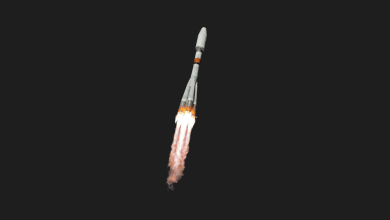
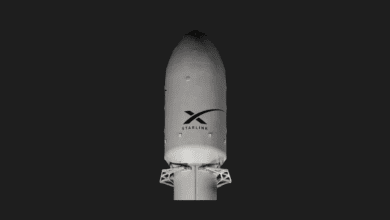
Achieving another historic success, SpaceX has completed its 500th orbital mission using reusable rockets. During the liftoff that took place on Monday, November 17 at 21:21 local time from Vandenberg Space Force Base in California, NASA and ESA‘s Sentinel-6B ocean observation satellite was also successfully placed into orbit. On the other hand, the Falcon 9 used in the mission has been reused three times so far.
Shutterstock
SpaceX Continues to Write History SpaceX announced this significant reuse milestone on the social media platform X. Gwynne Shotwell, the company’s President and COO, also praised the achievement. Shotwell said, “I congratulate the SpaceX team for completing 500 missions with flight-proven rocket boosters. You have made the impossible possible with reusable rockets and paved the way to transport large amounts of cargo and many people to establish a permanent human presence on the Moon and beyond with Starship.”
The fully reusable Starship developed by SpaceX is not included in this count, although it has been launched 11 times to date. For now, all Starship launches are classified as suborbital test flights. Starship stands out as the largest and most powerful rocket aimed at carrying humanity to the Moon and Mars.
Shutterstock

Meanwhile, Sentinel-6B will serve as part of the European Union‘s Copernicus Earth observation program. By measuring global sea surface height with high accuracy, the satellite will continue the work of Sentinel-6 Michael Freilich, launched in 2020.
According to Copernicus data, the average height of the world’s oceans has increased by approximately 10 cm in the last 25 years. Sentinel-6B will operate with a radar altimeter device developed by ESA. Additionally, the satellite will enable more accurate interpretation of altimeter data by measuring the amount of water in the atmosphere with a microwave radiometer provided by NASA. During its first year of observation, Sentinel-6B will work alongside Sentinel-6 Michael Freilich to enhance data accuracy through precise cross-calibration between the two instruments.
You Might Also Like;
- We Selected 10 Series Similar to Stranger Things for Those Who Love It
- Where and How is Silver Used in Electric Vehicles?
- Hyundai Unveils Its Multi-Purpose Wheeled Robot
Follow us on TWITTER (X) and be instantly informed about the latest developments…