Mercedes’ Electric G-Class Fails to Attract Expected Customer Interest

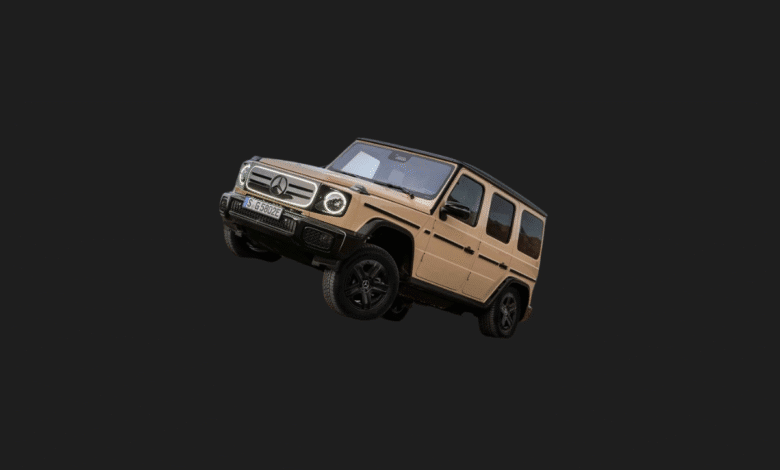

Mercedes-Benz’s all-electric G-Class has reportedly not garnered the anticipated market enthusiasm, prompting the company to reassess its plans for a smaller G-Class model, initially intended to be exclusively electric.
According to German newspaper Handelsblatt, citing data from market research firms Dataforce and Marklines, the Mercedes-Benz electric G-Class model, the G580 EQ Technology, has underperformed in the market.
By the end of April 2025, only 1,450 units of the electric G580 were sold worldwide. In stark contrast, 9,700 internal combustion engine (ICE) G-Class vehicles were sold during the same period, outselling the electric version by almost sevenfold.
Disappointment in China and US Markets

In China, the largest market for electric vehicles, only 58 units of the G580 were sold, and in South Korea, a mere 61 units. Surprisingly, not a single electric G-Class was sold in the United States, a market known for its strong demand for large SUVs.
Mercedes has not disclosed an official sales target for the electric G-Class, stating only that “our sales are as planned.” However, experts point to several key reasons for this underperformance. One primary factor is the vehicle’s underlying platform. The G580 is built on the chassis of the ICE G-Class, rather than a dedicated electric vehicle platform. This design choice prevents it from offering the spacious interior typically associated with electric vehicles.
The electric G-Class’s steel ladder frame chassis weighs 350 kg, and the 26 mm thick armored plate protecting the battery adds another 58 kg. Even before the battery is included, the vehicle already exceeds 400 kg in weight. With a 116 kWh capacity battery, the total weight reaches 3.1 tons, yet its payload capacity is only 415 kg. This significant weight is considered a major contributing factor to its struggles.


Finally, the G580 EQ Technology’s range is deemed insufficient. A WLTP range of 473 kilometers is considered weak performance for a vehicle with a starting price of 150,000 euros.
What About the Smaller G-Class Expected in 2027?

This lack of success has cast uncertainty over the future of Mercedes’ “smaller G-Class,” planned for 2027. While officially slated to be exclusively electric, internal sources suggest that the possibility of adding an internal combustion engine (ICE) version is now being considered. According to one engineer, the additional cost for a gasoline version would be manageable, requiring only a redesign of the front section.
Mercedes is also reportedly planning a shift in its platform strategy. Instead of fixed platforms, the company aims for a structure with flexible technology modules that can be adapted to different segments. The smaller G-Class will be based on the MMA (Mercedes Modular Architecture) platform, used in the CLA, which is designed for both electric and hybrid systems. Additionally, some components from the MB.EA platform, developed for mid- and large-sized segments, will also be utilized.
You Might Also Like;