Historic Step for Nuclear Fusion: Plasma Behavior is Now Predictable


MIT researchers have developed a model that predicts the behavior of plasma in tokamak reactors by combining physics and artificial intelligence. The method has been tested and proven successful.
Researchers at the Massachusetts Institute of Technology (MIT) have announced that they have crossed a major threshold on the path to making nuclear fusion a scalable energy source. Scientists have developed a model that can predict the behavior of plasma in tokamak reactors by combining the laws of physics with machine learning. This is critical for making fusion reactors, which replicate the energy production process of stars on Earth, safer, more efficient, and more sustainable.
A tokamak is one of several fusion reactor designs with a donut shape that confines extremely hot plasma using strong magnetic fields. However, one of the biggest challenges in these systems is controlling the plasma current and safely slowing it down once the reaction has started. The method developed by the MIT team makes this complex process predictable.
Predicting Plasma with Artificial Intelligence
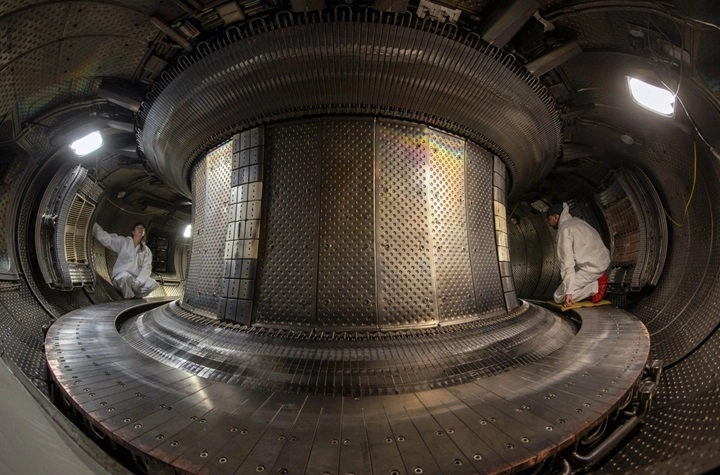
When a tokamak reactor operates at full capacity, the plasma current moves at a speed of approximately 100 kilometers per second and reaches 100 million degrees Celsius, which is even hotter than the Sun’s core. Due to these extreme conditions, reactors cannot be shut down abruptly. The shutdown process is carried out through a gradual cooling process. However, this process can cause scratches and wear on the inner surface of the reactor due to intense heat fluxes.
Stating that fusion experiments are still expensive and such tests can only be performed a few times a year, the team adopted an innovative approach to overcome the lack of data. They combined the machine learning algorithm with fundamental physics models and trained the system with data obtained from the experimental fusion reactor called TCV (Tokamak à Configuration Variable) in Switzerland. This data included the plasma’s initial temperature, energy levels, and the changes it underwent during the experiment.
The research team used this information to create “plasma trajectories” that guide the reactor operators. These trajectories enabled operators to safely shut down the device by predicting how the plasma would behave throughout the reaction. The model was tested repeatedly in experiments conducted on the TCV and made it possible to cool the reactor more stably.
You Might Also Like;
- We Selected 10 Series Similar to Stranger Things for Those Who Love It
- Where and How is Silver Used in Electric Vehicles?
- Hyundai Unveils Its Multi-Purpose Wheeled Robot
Follow us on TWITTER (X) and be instantly informed about the latest developments…