Whenever I look up at the night sky, I try to spot the International Space Station (ISS) moving like a fast, silent star across the horizon. For over two decades, it has been the ultimate symbol of human collaboration. But recently, while diving into NASA’s long-term orbital plans, I was hit with a bittersweet reality: the ISS is getting old, and its days are numbered. NASA and its global partners are planning a controlled de-orbit, eventually guiding our beloved orbital lab to burn up in the Earth’s atmosphere.
But don’t panic. Humanity isn’t abandoning space. In fact, while researching this transition, I realized we are standing on the edge of the most massive orbital real estate boom in history.
The departure of the ISS isn’t an end; it’s a massive grand opening for private aerospace companies. The goal is no longer just government-funded science—it’s about creating flexible, cost-effective, and highly commercialized habitats. The space race has shifted from nations competing for the moon to corporations competing to build your next off-Earth hotel, laboratory, or manufacturing hub.
Here is my deep dive into the five visionary companies building the orbital cities of tomorrow.
1. Axiom Space: The Heir Apparent


If I had to place a bet on who will take the crown first, my money is heavily on Axiom Space. They aren’t just presenting fancy PowerPoint slides; their hardware is actively being built.
Backed by $140 million in NASA funding and an impressive $350 million in private investment, Axiom is taking a very pragmatic, step-by-step approach.
- The “Training Wheel” Strategy: Instead of launching a standalone station immediately, Axiom is building a module that will initially attach directly to the existing ISS.
- The Timeline: They plan to send their first module up soon, allowing them to test their life-support and operational systems while still safely docked to the ISS.
- The Breakaway: Once the ISS is ready to be retired, the Axiom modules will detach, connect to one another, and form a completely independent, free-flying commercial space station.
What really blew my mind about Axiom is the SEE-1 module. They are literally planning to build the first-ever space entertainment and media arena. Imagine a Hollywood blockbuster actually filmed in zero gravity, or a live sports event where gravity isn’t a factor. It sounds like pure sci-fi, but they are laying the groundwork for it right now.
2. Vast Space: Starting Fresh from Day One


While Axiom is using the ISS as a stepping stone, Vast Space is taking a completely different route. They want absolute independence from day one.
Their initial project, Haven-1, is designed to be a fully autonomous, free-flying station from the moment it reaches orbit.
- Compact but Mighty: Haven-1 is relatively small, designed to host a crew of four astronauts. It will feature a comfortable living space, common areas, and a dedicated microgravity laboratory.
- Aggressive Expansion: Haven-1 is just the appetizer. Vast Space has secured $500 million in funding to build Haven-2, which is their true ISS replacement.
- The Master Plan: Their roadmap is incredibly aggressive. After their initial launch, they plan to add a new module every six months. Ultimately, they aim to build a massive, 12-person station.
I admire the sheer audacity of Vast Space. Building an independent station from scratch is a massive engineering gamble, but their fast-paced, iterative approach—similar to how tech startups operate—might just be the shakeup the aerospace industry needs.
3. Orbital Reef: The Ultimate Off-Earth Business Park


Forget everything you know about cramped, utilitarian space stations. Blue Origin (Jeff Bezos’s aerospace company) and Sierra Space have teamed up to build something entirely different: Orbital Reef.
When I look at their designs, I don’t see a traditional space base; I see a high-tech corporate campus floating 400 kilometers above the Earth.
- Commercial Focus: Orbital Reef is explicitly designed as a “mixed-use business park.” It will cater to commercial manufacturing, high-level research, and space tourism.
- Modular Architecture: The initial phase will consist of five core pieces, including a central hub, a dedicated research zone, and expandable habitats.
- Capacity: It is being designed to comfortably house up to 10 people at a time.
NASA has injected $172 million into this project. While they are targeting the latter part of this decade for launch, the project is still heavily in the design and testing phases. Still, the idea of leasing “office space” in orbit is a fascinating glimpse into the commercial future of low Earth orbit.
4. Starlab: The “One and Done” Launch


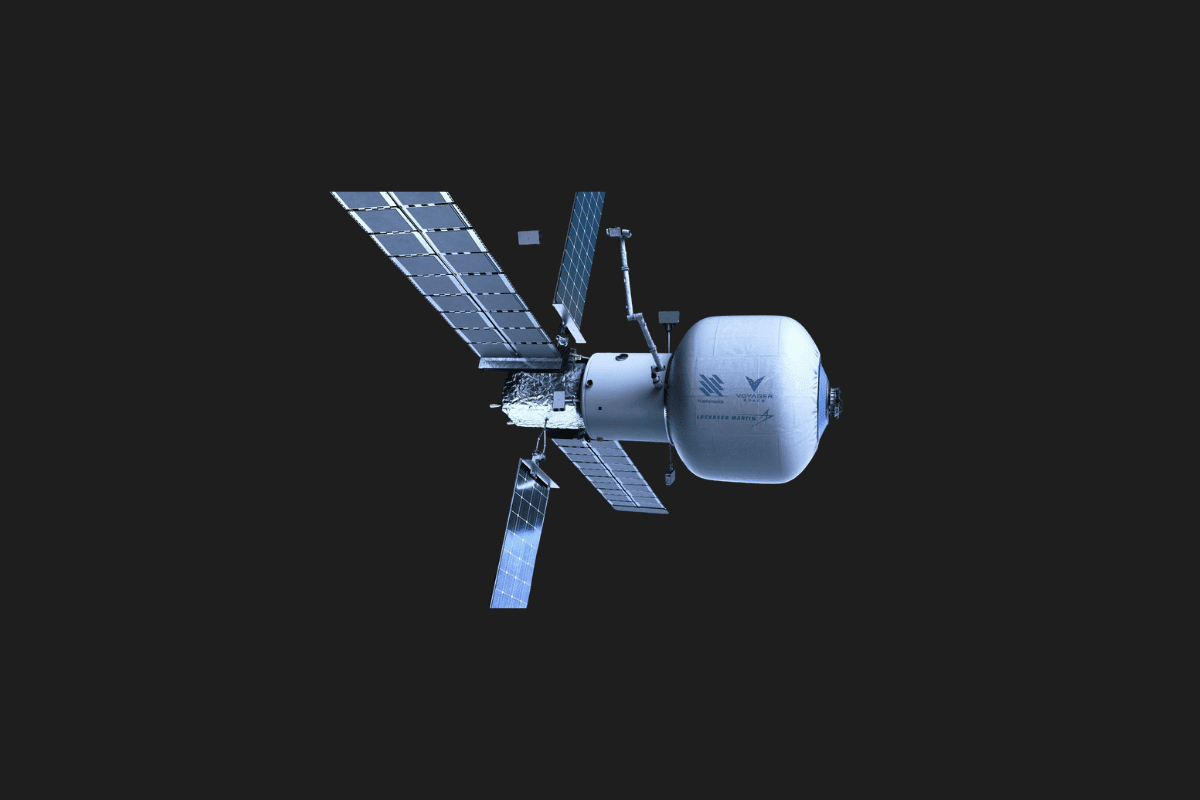
As someone who gets deeply frustrated assembling flat-pack furniture, I have a profound respect for Starlab’s engineering philosophy. A joint venture between Airbus and Voyager Space, Starlab is skipping the complex, multi-year puzzle of piecing a station together in orbit.
- Fully Assembled: Starlab will be launched in a single, massive payload. No connecting modules in the vacuum of space, no multiple rocket launches. It goes up ready to use.
- Dual Architecture: The station consists of two main sections: a service module handling power and propulsion, and a massive habitat module for the crew.
- Advanced Laboratory: It will support four astronauts and features a dual-purpose lab. The interior focuses on biology and material sciences, while the exterior is dedicated to exposing equipment to the harsh vacuum of space.
Launching an entire space station in one go requires a remarkably powerful rocket, but it drastically reduces the risks associated with orbital construction.
5. Max Space: The Inflatable Giant


Last but certainly not least is Max Space, the newest player on the board. When I first read about their concept, I actually laughed—an inflatable space station? But the more I looked into the physics of it, the more brilliant it became.
- The Volume Problem: The biggest constraint in spaceflight is the size of the rocket’s payload fairing (the nose cone). You can only send up what fits inside.
- The Expandable Solution: Max Space’s Thunderbird station launches tightly packed. Once in orbit, it inflates and expands, achieving a massive internal volume of over 350 cubic meters.
- Record-Breaking Size: According to the company, this will make it the most spacious single-launch module ever put into orbit, comfortably housing four astronauts with room to spare.
Using expandable habitats is a game-changer. It provides astronauts with crucial psychological comfort (more room to float and live) while keeping launch costs relatively low.
A New Frontier for Humanity
The retirement of the ISS might feel like the end of a golden era, but it is actually the catalyst for a much bigger, much wilder space race. The torch is being passed from government agencies to agile, ambitious private corporations. Low Earth orbit is transforming from a quiet scientific outpost into a bustling hub of commerce, tourism, and next-generation manufacturing.
The next few years are going to be a thrilling ride as these five titans race to prove their technology and claim their territory among the stars. I, for one, can’t wait to see who gets their doors open first.
So, over to you: If you were given a free, round-trip ticket to orbit right now, which of these five space stations would you choose to visit and why? Let me know your thoughts—I’d love to read them!
You Might Also Like;
- The New Era of Space Mechanics: Extending Satellite Lifespans
- AI Discovers Groundbreaking Non-Opioid Painkiller
- Mind Over Matter: What Neuralink’s First Human Trial Really Means for Our Future
-
-

-
-

-

-

-
-

-

-

-
-