Is Wall-E Becoming a Reality? How SpaceX’s 1 Million AI Satellites Could Turn Orbit into a Junkyard



Welcome back, Spartans. I spend my days tracking the relentless expansion of the digital world, but sometimes the most shocking developments aren’t happening on our screens—they are happening right above our heads.
We all know the AI industry is facing a massive physical bottleneck. Training and running these god-tier models requires terrifying amounts of electricity and water, and quite frankly, nobody wants a humming, power-hungry mega-data center built in their backyard. So, SpaceX recently proposed what sounds like the ultimate sci-fi solution: move the data centers to space.
Elon Musk recently defended the plan, stating that space is infinitely vast and these orbital servers would be too small to see from Earth. But as I dug into the regulatory filings and the math behind this 1-million-satellite dream, the reality looks a lot less like a tech utopia and a lot more like the dystopian opening scenes of the movie Wall-E.
Here is why scientists and space experts are sounding the alarm.
The Hockey Rink in the Sky: Scaling Up to Disaster

When industry insiders first heard the “1 million satellites” figure, many laughed it off as a massive exaggeration—perhaps a wildly inflated roadmap designed to hype up investors ahead of an IPO. But the blueprints are very real, and they are terrifyingly large.
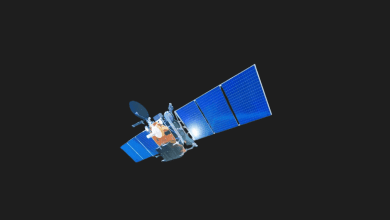
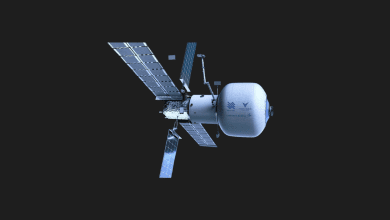
We aren’t talking about your standard, relatively compact Starlink satellites. These are AI1 orbital data centers.

- Massive Scale: Each AI1 unit is roughly the size of an ice hockey rink. That is 12 times larger than the hardware currently floating above us.
- The Danger Zone: SpaceX plans to park about half of these behemoths at an altitude of around 1,000 kilometers.
This specific altitude is what keeps NASA engineers awake at night. At 1,000 kilometers, atmospheric drag is practically non-existent. If a satellite breaks down or a piece of debris snaps off, it doesn’t fall back to Earth and burn up safely. It stays up there, orbiting at hypersonic speeds for hundreds of years. This is the exact recipe for a catastrophic chain reaction of collisions that could render our orbit completely unusable.
The Wall-E Effect: Birthing a Cosmic Graveyard

Normally, when a satellite reaches the end of its life, operators push it down into the atmosphere where it safely incinerates. However, we are now realizing that burning up thousands of satellites is actively damaging our ozone layer with metallic ash.
Because the AI1 satellites are so massive, SpaceX wants to pivot. Instead of burning them up, the proposed plan is to push dead servers deeper into space, creating a literal “satellite graveyard.” Let’s do the math: if you have an active fleet of 1 million satellites, roughly 200,000 of them will retire every single year. Over time, we will be constructing a massive, dead ring of floating garbage around the Earth. Scientists are directly comparing this to Wall-E, where humanity essentially locked itself inside a shell of its own orbital trash. While Musk has suggested eventually shooting this junk into the sun, astrophysicists point out that the fuel, time, and physics required to do that make it practically impossible right now.
The Threat is Already Falling From the Sky
If the threat to space exploration wasn’t enough, SpaceX’s own regulatory reports feature a chilling mathematical reality regarding us down here on the ground.
SpaceX officially estimates the risk of falling debris harming a human as “near zero.” But independent mathematicians looking at a 1-million-satellite network suggest a very different outcome. Statistically, at that scale, we could see around 100 people lose their lives every year due to surviving chunks of orbital hardware plummeting to Earth.
And this isn’t some distant, theoretical future. It is already happening:
- Just last year, Canadian farmers found laptop-sized chunks of Starlink debris in their fields.
- Heavy rocket debris washing up on shores or crashing into rural areas is becoming normalized.
- Communities living near launch sites are already dealing with constant, earthquake-level vibrations from the sheer volume of rockets heading into orbit.
The Bottom Line
Let’s put this into perspective. In 2019, there were only about 2,000 active satellites in orbit. Today, there are around 15,000, and astronomers are already begging companies to slow down because the night sky is becoming unreadable.
SpaceX has a legendary track record of achieving the “impossible.” But unleashing 1 million massive, hockey-rink-sized data centers into the void is a completely different beast. Moving our AI power crisis into orbit might solve a problem on Earth, but it looks like we are just trading a power grid issue for a planetary lockdown.
You Might Also Like;