Heat Flowing Backwards? How Quantum Physics Just Broke the Second Law (Sort of)


I have a cup of coffee sitting next to me right now. It was piping hot twenty minutes ago, and now it’s lukewarm. In another twenty minutes, it will be stone cold.
This is the most basic rule of our universe: Heat always flows from hot to cold. It is the tyranny of the Second Law of Thermodynamics. Entropy increases. Things fall apart. Your tea gets cold, and ice cream melts. It is the arrow of time, and it only points in one direction.
Or at least, that’s what I thought until this morning.
A team of researchers from China has just done the unthinkable. In a groundbreaking experiment at the Southern University of Science and Technology, they managed to make heat flow spontaneously from a colder quantum system to a hotter one.
Yes, you read that right. In the quantum realm, the coffee can technically heat itself up.
This isn’t just a “cool science trick”; it challenges the very foundations of how we understand energy, time, and the laws of physics that govern our reality. Let’s dive into the quantum weirdness and figure out what is actually going on.


The Experiment: Rewiring the Rules of Reality
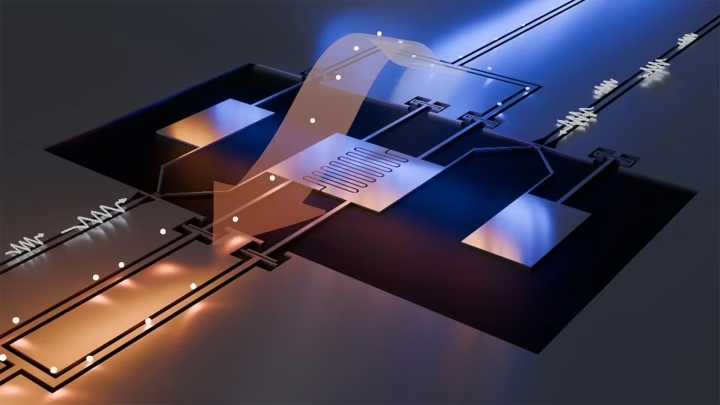
The experiment was led by Dawei Lu and his team, and frankly, the setup sounds like something out of a sci-fi novel. They didn’t use beakers and thermometers; they used Nuclear Magnetic Resonance (NMR) technology on a microscopic scale.
Here is the breakdown of their “lab bench”:
- The Subject: A molecule of crotonic acid (composed of carbon, hydrogen, and oxygen).
- The Players: They focused on the nuclei of four specific carbon atoms within the molecule.
- The Tech: These nuclei acted as qubits (quantum bits)—the fundamental building blocks of quantum computers.
In a normal world, if you link a hot object and a cold object, they equilibrate. The hot one loses energy; the cold one gains it. But Lu’s team used electromagnetic pulses to manipulate these qubits. They successfully demonstrated that, under specific quantum conditions, thermal energy moved from the cooler qubit to the hotter one.
It’s the thermodynamic equivalent of water flowing uphill.
Wait, Did They Just Break Physics?
This is the big question. If you ask a classical physicist from the 19th century, they would say this is impossible. The Second Law of Thermodynamics is pretty strict: No process is possible whose sole result is the transfer of heat from a body of lower temperature to a body of higher temperature.
So, did Dawei Lu’s team break the law?
Not exactly. They found a loophole.
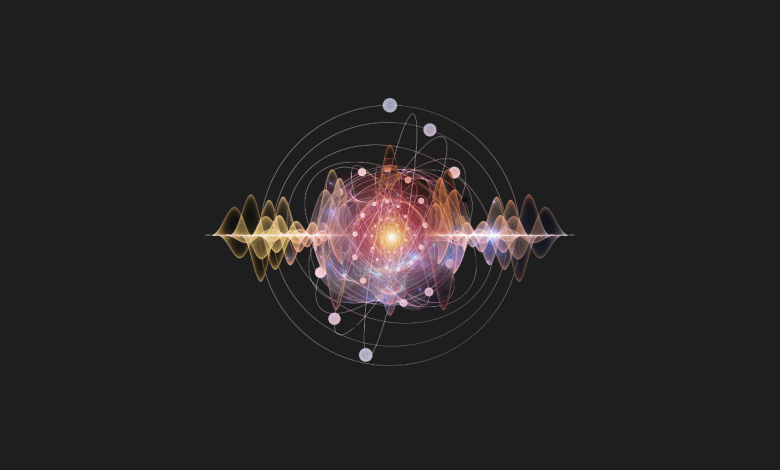
In our macroscopic world (the world of coffee cups and car engines), we ignore the tiny details. But in the quantum world, there is a hidden resource called Quantum Coherence.
- Classical View: Heat transfer is driven by temperature difference.
- Quantum View: Heat transfer can be driven by “information” and “coherence.”
Think of coherence as a special kind of “quantum fuel.” In the experiment, the researchers injected this quantum information into the system. This extra “fuel” allowed the heat to reverse its natural flow. It’s like having a pump that pushes water uphill—the water isn’t defying gravity; it’s just being driven by an external force (the pump). In this case, the pump is quantum information.
“Apparent Temperature”: A New Way to Measure Heat
This is where my brain started to hurt, but stay with me because it’s fascinating.
To make sense of this, the researchers had to invent a new metric. They calculated what they call the “Apparent Temperature” for each qubit.
This isn’t temperature as you see it on a thermometer. It is a composite metric that combines:
- The classical thermal state.
- The quantum coherence (the “spookiness”).
When they looked at the data through this new lens, the laws of physics suddenly made sense again. Heat was flowing from a higher “Apparent Temperature” to a lower one. It’s just that the quantum coherence skewed the numbers so much that, to a casual observer, it looked like it was flowing from cold to hot.
Roberto Serra, a researcher from the Federal University of ABC in Brazil who commented on the study, put it perfectly. He argues that we aren’t seeing a violation of the laws of physics, but rather a limitation of our old definitions.
“The laws of thermodynamics were written in the 19th century, long before we knew about quantum mechanics. We built those laws assuming we couldn’t see or touch the microscopic gears of the universe. Now that we can, we need to rewrite the manual.”
Why Should You Care? (The “So What?” Factor)

Okay, so atoms can swap heat in weird ways. Why does this matter to you or me?
Because of Computers.
We are currently hitting a wall in computing power. Our chips are getting too hot, and we can’t cool them down fast enough. This is doubly true for Quantum Computers, which need to be kept near absolute zero to function.
If we can master this “reverse heat flow,” we are looking at the birth of Quantum Thermodynamics.
1. The Ultimate Cooling System
Imagine a cooling system that doesn’t just blow air on a chip but uses quantum mechanics to actively pump heat out of the processor at an atomic level. This experiment proves that we can manipulate heat transfer using information. This could lead to:
- More stable quantum computers.
- Processors that don’t melt themselves.
- Energy-efficient supercomputers.
2. Maxwell’s Demon Comes to Life
Physics nerds will recognize this as the realization of Maxwell’s Demon—a thought experiment from 1867. James Clerk Maxwell imagined a tiny demon who could sort fast molecules from slow ones, reversing entropy. For 150 years, it was a paradox. Dawei Lu’s experiment shows that with enough quantum control, we are the demon. We can sort the heat.
My Final Take: The Universe is weird, and I Love It
I often write about the Metaverse and digital worlds, but sometimes the “real” world is glitchier than any software I’ve ever seen.
What this experiment tells me is that our understanding of reality is still in beta testing. We thought we knew the rules—hot goes to cold, time moves forward—but the quantum layer of the universe operates on a completely different operating system.
We are entering an era where Information is Energy. The fact that “knowing” the state of a particle (coherence) can be used to drive a physical engine is mind-blowing. It blurs the line between the physical world (heat) and the informational world (data).
As we continue to build the future of computing, we aren’t just engineering circuits anymore; we are engineering the fundamental flow of entropy itself.
I’m curious: If we can reverse heat flow, what’s next? Do you think we’ll ever see a refrigerator that runs on quantum bits instead of electricity?
You Might Also Like;