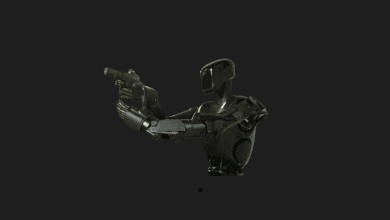
I have to admit, when I was scrolling through my feed this morning looking for the usual smartphone updates, I had to do a double-take. HONOR—yes, the very same brand we normally associate with ultra-thin foldable phones and killer mobile cameras—is officially stepping into the humanoid robot arena.
When I first read the news, my immediate thought was: Why is a smartphone giant building a sci-fi robot? But after digging into their recent teaser and looking at the broader picture of the tech industry, it suddenly makes perfect sense. We are no longer just looking at screens; we are trying to give our artificial intelligence a physical body. And HONOR clearly doesn’t want to be left behind.
Let’s break down exactly what we know so far, why this is a massive shift for the consumer electronics market, and what it means for the future of our smart homes.

If you’ve been following my articles, you know that Mobile World Congress (MWC) in Barcelona is usually the playground for next-generation telecommunications, new smartphone releases, and 5G infrastructure. It is the biggest mobile tech fair in the world, running from March 2 to 5.
But this time, HONOR is hijacking the narrative.
They’ve dropped an official teaser image and video showing the silhouette and design language of their very first humanoid robot. While the teaser leaves an aura of mystery, the visual cues tell us a lot:


- Sleek, Consumer-Friendly Design: Unlike industrial robots that look like walking factory machines, HONOR’s teaser suggests a polished, modern aesthetic. It looks like a device designed to fit into a human environment, not just a warehouse.
- The Mobility Factor: Unveiling this at MWC is a calculated move. It screams “connectivity.” This isn’t just a standalone machine; it’s heavily implied to be a hyper-connected entity, likely running on the same 5G/6G networks that power our phones.
We don’t have a name yet. We don’t have a spec sheet. But the sheer fact that they are bringing a physical prototype to a global stage means they are taking this incredibly seriously.
Why a Smartphone Company? The Hidden Advantage
You might be asking yourself, “Ugu, isn’t robotics a completely different ballgame than making phones?”
Yes and no. When you really think about it, a humanoid robot is essentially a giant, walking smartphone. Let me explain why companies like HONOR (and previously Xiaomi with their CyberOne) actually have a massive head start in the robotics race:
1. The Supply Chain Mastery
Building a robot requires lightweight batteries, high-resolution cameras, LiDAR sensors, and incredibly powerful, energy-efficient microchips. Who currently buys and manufactures these components by the millions? Smartphone companies. HONOR already has the supply chain infrastructure to build complex hardware at scale, which gives them a huge advantage in keeping production costs down.
2. On-Device AI Experience
HONOR has spent the last few years aggressively pushing what they call intent-based AI. Instead of just reacting to your commands, their smartphone software (MagicOS) tries to predict what you want to do next. Now, imagine taking that localized, on-device AI—an AI that understands your habits, your schedule, and your preferences—and putting it into a bipedal robot. You don’t just get a machine that walks; you get a physical assistant that already knows how you live.
3. The Ecosystem Play
Tech brands want to lock you into their ecosystem. First, it was the phone, then the smartwatch, then the smart TV, and the smart speaker. The humanoid robot is the ultimate endgame of the smart home ecosystem. I can easily see a future where your HONOR smartphone acts as the central “remote” or brain-link to your HONOR robot.
The Competitive Landscape: HONOR vs. The Titans

Of course, HONOR isn’t the first to the party. The humanoid robot space is suddenly getting very crowded, and the competition is fierce. When I look at the current market, here is what HONOR is going up against:
- Tesla Optimus: Elon Musk’s project is arguably the most famous, focusing heavily on manufacturing and repetitive labor.
- Figure (backed by OpenAI): Figure 01 shocked the world recently by having full, real-time conversations while doing chores, powered by ChatGPT-like reasoning.
- Boston Dynamics (Atlas): The kings of robotic agility. They dominate in physical movement and balance.
So, where does HONOR fit in? If I had to make an educated guess, I believe HONOR is not building a factory worker. Because of their deep roots in consumer electronics, I suspect they are building a domestic and personal companion. They are going to leverage their user-friendly software interface to create a robot that feels less like a tool and more like an intelligent appliance for the home.
What We Need to Look Out For at MWC
As we count down the days to the official reveal in Barcelona, I have my notebook ready. Here are the critical details I’m going to be hunting for when HONOR finally pulls the curtain back:
- The Price Tag Ambition: Will this be an affordable consumer product in the near future, or a $100,000 concept car meant only for research?
- Battery Life: The Achilles heel of all humanoid robots. Walking takes a massive amount of energy. Can a smartphone company figure out a way to keep this thing running for more than a few hours?
- Safety and Privacy: If a robot is walking around my house, equipped with cameras and microphones, how secure is my data? HONOR has historically been good with local AI processing, and I want to see them emphasize privacy here.
Final Thoughts
Watching the lines blur between mobile technology, artificial intelligence, and physical robotics is genuinely thrilling. We are moving away from the era where AI was just a chatbot on a screen. AI is getting legs, arms, and a physical presence in our world.
HONOR entering this space proves that humanoid robots are no longer just science experiments for universities; they are becoming the next frontier for mass-market consumer electronics. I’ll be closely monitoring the announcements from Barcelona to bring you the full specs and my hands-on impressions (or at least, my eyes-on impressions!) as soon as they drop.
I’m curious to hear your take on this massive shift in tech. If your favorite smartphone brand offered you a humanoid robot to help around the house today, would you trust it enough to bring it into your living room, or does the idea still feel a bit too dystopian for you? Let’s discuss it!
You Might Also Like;