The Deep Underground Nuclear Revolution: Exploring Deep Fission’s SMR Technology | Metaverse Planet
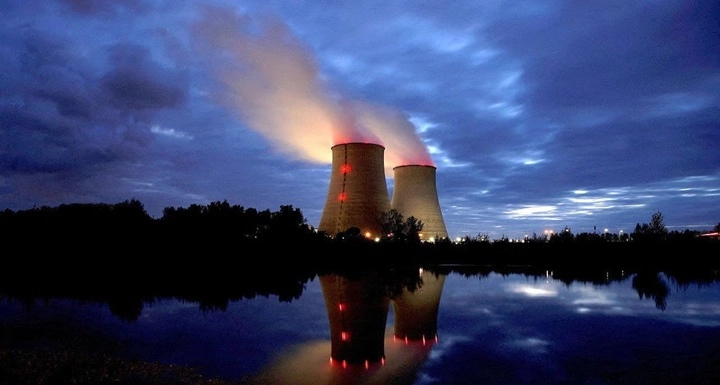
Whenever we talk about the future of energy—especially the massive power needed to run tomorrow’s AI data centers and the infrastructure of the Metaverse—we usually look up. We look at massive wind turbines, sprawling solar farms, or giant concrete nuclear cooling towers scraping the sky.
But as I was doing my daily research on the energy sector, I stumbled upon a project that completely flips this script. Instead of looking up, a US-based startup called Deep Fission is looking straight down. And I mean really deep down.
They have officially begun drilling a borehole for a nuclear reactor that will operate a staggering 1.6 kilometers (about 1 mile) beneath the Earth’s surface. Let’s dive into why this is happening, the engineering brilliance behind it, and why this could be the ultimate energy solution for the tech-driven future we are building.
The Core of the Story: Digging Deep in Kansas


Right now, in the Great Plains Industrial Park located in Parsons, Kansas, heavy drilling equipment is breaking ground. Deep Fission isn’t just theorizing; they are actively digging the first of three planned data-collection wells.
This initial borehole will go down approximately 1,800 meters and have a diameter of about 20 centimeters. This phase is all about gathering critical intelligence—mapping the geological, hydrological, and thermal properties of the deep earth.
This prep work is setting the stage for their flagship project: a 15-megawatt (MW) Small Modular Reactor (SMR) aptly named “Gravity.” When I first read about putting a nuclear reactor a mile underground, I’ll admit, my initial thought was, “Is this a sci-fi movie plot waiting to go wrong?” But when you actually break down the physics and the engineering logic, it is remarkably elegant.
The “Aha!” Moment: Why Build a Reactor a Mile Underground?


Traditional nuclear power plants are engineering marvels, but they are incredibly expensive and take decades to build. A massive chunk of that cost goes into constructing colossal, pressurized containment domes designed to keep everything safe in worst-case scenarios.
Deep Fission’s design completely eliminates the need for these giant surface structures. By placing the reactor at the very bottom of a deep borehole, they leverage the Earth itself as the ultimate engineering tool. Here is why this blew my mind:
- Natural Pressurization: To keep a reactor from boiling its cooling water, traditional plants use massive, expensive steel pressure vessels. At 1.6 kilometers deep, the sheer weight of the water column above the reactor naturally creates about 160 atmospheres of pressure. The Earth is literally doing the heavy lifting for free.
- The Ultimate Safety Shield: Instead of pouring millions of tons of custom concrete, Deep Fission uses the surrounding bedrock. That is billions of tons of solid rock acting as an impenetrable, natural containment layer.
- A Tiny Footprint: Because everything is vertical and underground, the surface facility is shockingly small. You don’t need acres of land; you just need enough space for the wellhead and the power distribution hardware.
The Economics: Slashing the Cost of Nuclear Energy


I’ve been tracking the Small Modular Reactor (SMR) space for a while now, and the biggest hurdle has always been the bottom line. Supply chain issues and custom manufacturing make SMRs surprisingly pricey.
Deep Fission is tackling this from a completely different angle. Rather than inventing brand-new construction methods, they are piggybacking on a mature, highly optimized industry: oil and gas drilling.
By utilizing existing drilling technologies, standard pipes, and established supply chains, Deep Fission estimates they can reduce the construction costs of a nuclear plant by an incredible 70% to 80%. As someone who watches tech budgets closely, this is the kind of disruption that actually moves the needle. It turns nuclear power from a “maybe in 20 years” solution into an economically viable option for the near future.
Fueling the AI and Tech Boom

You might be wondering, “Ugu, why are we talking about nuclear drilling on a site dedicated to the future of technology?”
Here is the reality: the tech industry is facing an unprecedented energy crisis. Artificial Intelligence, massive cloud data centers, and the expanding infrastructure of spatial computing require insane amounts of stable, continuous electricity. Solar and wind are fantastic, but they are intermittent. When the sun goes down or the wind stops, AI models still need to compute.
This is where the high scalability of Deep Fission’s system becomes a game-changer.
- Modular Growth: A single well produces 15 MW of electricity.
- Massive Output: If you cluster 100 of these underground reactors on the same relatively small site, you instantly scale up to 1.5 Gigawatts (GW).
That is enough stable, carbon-free baseload power to sustain the largest hyperscale data centers in the world. It’s no surprise that Deep Fission recently secured $80 million in new funding. Investors know that whoever solves the energy bottleneck for AI is going to win the next decade of tech.
The Road Ahead: Targets and Challenges

The momentum behind this project is moving fast. Deep Fission isn’t just drilling; they are securing the supply chain. They recently signed a crucial agreement with Urenco USA to purchase low-enriched uranium for their testing and demonstration phases.
Furthermore, this project is a key player in the US Department of Energy’s Reactor Pilot Program. The ambitious goal here is to get advanced reactors to reach criticality by July 4, 2026. The data gathered from the current Kansas drilling will be the cornerstone for finalizing engineering designs and navigating the complex regulatory approvals needed to commercialize this tech.
My Takeaway
Researching Deep Fission’s “Gravity” reactor reminded me why I love technology so much. Sometimes the most innovative solutions aren’t about creating something incredibly complex, but rather looking at our environment—in this case, the deep earth—and using its natural properties to solve our biggest engineering headaches.
By burying the reactor, we get natural pressure, unmatched safety shielding, a fraction of the cost, and the clean baseload power our digital future desperately needs.
I want to turn this over to you. The idea of nuclear energy often makes people nervous because of the massive surface structures we are used to seeing. If you were choosing how your city or local data center was powered, would you feel more comfortable with a traditional nuclear cooling tower on the horizon, or a silent, invisible reactor operating safely a mile beneath your feet? Let me know your thoughts down below!
You Might Also Like;
- A Midnight Stroll with a Humanoid Robot: Why the Macau Incident Changes Everything
- Unitree PUMP MAX Review: The Ultimate Portable Smart Gym
- The End of an Era: Breaking Down the Epic Dune: Part Three Trailer
-

-
-
-

-

-

-

-

-

-

-

-