Breaking the Ultimate Distance Record in Human Spaceflight


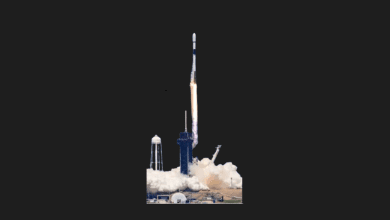
I honestly got chills when the telemetry data confirmed it. Watching the Artemis 2 crew break the ultimate distance record wasn’t just another news update for me; it felt like watching a massive, historical shift happen right in front of my eyes.
When I saw that the Orion spacecraft had traveled exactly 406,771 kilometers away from Earth, I had to sit back and just process that number. To put it in perspective, that is further than any human being has ever ventured into the absolute darkness of the cosmos. It completely shatters the long-standing record set by the Apollo 13 crew back in 1970. Tracking this mission, I realized something profound: we are no longer just dreaming about the next era of deep space travel. We are actually living in it.
Let me take you through why this specific milestone has me so hyped, and why it is so much more than just a new number in the Guinness World Records.
The Ghost of Apollo 13: A Record Born of Crisis, Broken by Design
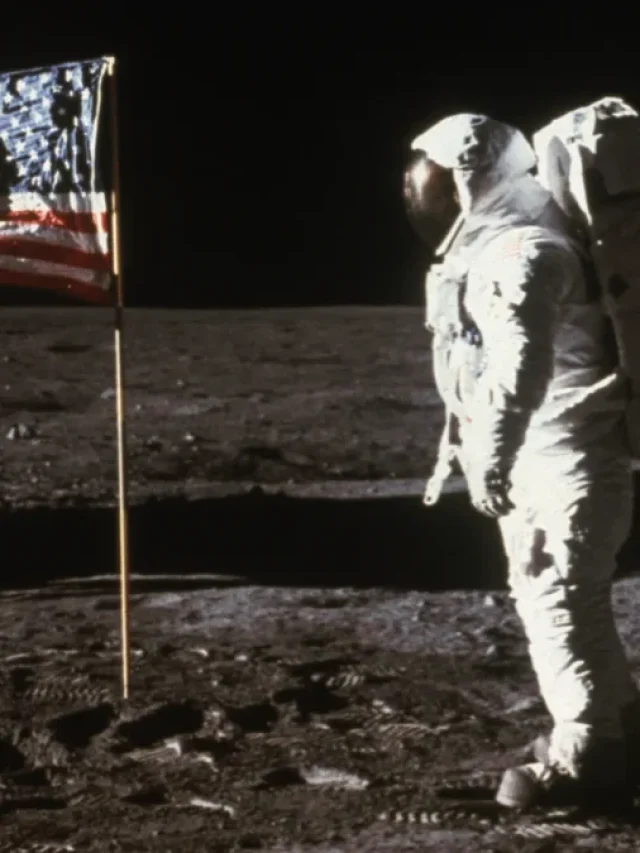
I’ve always been fascinated by the Apollo 13 mission. If you know the history, you know that their distance record of 400,171 kilometers wasn’t exactly something NASA planned to celebrate. It was a terrifying necessity. After an oxygen tank explosion crippled their command module, the crew had to use the Moon’s gravity to sling them back toward Earth in a free-return trajectory. They swung unusually high around the far side of the Moon, accidentally setting a record for the furthest distance humans had ever traveled from our home planet.
What amazes me about the Artemis 2 achievement is the sheer contrast in intention.
We didn’t stumble into this new record because something went wrong. We engineered our way there deliberately. The Artemis 2 crew pushed the Orion spacecraft to this extreme distance to intentionally stress-test our modern life support systems, communication arrays, and navigation protocols. It’s a bold statement that says we aren’t just surviving the trip to the Moon anymore; we are mastering the space around and beyond it.

Inside the Orion Spacecraft: Surviving the Deep Void
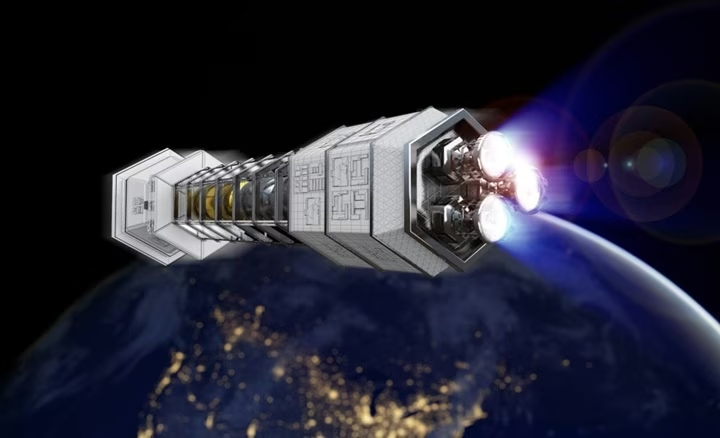
When I was researching the specs of the Orion spacecraft, I was genuinely blown away by the technological leaps we’ve made since the Apollo era. It’s easy to look at a capsule and think it’s just an upgraded version of the 1960s hardware, but that couldn’t be further from the truth.
Here are the key things I found that make Orion an absolute beast of a machine capable of surviving 406,771 kilometers away:
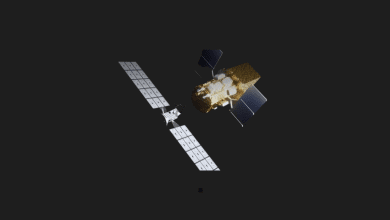
- The European Service Module (ESM): This is essentially the powerhouse of the spacecraft. Provided by the European Space Agency, it supplies the crew with water, oxygen, thermal control, and the electrical power generated by its massive solar arrays. Knowing that international collaboration is literally keeping these astronauts alive that far out makes the whole mission feel like a true victory for humanity, not just one country.
- Next-Gen Radiation Shielding: Space is incredibly hostile, and once you get past the Earth’s protective magnetic field, radiation becomes a massive threat. Orion is equipped with high-density shielding to protect the crew from unpredictable solar flares.
- Deep Space Network (DSN) Capabilities: Communicating with a ship almost half a million kilometers away requires insane precision. The latency and data transfer rates were tested to their absolute limits here.
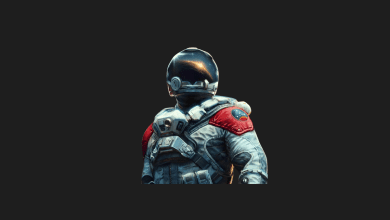
Thinking about the crew sitting inside that capsule, trusting this intricate web of technology to keep the cold, radioactive vacuum of space at bay, is truly mind-boggling to me.
The Psychological Void
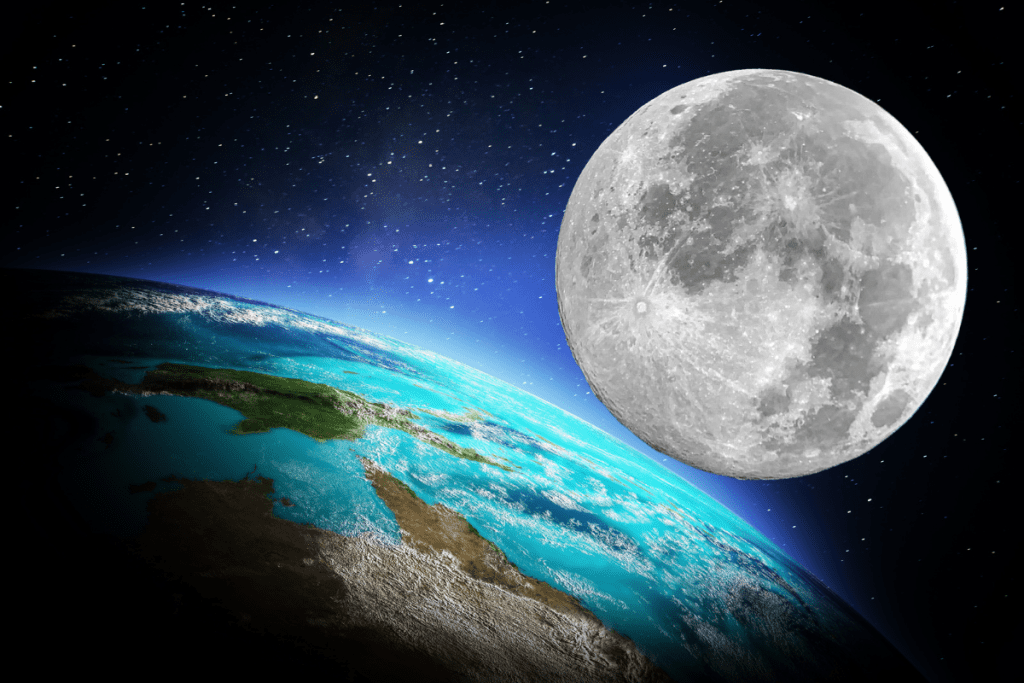
I try to put myself in the boots of the Artemis 2 astronauts. Imagine looking out the window of the Orion spacecraft. The Moon is a massive, looming sphere of gray craters, but when you look back at Earth? It’s not even the classic “Blue Marble” we are used to seeing from the International Space Station. From 406,771 kilometers away, Earth is terrifyingly small.
We often talk about the “Overview Effect”—that cognitive shift astronauts experience when seeing Earth from space. But what happens to the human mind when Earth is just a tiny, distant pale blue dot in a sea of black? Testing human psychology at these extreme distances is just as critical as testing the physical hardware.
Why This 406,771-Kilometer Mark Actually Matters
I know some skeptics might ask, “Why bother going that far just to orbit the Moon and come back?” But from where I sit, analyzing the trajectory of our space programs, this is the ultimate dry run.
We aren’t just stretching our legs; we are proving that our deep-space architecture actually works. When you are hundreds of thousands of kilometers away from Earth, there is no quick rescue mission. If something breaks, the crew and the ground control teams have to solve it with whatever is on board. By pushing Orion to this unprecedented distance, NASA is proving that we have the robust, redundant systems necessary to keep humans alive when quick aborts are mathematically impossible.
Next Stop: The Red Planet
This brings me to the thought that I just can’t shake since the news broke.
Every single system tested at this record-breaking distance—the life support, the radiation shielding, the communication delays, the human endurance—is a direct proxy for the journey to Mars.
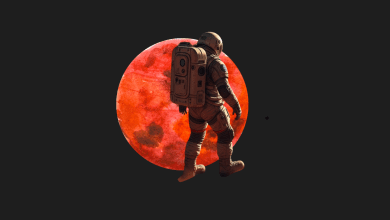
I was looking at the mission roadmap, and it hit me: Artemis isn’t just about going back to the Moon to stay. The Moon is our proving ground. Breaking the ultimate distance record is the final, undeniable proof that we have the hardware and the audacity to cross the interplanetary void. I can’t help but wonder if the next major milestone I get to report on won’t just be an orbital record, but the actual launch of a multi-year, direct journey to the Martian surface.
We are living in the prologue of a multi-planetary human race, and watching Orion push the boundary out to 406,771 kilometers makes me incredibly optimistic for the future of space exploration.
If you had the chance to be on a spacecraft breaking the ultimate distance record, knowing Earth was just a speck in the window, would you take the risk, or would the vastness of deep space be too much? Let me know your thoughts down in the comments, and don’t forget to subscribe if you want to keep exploring the future with me!
You Might Also Like;