Artificial Intelligence (AI) technologies, which have recently become much more widespread in daily life, continue to evolve rapidly. Almost every day brings a notable development in this field, with significant thresholds being crossed one by one. In our “AI Daily” series, we continue to regularly document the progress of this technological revolution, which has the potential to substantially change life around the world in the coming period.
What Happened This Week in the World of AI?

The star of the week in the AI world was Gemini 3. Google’s new large language model quickly managed to impress both AI enthusiasts and ordinary users. Besides Gemini 3, the arrival of Nano Banana Pro was another AI making headlines this week. Meanwhile, concerns about the “AI bubble” and hardware supply shortages, which have been ongoing topics in the AI world, remained central to the agenda this week. Parallel to all this, new AI tools entered our lives, as is the case every week. Here are the prominent developments in the world of AI this week:
Google Releases Its Most Advanced AI Model, Gemini 3
Google has released Gemini 3, which stands out for its multimodal intelligence, advanced reasoning, and coding capabilities. As one of the “smartest” AI models released to date, Gemini 3 may also be the most accurate model. Initial data shared indicates that Gemini 3 hallucinates—meaning provides incorrect information—much less frequently than other models.
Gemini 3 Pro was naturally designed as a multimodal model. This means it can process text, images, and audio data simultaneously. For example, it can take photos of a recipe and convert it into a cookbook, or create interactive flashcards from a series of video lessons.
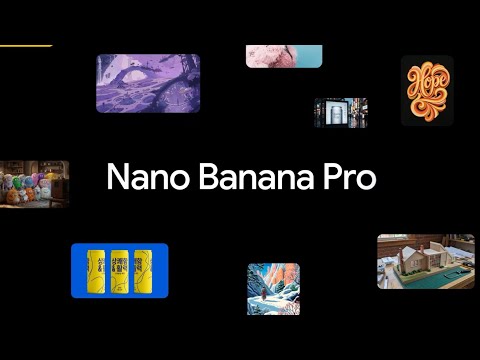
Google also introduced its new image generation model, Gemini 3 Pro Image, also known as Nano Banana Pro. The company claims that the new model has achieved major advancements in almost every aspect compared to previous versions. According to Google’s statement, the new model transforms scenes imagined by the user into studio-quality designs, offering higher control, seamless text insertion, and enhanced world knowledge. One of the differences of this new model is the text addition part in visuals. Nano Banana Pro can now prepare detailed infographics and diagrams or add clear and readable text over an existing image.
Nano Banana Pro is available for free, although free users have a certain daily production quota. Google AI Plus, Pro, and Ultra subscribers have a higher limit. To create an image, it is enough to open the Gemini app and select the “Thinking” model.
Amazon Plans to Transfer All Unskilled Jobs to Robots

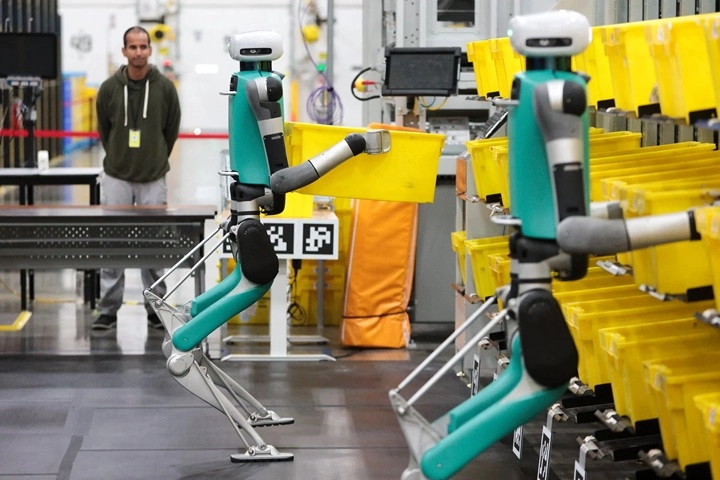
Warnings that the rise of Artificial Intelligence will cause a serious unemployment crisis are no longer just future concerns. This week’s announcement by Amazon once again reminded millions that their jobs will soon be lost to robots. Tye Brady, Chief Technologist for Amazon Robotics, announced plans to hand over all kinds of “unskilled” jobs to robots. This alone means the elimination of nearly half a million jobs at Amazon over the next five years.
EU Delays AI Regulations Until 2027


As seen in the Amazon example, while AI is making fundamental changes in every aspect of life, governments are allowing technology companies to steer this social transformation. This week, the European Union took another step in this direction, postponing its regulations aimed at AI companies and even softening the existing rules.
Under this decision, the date for the strict rules concerning “high-risk” AI applications to take effect has been pushed from August 2026 to 2027. The scope of the postponement includes biometric identification systems, traffic management, energy and infrastructure services, recruitment processes, exam and assessment systems, healthcare services, creditworthiness analysis, and the use of AI by law enforcement agencies.
xAI Introduces New Version of Grok
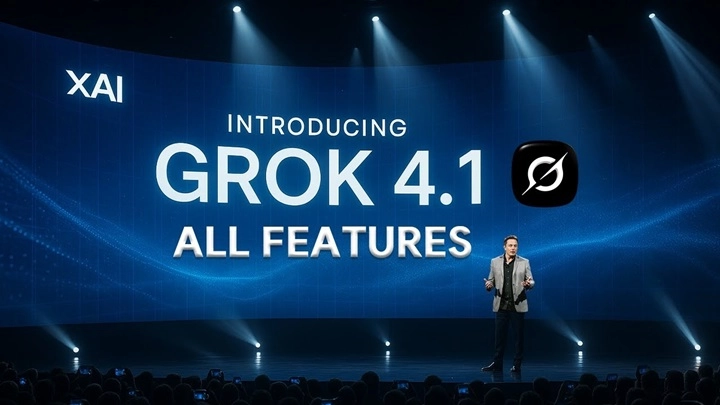
Google was not the only company to release a new model this week. xAI also introduced a new version of Grok, which it offers to users via X. This intermediate model, called Grok 4.1, differentiates itself from its predecessor by better reasoning and providing more friendly responses to the user. xAI wants users chatting with Grok to feel as if they are talking to an intelligent friend. Grok 4.1 appears to be a significant step in this direction. However, like previous Grok models, Grok 4.1 has brought criticism with it. Grok’s tendency to provide non-politically correct answers on sensitive issues has drawn backlash for both Grok and Elon Musk.
“AI Bubble” Concerns Persist


The astronomical rise in technology stocks following the boom in the AI sector is now creating fear of a crash in the markets. This issue has been frequently discussed in the AI world recently. This week, both Google CEO Sundar Pichai and Nvidia CEO Jensen Huang addressed the matter.
Pichai, acknowledging the irrational elements in the market, stated that Google could also be affected if the AI bubble bursts, saying, “No company will be immune, including us.” On the other hand, Jensen Huang said he saw no sign of such a danger. The Nvidia CEO dismissed these concerns, stating, “There’s been a lot of talk about an AI bubble. From our perspective, we see something very different.”
Producers Struggle to Meet GPU and DRAM Demand
Massive investments in AI infrastructure by both countries and the private sector have led to an explosion in demand for GPUs (Graphics Processing Units) and DRAM (Dynamic Random-Access Memory). In fact, producers are now struggling to meet demand. SK Hynix, one of the world’s largest memory manufacturers, plans to increase production eightfold to keep up with the enormous DRAM demand driven by AI. However, even this might not be enough. Nvidia, perhaps foreseeing this, decided to switch to the LPDDR memory type—normally used in smartphones—in its AI servers. This decision could double memory prices next year.
Meanwhile, GPU sales have not slowed down. Nvidia CEO Jensen Huang announced that cloud GPUs are completely sold out. Thanks to massive orders from companies like Microsoft, Meta, Amazon, and Alphabet, Nvidia is now selling GPUs even before their production is complete. This situation is making it increasingly difficult for smaller-scale AI startups to procure GPUs.
Jeff Bezos Joins Elon Musk in Launching His Own AI Company

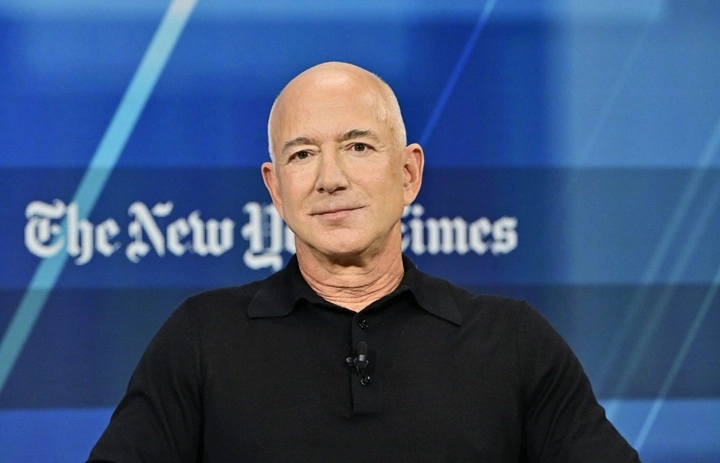
Jeff Bezos, the founder of Amazon, is establishing his own AI company. This new venture, currently referred to as “Project Prometheus,” will be an independent Jeff Bezos initiative, similar to Blue Origin.
Starting with a significant investment of $6.2 billion, Project Prometheus will focus on a different area rather than developing competitors to models like ChatGPT and Grok. The main objective of this new company will be to develop AI for use in the production of next-generation computers, automobiles, spacecraft, and similar innovative technologies. The robotics and pharmaceutical sectors will also be among Project Prometheus‘s focus areas.
AI Tools Introduced This Week

- Meta’s new segmentation model, SAM 3, can recognize and isolate objects in videos one by one. This allows users to edit only specific parts of the content.
- SAM 3D, on the other hand, can create three-dimensional environments based on a single image.
- Tencent’s new open-source model, Hunyuan Video 1.5, yields quite successful results despite being an extremely compact model. Hunyuan Video 1.5’s compact structure enables this generative AI to be run locally even on a regular computer with an average GPU.
- WeatherNext 2, published by Google DeepMind, can produce weather forecasts much faster and more accurately than traditional models.
AI World: Quick Takes
- The copyright debate in AI production has spilled over to the user side. A lawsuit has been filed against a 27-year-old Japanese man who illegally copied a brand’s visuals using the Stable Diffusion model and offered them for sale as a book cover.
- OpenAI announced a free ChatGPT version for teachers. The version, offering unlimited messages, file uploads, and image generation with GPT-5.1, will be available until June 2027.
- Perplexity brought its AI-powered web browser, Comet, introduced in July, to mobile. Comet, a rival to Chrome, began rolling out to Android users this week.
- OpenAI announced that it will expand its group chat feature, which it started testing in a few countries like Japan, New Zealand, and South Korea a week ago, worldwide.
- Google started placing ads in its recently launched AI-based search mode, AI Mode.
- Speaking at an AI-focused event this week, Vladimir Putin announced that Russia will make significant investments in the AI sector and will build a strong AI infrastructure thanks to the resources they possess in nuclear energy.
- Microsoft and Nvidia announced that they will invest a total of $15 billion in Anthropic, which is becoming increasingly ambitious in the AI field.
You Might Also Like;
- We Selected 10 Series Similar to Stranger Things for Those Who Love It
- Where and How is Silver Used in Electric Vehicles?
- Hyundai Unveils Its Multi-Purpose Wheeled Robot
-

-

-

-

-

-

-

-
-
-
-
-