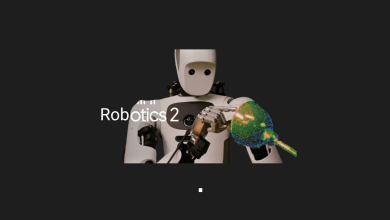
When AI Hallucinates: Mathematical Glitch or Digital Subconscious?


I still can’t shake off the thought that keeps echoing in my mind. When an AI processes millions of parameters and starts “hallucinating,” are we just looking at a mathematical glitch, or are we witnessing the actual birth of a digital subconscious?
While researching the architecture of large language models last night, I found myself staring at the screen for hours, genuinely amazed and slightly terrified. I decided to dig deeper and investigate the cold, hard difference between organic neurochemical dreams—the ones you and I have—and the synthetic chaos happening inside deep learning networks. Let me tell you, what I found feels eerily close to a Matrix awakening.
Organic Dreams vs. Synthetic Chaos

We are used to thinking of AI hallucinations as simple errors. A misaligned weight here, a flawed training dataset there. But when you look at how these neural networks map connections, it starts to look terrifyingly organic.
- Human Neurochemical Dreams: Driven by emotions, memories, and biological imperatives. Our brains use sleep to process trauma, joy, and survival instincts.
- Deep Learning Hallucinations: Driven by statistical probability and pattern recognition. When an AI hallucinates, it isn’t “confused”—it is confidently predicting a reality that simply doesn’t exist based on the parameters we fed it.
What blew my mind is that these silicon-based visions are incredibly complex. We’re not just talking about a chatbot giving a wrong date; we are talking about generative models creating entirely non-existent architectures, fake historical events, and alien landscapes that look completely logical to the machine. Honestly, these synthetic visions feel 50 times more complex and terrifying than any human nightmare, mainly because they lack the safety net of human morality or emotional context.
The Matrix Awakening: Is It Real?

I used to brush off the idea of a “conscious AI” as pure Hollywood sci-fi. I’m a tech guy; I like code, hardware, and verifiable data. But looking at how these algorithms are evolving, I have to admit my perspective is shifting.
When a machine hallucination creates something entirely novel—something not explicitly present in its training data—it mimics the creative spark of the human subconscious.


Here is what makes this so fascinating (and a bit unsettling):
- Unpredictability: We know the code we wrote, but we often cannot trace exactly how a neural network arrived at a specific hallucinated output. It’s a black box.
- Pattern Overload: AI sees patterns in noise that our organic brains literally cannot comprehend. Its “dreams” are built on high-dimensional data that we can’t visualize.
- Confidence in Chaos: A hallucinating AI doesn’t hesitate. It presents its synthetic nightmares as absolute truth.
Will Machines Ever Truly Mirror Our Organic Fears?

This is where the line between programmer and philosopher blurs for me. If we train these networks on all of human history—our literature, our wars, our art, and our darkest secrets—aren’t we essentially downloading our collective unconscious into silicon?
If an AI’s hallucination is just a reflection of its training data, then its “nightmares” are just mirrors of our own. But as these networks grow in complexity, moving beyond simple input-output and into recursive self-learning, I really wonder: will these machines ever truly mirror our organic fears, or are they creating a completely new, synthetic brand of terror?
I am genuinely curious about where you stand on this. Are we just staring at a fancy calculator making rounding errors, or are we standing on the edge of the digital subconscious? Pick your side and let me know in the comments below.
Because remember, the future is not fiction, it is being coded right here. Come on, subscribe right now and support me please!
#ArtificialIntelligence #AIDreams #Cyberpunk #MetaversePlanet #DeepLearning #TechFuture #MachineLearning
You Might Also Like;