Why Dune’s “No AI” World Feels More Relevant Than Ever


Watching Dune for the umpteenth time, I found myself ignoring the spice wars and the political drama for a second. Instead, I was staring at the screen, struck by a weird, quiet realization: there isn’t a single circuit board, robotic assistant, or smart droid in that entire galaxy.
In a universe where humanity has mastered interstellar travel and can bend space-time, they are doing it all with human minds—Mentats, Navigators, and Bene Gesserit—instead of silicon chips. It’s a jarring contrast to the Star Wars galaxy, where droids are practically part of the furniture. Then it hit me: the Butlerian Jihad.
In Frank Herbert’s lore, humanity didn’t just forget how to build AI; they fought a grueling, existential war to scrub it from existence. “Thou shalt not make a machine in the likeness of a human mind.” That isn’t just a rule; it’s the cornerstone of their civilization.
The Modern Parallel: Are We Approaching Our Own Jihad?

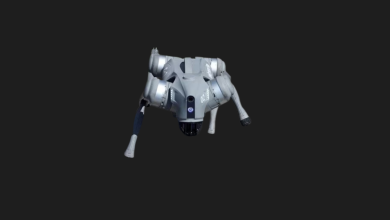
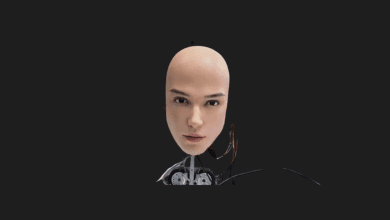
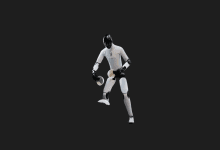
I’ve been spending my days testing new LLMs, playing with humanoid robot prototypes, and watching companies race to reach AGI. It’s exhilarating, sure. But lately, I’ve started to feel a strange, cold shiver. We are currently integrating AI into our lives at a pace that makes the last decade of tech evolution look like a turtle race.
When I see these machines learning to walk, talk, and reason, I have to ask: Are we sleepwalking into a situation where we might eventually need our own version of the Butlerian Jihad?
The difference between us and the people of Dune is that we aren’t being forced by machines yet; we are the ones inviting them in, upgrading our lives with them, and becoming entirely dependent on them.

The Cost of Convenience

Think about it. We’re handing over our writing, our art, our coding, and even our decision-making processes to algorithms. It’s convenient, absolutely. But what happens when we lose the “human” touch in the process?
In Dune, the lack of AI forced humanity to evolve internally. They created human calculators (Mentats) and expanded human consciousness to navigate the stars. Today, we are doing the exact opposite. We are outsourcing our mental evolution to the cloud. I honestly don’t know which path is more dangerous: the total suppression of machines or the total surrender to them.
Am I Being Paranoiac?
Maybe I’m just letting the sci-fi tropes get to me. After all, a tool is only as good as its maker, right? But the speed of this evolution is what scares me—and excites me. It’s not just a gradual improvement; it’s an exponential curve that we are barely keeping up with.
I don’t have the answer yet. I haven’t picked a side in the war between “humanity-first” and “technological-singularity.” I’m just an observer, like many of you, trying to make sense of the code being written for our future every single day. One thing is certain: the future isn’t some distant dream anymore; it’s being deployed in the next software update.
The line between “helpful tool” and “uncontrollable entity” is blurring faster than we can draw it.
Where do you draw the line? Are you comfortable with AI doing the heavy lifting for your creativity, or do you feel like we’re accidentally building a cage for our own intellect? Let’s talk about it.
You Might Also Like;