Have you ever wondered why some sci-fi concepts feel so incredibly close to reality? When I first read about this new breakthrough from Johns Hopkins University, my mind instantly went to the self-repairing ships in Interstellar or the adapting code in The Matrix. But this isn’t science fiction, Spartans—this is our own biology.
We’ve been told for years that if you damage your optic nerves or central nervous system, that’s it. Game over. Central neurons supposedly lack the capacity to regenerate. But researchers just discovered a hidden “biological backup plan” that could literally change how we treat vision loss and neurological damage forever.
The “Sprouting” Phenomenon: Nature’s Neural Rerouting
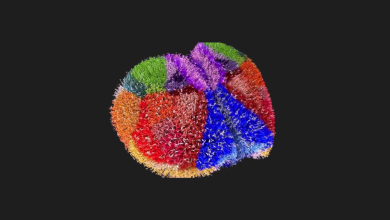
Instead of regenerating dead cells, the surviving neurons actually branch out and build entirely new connections.
- No New Cells, Just Better Networking: The damaged neurons don’t come back from the dead. Instead, the surviving cells step up and carry the weight.
- The “Sprouting” Process: Think of it like a decentralized Web3 network or a quantum error-correction protocol. When one node goes down, the remaining nodes stretch out, developing new extensions to bridge the gap and restore communication with the brain.
- Near-Total Connection Recovery: In the lab mice they observed, the sheer volume of new connections eventually reached levels incredibly close to what they had before the traumatic damage.
I always find it fascinating how biological systems operate so much like the advanced AI and tech architectures we analyze every day. The mammalian body is basically running its own dynamic rerouting algorithms!
A Surprising Twist: The Gender Gap in Recovery
While digging through the research, one detail really caught me off guard. The recovery process isn’t equal across the board.
- Male mice demonstrated a much faster and highly comprehensive recovery after the nerve damage.
- Female mice experienced a noticeably slower “sprouting” process, leading to a much more limited visual healing.
We still don’t have the full picture of why this biological hardware discrepancy exists, but it actually mirrors human medical data. We already know that women often experience prolonged symptoms from concussions and traumatic brain injuries compared to men. If scientists can isolate the exact variables slowing down the female recovery mechanism, it could unlock highly targeted, accelerated therapies for everyone.
Stealing Source Code from Snails and Fish

If we want to hack the human body’s limitations, we have to look at the species that already have the source code.
- Apple Snails: Just last year, research showed these little guys possess the genetic machinery to literally regrow their eyes from scratch.
- Zebrafish: Another brilliant team successfully triggered partial vision recovery in mice by mimicking the natural regenerative processes found in zebrafish.
We aren’t quite at the point where a simple treatment will instantly restore 20/20 vision after severe trauma. But knowing that mammals already possess this dormant, powerful “sprouting” mechanism means the underlying hardware is there—we just need to figure out how to push the right firmware update to our nervous systems.
This discovery proves that our capacity to adapt is far greater than traditional science gave it credit for.
So, I have to ask you: If science eventually perfects this biological rewiring, do you think we’ll stop at just healing injuries, or will we start trying to upgrade our natural senses entirely? Drop your thoughts below!
You Might Also Like;