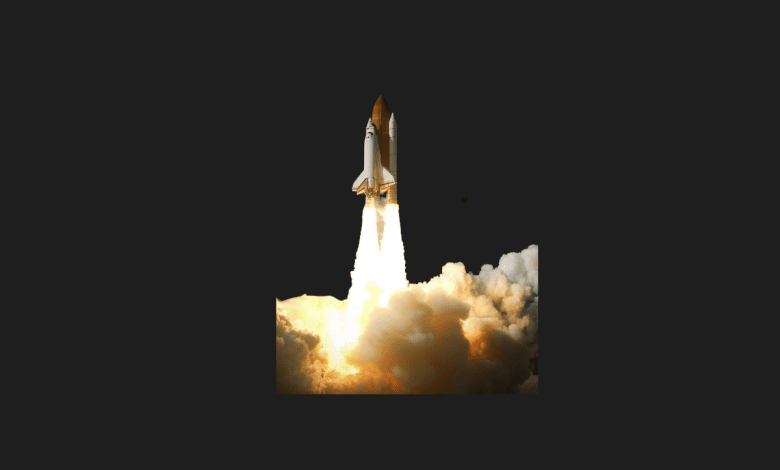

I’ve been tracking future tech and off-world developments for years, and honestly, nothing gives me goosebumps quite like a rocket launch. It used to be a rare, stop-everything-you-are-doing event. Now? It’s a weekly schedule. But don’t let the sheer frequency of these launches fool you; the engineering happening above our heads right now is pure magic.
As I was compiling this month’s space launch roster for you, I realized just how crowded our orbit is getting. We aren’t just sending up basic satellites anymore. From SpaceX pushing the absolute limits of physics with Starship to international space agencies ramping up their deep-space infrastructure, this month is packed with heavy hitters.
Instead of just giving you a dry list of dates, I wanted to break down what’s actually happening out there, why these missions matter, and what you should be keeping your eyes on.
The Global Space Race is Heating Up

When I look at this schedule, the first thing that jumps out at me is the massive diversity of the payloads and the vehicles. This isn’t just a one-company show anymore. Yes, SpaceX is dominating the cadence with their Falcon 9 fleet, but we are seeing critical infrastructure launches from China, massive broadband deployments from United Launch Alliance (ULA) and Arianespace, and precision orbital deliveries from Rocket Lab.
Here is why this month is particularly fascinating:
- The May 13th Bottleneck: Mark your calendars. We have three massive launches scheduled in a single day, including a highly classified NRO mission, a Dragon cargo run to the ISS, and the crown jewel: Starship Flight 12.
- Project Kuiper Steps Up: Amazon is fighting hard for its piece of the low-Earth orbit (LEO) broadband pie. We are seeing major launches utilizing both the Atlas V and the new Ariane 64 to get their satellites operational.
- China’s Deep Space Ambitions: The Long March rockets are busy this month. Between the Tianzhou-10 cargo mission and testing the new Long March 10B, China is aggressively building out its orbital capabilities.
The Complete Launch Schedule Table

I’ve organized all the confirmed and projected launches into a clean table so you can easily track what’s flying, who’s flying it, and where it’s lifting off from.


(Note: Spaceflight is notoriously tricky. Weather, technical scrubs, and range violations can shift these dates. I always recommend checking live feeds as the date approaches.)
| Date / Time (GMT+3) | Mission / Payload | Launch Vehicle | Agency / Company | Launch Location |
| May 6 (5:35 AM) | Starlink Group 17-29 | Falcon 9 Block 5 | SpaceX | Vandenberg SFB, CA |
| May 10 (1:00 AM) | Tianzhou-10 | Long March 7 | CASC | Wenchang Launch Site, China |
| May 10 (5:00 PM) | Starlink Group 17-37 | Falcon 9 Block 5 | SpaceX | Vandenberg SFB, CA |
| May 12 (2:55 PM) | Unknown Payload | Long March 6A | CASC | Taiyuan Launch Center, China |
| May 13 (1:15 AM) | NROL-172 | Falcon 9 Block 5 | SpaceX | Vandenberg SFB, CA |
| May 13 (1:30 AM) | Flight 12 | Starship | SpaceX | Starbase, TX |
| May 13 (2:16 AM) | Dragon CRS-2 SpX-34 | Falcon 9 Block 5 | SpaceX | Cape Canaveral SFS, FL |
| May 16 (5:11 AM) | Starlink Group 17-42 | Falcon 9 Block 5 | SpaceX | Vandenberg SFB, CA |
| May 19 (6:52 AM) | SMILE (Solar wind) | Vega-C | Avio S.p.A | Guiana Space Centre |
| May 22 (Projected) | Amazon Leo (LA-07) | Atlas V 551 | ULA | Cape Canaveral SFS, FL |
| May 22 (12:30 PM) | Viva La StriX | Electron | Rocket Lab | Mahia Peninsula, NZ |
| May 26 (7:00 PM) | Unknown Payload | Long March 7A | CASC | Wenchang Launch Site, China |
| May TBD | Demo Flight | Solid-Fuel SLV | South Korean ADD | Sea Launch |
| May TBD | Spectrum | Onward and Upward | Isar Aerospace | Andøya Spaceport |
| May TBD | Demo Flight | Long March 10B | CASC | Wenchang Launch Site, China |
| May TBD | Unknown Payload | Zhuque-2E | LandSpace | Jiuquan Launch Center, China |
| May TBD | Amazon Leo (LE-03) | Ariane 64 Block 2 | Arianespace | Guiana Space Centre |
| May TBD | The Grain Goddess | Electron | Rocket Lab | Mahia Peninsula, NZ |
| May TBD | 16 x Rassvet-3 | Soyuz 2.1b | ROSCOSMOS | Plesetsk Cosmodrome, Russia |
| May TBD | Swift Rescue Mission | Pegasus XL | TBD | TBD |
Mission Highlights: What I’m Watching Closely

Looking at that table, a few missions immediately grab my attention. Let’s break down the most critical events.
Starship Flight 12: Pushing the Envelope
I’ll be honest, no matter how many times I watch Starship launch, the sheer scale of it breaks my brain. Flight 12 is scheduled from the Starbase facility in Texas. If you’ve been following the rapid iteration of the Starship program, you know that every single flight aims to test a new, extreme parameter.
Whether they are trying another wild catch with the “Mechazilla” arms or pushing the raptor engines for longer in-space burns, this is the architecture that will eventually take us back to the Moon and onward to Mars. I highly recommend tuning into the live stream for this one; the visuals are always cinematic.
The Starlink Machine Never Sleeps
Notice how many Falcon 9 launches are dedicated to Starlink (Groups 17-29, 17-37, 17-42)? SpaceX has turned orbital logistics into a boring, routine delivery service—and I mean “boring” as the highest compliment an engineer can give.
By constantly launching these batches from Vandenberg, they are densifying their global network. If you live in a remote area or follow rural tech setups like I do, these launches are the backbone of next-generation internet accessibility.
Project Kuiper Enters the Fray
Amazon is tired of letting Starlink have all the fun. The two Amazon Leo missions are massive moves. They are using ULA’s reliable Atlas V out of Florida and Arianespace’s new Ariane 64 out of French Guiana. This dual-launch strategy shows how urgently Amazon wants its satellite constellation operational. Competition in LEO broadband is going to drive down prices and force better tech, which is a win for all of us.
Rocket Lab’s Precision Drops
Never sleep on Rocket Lab. Their Viva La StriX and The Grain Goddess Provides missions out of New Zealand using the Electron rocket are perfect examples of how the industry has diversified. We don’t always need a massive Falcon 9. For dedicated, small satellite payloads that need precise orbital insertion, Rocket Lab has carved out a brilliant, highly reliable niche.
Where to Watch and Pro-Tips

If you are planning to catch these live, the location matters just as much as the rocket.
- Vandenberg SFB (California): These launches often head south over the Pacific. If the timing is right (usually right after sunset or before sunrise), they create massive, glowing “space jellyfish” in the sky as the exhaust plumes catch the high-altitude sunlight.
- Kennedy Space Center / Cape Canaveral (Florida): The classic. If you are ever in the area for a launch, places like Playalinda Beach or the Titusville waterfront offer incredible views and you can actually feel the sound waves hitting your chest.
- Starbase (Texas): This is the wild west of rocketry. Starship launches from Boca Chica are raw, incredibly loud, and heavily covered by independent streamers who set up cameras miles deep into the wetlands.
Orbit is getting crowded, and the technology is iterating faster than we can almost write about it. I spend a lot of my time diving into the code and systems behind web platforms, but seeing that hardware physically leave the atmosphere puts all of our technological progress into a totally different perspective.
Looking at this month’s massive payload schedule, I have to ask: Do you think the rapid commercialization of space (like Amazon and SpaceX fighting for internet dominance) is accelerating our path to becoming an interplanetary species, or is it just crowding our skies? Let me know what you think!
You Might Also Like;