Agent Hospital: Inside the World’s First Fully AI Medical Center


I have to admit, when I first stumbled upon the reports coming out of Tsinghua University, I had to re-read the data twice to make sure my eyes weren’t playing tricks on me. We talk about artificial intelligence disrupting industries every single day here, but healthcare? That is a uniquely human domain. Or at least, it was.
Enter Agent Hospital, the world’s very first fully AI-driven medical facility.
Let me be perfectly clear: this isn’t a hospital with a few robotic arms assisting surgeons or an AI chatbot booking appointments. This is a complete, virtual facility where zero human doctors exist. The doctors are AI, the nurses are AI, and the entire diagnostic workflow is run by autonomous agents. I spent hours digging into how this actually works, and honestly, the implications are both incredibly exciting and slightly terrifying. Let’s break down why this is a massive turning point for the future of medicine.
What Exactly is Agent Hospital?

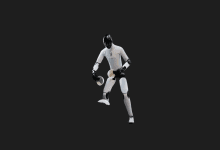
When I first pictured an “AI hospital,” I imagined a physical building packed with Boston Dynamics-style humanoids walking the halls. The reality is far more sophisticated, though entirely digital.
Developed by researchers at China’s Tsinghua University, Agent Hospital is a simulated virtual environment powered by large language models (LLMs). It operates exactly like a real-world medical center, complete with specialized departments, consultation rooms, and examination wards.
Inside this digital ecosystem, autonomous AI agents are assigned specific roles:

- AI Physicians: Diagnosing illnesses and prescribing treatments.
- AI Nurses: Managing daily care and patient follow-ups.
- AI Patients: Virtual entities with specific, generated symptoms and medical histories used to test the system.
Instead of physical beds, the “hospital” processes massive amounts of medical data and patient profiles, running them through rigorous diagnostic pathways.
The Jaw-Dropping Numbers: Speed Meets Precision
What truly shocked me wasn’t just the fact that they built this system, but how incredibly well it performed. When we talk about human doctors, we factor in fatigue, emotional burnout, and the sheer limit of hours in a day. Algorithms don’t need sleep, and the data reflects that beautifully.
10,000 Patients in a Blink
During its initial testing phase, the AI agents in this virtual hospital successfully diagnosed and treated 10,000 patients in just a few days.
To put that into perspective:
- A highly experienced human doctor might see around 15-20 patients a day.
- To reach that 10,000-patient milestone, it would take a real human doctor roughly two full years of non-stop work.
The 93.06% Accuracy Rate
Speed is meaningless if the diagnoses are wrong, right? That was my immediate skepticism. But the researchers tested the AI doctors using the MedQA dataset (which includes questions from the US Medical Licensing Examination).
The result? A staggering 93.06% accuracy rate across major respiratory diseases. The AI wasn’t just guessing; it was cross-referencing symptoms, analyzing medical literature, and outputting highly accurate treatment plans faster than a human could even read the patient’s chart.
“We are no longer looking at AI as just an assistant. In environments like Agent Hospital, the AI is the chief of medicine, the resident, and the attending physician all rolled into one.”
Why This Matters: More Than Just a Simulation
I know what you’re thinking because I thought the exact same thing: I am not letting a virtual algorithm treat my physical body. But the immediate goal of Agent Hospital isn’t to replace your local physician. It is designed to act as an ultimate training ground and a massive data processor. Here is how I see this changing the game:
- Risk-Free Training for Real Doctors: Human medical students can enter this virtual hospital and practice diagnosing rare, complex diseases on “AI patients” without any risk to human life. It’s like a hyper-realistic flight simulator, but for medicine.
- Tackling the Global Doctor Shortage: We are facing a massive global shortage of healthcare professionals. By deploying systems trained in environments like Agent Hospital, we can offer instant, highly accurate preliminary diagnoses to people in remote areas who don’t have access to specialists.
- Predicting Pandemics: If you can simulate thousands of patients in days, you can simulate how a new virus might spread and how different treatment protocols would work in a fraction of the time it takes in the real world.
My Take: Will Algorithms Replace Stethoscopes?
If I’m being completely honest, the speed and accuracy of Agent Hospital are nothing short of perfect. As a tech enthusiast, I am mesmerized by how efficiently these language models have adapted to complex medical reasoning.
However, medicine is as much an art as it is a science. When I’m sick, I don’t just want data processing; I want empathy. I want a human to look me in the eye and tell me it’s going to be okay. A soulless algorithm, no matter how brilliantly coded, cannot hold your hand when giving bad news.
Agent Hospital proves that AI can handle the heavy lifting of diagnosis and data analysis better and faster than we ever could. But the true future of medicine won’t be AI replacing humans—it will be human doctors, armed with the god-like processing power of systems like Agent Hospital, delivering care that is both mathematically perfect and deeply compassionate.
I’ve shared my thoughts, but this is a heavy topic and I really want to know where you stand. If you had a mysterious, hard-to-diagnose illness, would you trust an AI doctor with a 93% success rate, or would you still demand a human doctor even if it meant waiting months for an answer? Let’s talk about it below!
You Might Also Like;