
I’ve been tracking OpenAI’s moves like a hawk for years now. We all knew it was coming. You don’t build the world’s most powerful artificial intelligence and just let it live inside a browser tab forever. Rumors were flying about a “ChatGPT Phone” or some Jony Ive-designed magical slab of glass that would kill the iPhone.
But the reality? It’s much more subtle, and honestly, I think it’s brilliant.
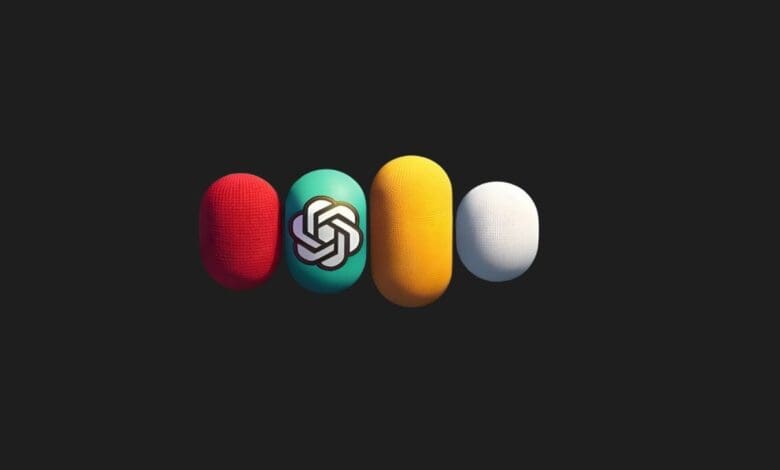
According to the latest leaks I’ve dug into, OpenAI is officially stepping into the hardware ring. But they aren’t trying to replace the screen in your pocket—at least, not yet. They are coming for your ears. The project is codenamed “Dime,” and it’s an AI-first pair of headphones slated for 2026.
Here is why I think this pivot from a “smartphone killer” to a “screenless wearable” tells us everything about the future of AI.
The Pivot: Why Not a Phone?

Let’s be real for a second. Building a smartphone in this economy is a nightmare. I read earlier reports that OpenAI was originally exploring a device with its own massive processing power—basically a supercomputer in your pocket.
However, the hardware realities hit hard.

- The Cost: Building a phone that can run local LLMs (Large Language Models) requires expensive chips and massive batteries.
- The Supply Chain: There is a global shortage of HBM (High Bandwidth Memory) chips, which are essential for on-device AI.
- The Competition: Trying to beat Apple and Samsung at their own game on the first try? That’s suicide.
So, they scrapped the complex phone idea. Instead, they are focusing on a device that relies on the cloud and focuses on pure interaction.
Meet “Dime”: The “Her” Moment
The device, codenamed Dime, represents a philosophy that Sam Altman has been hinting at for a while. He has described the ideal AI hardware as something “calmer and more peaceful” than a smartphone.
And I agree with him. My phone is a source of anxiety. It buzzes, it flashes, it demands my eyes. A screenless device—likely an earbud or headphone—changes the dynamic entirely.
Here is what we know about Dime so far:
- No Screen: It is purely audio-driven.
- Date: Expected in 2026.
- The Vibe: It’s about being present. Imagine walking down the street, looking at the architecture, and asking your AI about the history of the building without ever looking down at a screen.
It feels like we are inching closer to the operating system from the movie Her. Just a voice in your ear that knows everything, helps with everything, and doesn’t distract you from the real world.
The Manufacturing Powerhouse
This isn’t a Kickstarter project. OpenAI is bringing out the big guns. Reports indicate they are in talks with Foxconn and Luxshare. These are the same titans that build iPhones and other premium tech. This tells me two things:
- Scale: They plan to sell millions of these, not thousands.
- Quality: They want Apple-level build quality.
Chris Lehane, OpenAI’s VP of Global Affairs, has confirmed they are actively developing hardware. While he kept the details vague, the improved Advanced Voice Mode in ChatGPT is clearly the software beta test for this hardware product.
Why “Screenless” is the True Future

I’ve tested the Humane AI Pin and the Rabbit R1. To be honest, they were disappointments. They tried to do too much and failed at the basics.
OpenAI has a massive advantage: They own the brain. Other devices failed because the AI was slow or hallucinated. OpenAI controls the model. By stripping away the screen and focusing on audio, they play to their strength. Voice is the most natural way to communicate. If “Dime” can offer real-time translation, instant fact-checking, and emotional intelligence without latency, it won’t just be a headphone; it will be a second brain.
My Take
I’m excited, but I’m also cautious. The graveyard of tech wearables is full of ambitious projects. But if anyone can make “ambient computing” work, it’s the team that started this whole AI revolution.
I’d rather have a perfect audio assistant than a mediocre smartphone.
What about you? Would you wear an AI device that listens to everything but has no screen, or are you too attached to your visual apps to let go?
You Might Also Like;