Pack Your Bags (And Your Life Savings): The $250,000 Moon Hotel Is Taking Reservations


I’ve always been fascinated by the concept of “The Final Frontier,” but for the longest time, it felt like a club where you needed to be either a NASA astronaut or a multi-billionaire like Elon Musk or Jeff Bezos to get an invite. However, I stumbled upon some news this week that made me stop and check my bank account (and then sigh deeply).
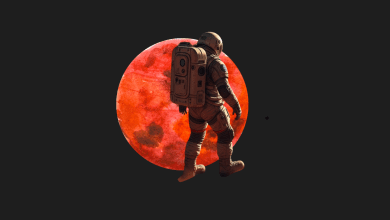
A California-based startup called GRU Space has officially started taking deposits for a hotel stay on the Moon. We aren’t talking about a quick orbit or a flyby; we’re talking about actually sleeping on the lunar surface.
I’ll be honest: when I first saw the headline, I thought it was another “vaporware” project designed to grab headlines. But the more I looked into Skyler Chan, the founder, and his technical roadmap, the more I started to wonder if we are witnessing the birth of the “Hilton” of the solar system.
The Visionary Behind the “Lunar Palace”
What caught my eye wasn’t just the price tag—it was the pedigree. Skyler Chan isn’t just some random dreamer; he’s a Berkeley-educated engineer who worked on software at Tesla and was involved in a NASA-backed 3D printing project for space.
When I read his interview, one quote really stuck with me. He said that while SpaceX and others are the “ships” that get us to the new world, you can’t exactly live on a ship forever. You need a destination. You need a home. That is what GRU Space wants to build.
The name “GRU” stands for Galactic Resource Utilization, and it tells you everything you need to know about their philosophy. Instead of hauling every single piece of steel and glass from Earth (which is ridiculously expensive), they want to use what’s already there: Moon dust.

The 2032 Roadmap: From Inflatables to “Moon Bricks”
I’ve looked at a lot of space colonization plans, and most of them fail because they try to do too much too soon. GRU Space seems to have a more “step-by-step” approach that I actually find quite grounded—for a project involving the Moon, anyway.
Here is how I see their timeline playing out:
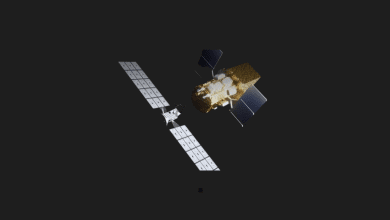
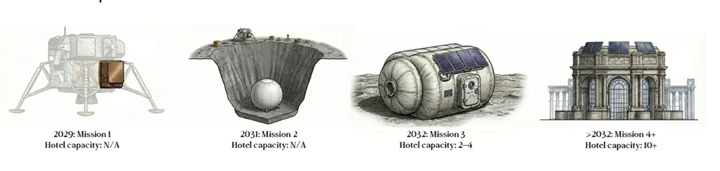
- 2029 – The First Step: They plan to send a 10kg payload to the Moon. The goal here isn’t luxury; it’s testing the tech. They want to see if they can successfully inflate a structure and, more importantly, start turning lunar soil (regolith) into “Moon Bricks.”
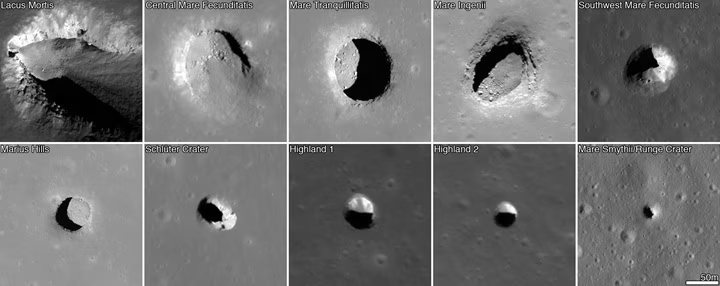
- The Second Mission: They intend to place a larger inflatable structure inside a natural lunar pit (a lava tube). This is brilliant because it provides natural protection from radiation and meteorites.
- 2032 – The Grand Opening: This is the big one. The launch of a four-person inflatable hotel.
Eventually, Chan wants to build a structure inspired by the Palace of the Fine Arts in San Francisco. I find that choice fascinating. Why build a cold, sterile laboratory when you can build a monument? It suggests that the future of space travel isn’t just about survival—it’s about aesthetics and culture.
Is $250,000 a “Deal” or a Gamble?
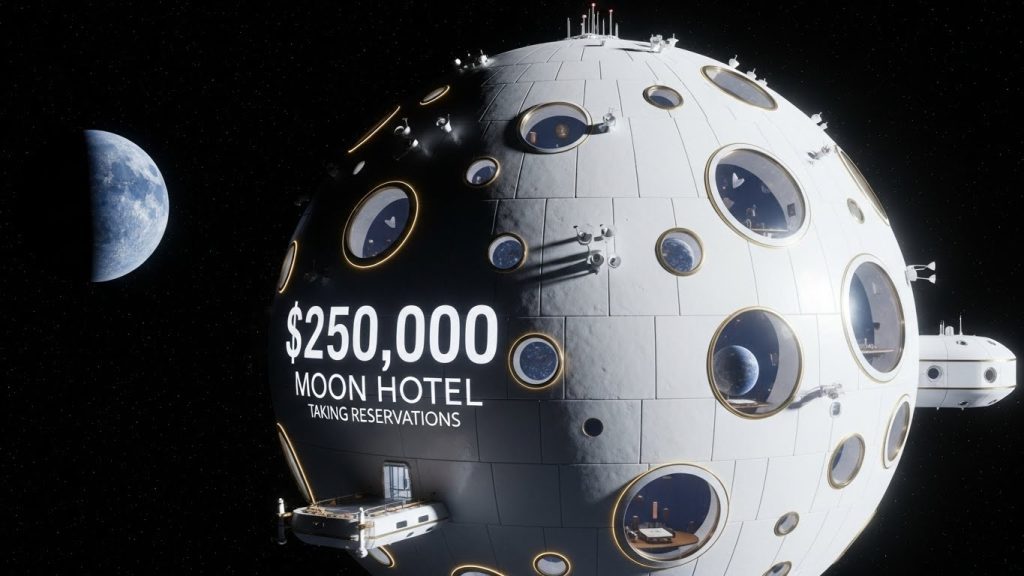
Let’s talk about the elephant in the room: the money. GRU Space is asking for deposits ranging from $250,000 to $1 million.
Now, I know what you’re thinking. “Ugu, that’s a house! That’s a retirement fund!” And you’re right. But in the world of space tourism, this is actually… dare I say, “affordable”? To put it in perspective, a seat on a Virgin Galactic flight—which only gives you a few minutes of weightlessness—costs around $450,000.
Chan’s argument is that there is a “Third Pillar” of customers. We have the government (NASA) and the billionaires (SpaceX/Blue Origin), but there is a massive group of “regular” high-net-worth individuals who want a real experience. If I had the money, would I put a down payment on a lunar room?
I’m torn. On one hand, the company currently only has one full-time employee (Chan himself), which screams “high risk.” On the other hand, they just got backed by Y Combinator, which is basically the gold standard for tech accelerators. They don’t bet on people who are just “playing around.”
The Challenges: Why This Isn’t a Done Deal
I wouldn’t be doing my job if I didn’t point out the massive hurdles here.
- Life Support: Building a hotel is easy. Keeping people breathing, fed, and protected from lunar dust (which is basically tiny shards of glass) is incredibly hard.
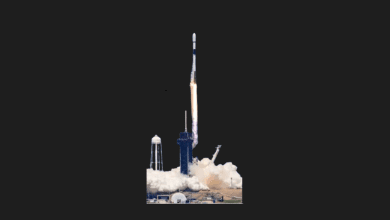
- The Logistics: GRU Space is relying on other companies (like SpaceX or Blue Origin) to provide the “taxi” service. If those companies have delays, the hotel stays empty.
- The “Vibe” Factor: What do you actually do at a Moon hotel? After the initial “Oh my god, I’m on the Moon” moment, you’re in a pressurized tent with three other people. I suspect the “activities” part of lunar tourism will be the next big industry.
My Perspective: The Metaverse and the Moon
As someone who spends a lot of time thinking about the Metaverse, I see a deep connection here. We are moving toward a world where our physical location matters less and our experiences matter more. Whether we are exploring a digital world through a headset or a lunar crater through a space helmet, the goal is the same: expansion.
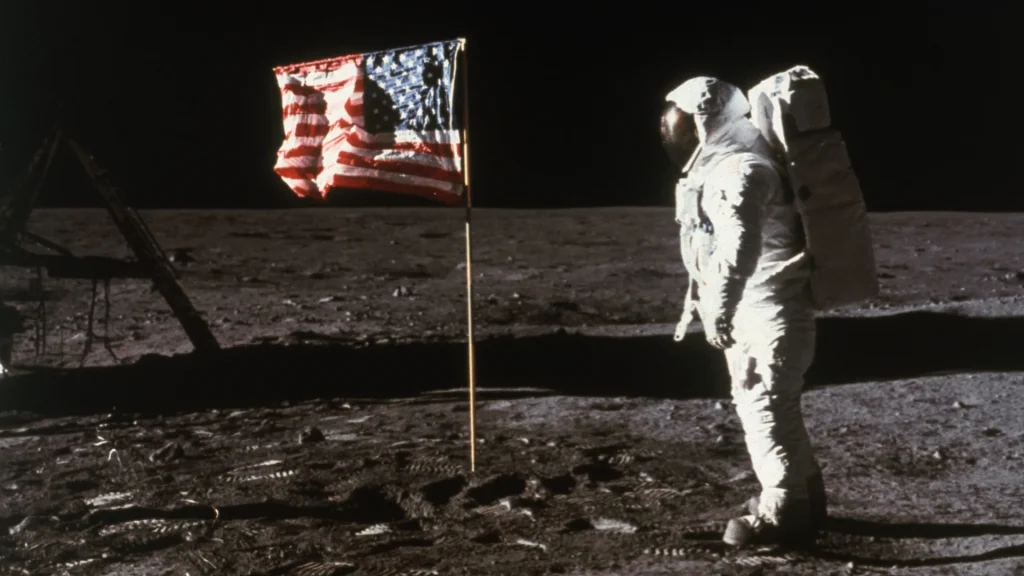
I love the idea that we are moving away from the “Cold War” era of space travel—where it was all about flags and footprints—and into a “Commercial Era” where it’s about hotels, art, and living. It makes the Moon feel less like a barren rock and more like our next neighborhood.
I’m going to be watching GRU Space very closely as they enter the Y Combinator program this year. If they can successfully test those “Moon Bricks” in 2029, the dream of a lunar vacation might actually be more real than any of us imagined.
I have to ask: If you suddenly won the lottery and had $250,000 to spare, would you be the first in line to book a room at the Palace of the Fine Arts on the Moon, or would you much rather stay right here on Earth and watch the livestream from your couch?
You Might Also Like;