Medical Breakthrough: World’s First 3D-Printed Cornea Transplant Performed

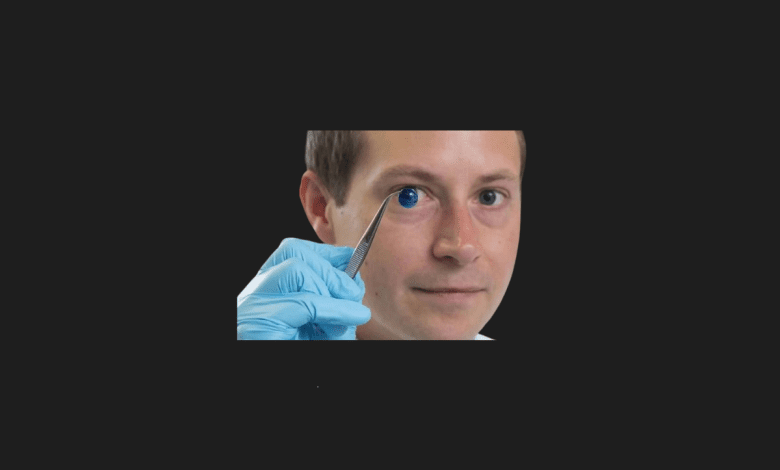

For the first time in the world, a 3D-printed cornea was transplanted into a legally blind patient, and the patient’s vision was successfully restored.
A major advancement has been made in the field of human tissue reproduction. For the first time, a 3D-printed cornea was transplanted into a legally blind patient, and the patient’s vision was successfully restored.
Created by Culturing in the Laboratory

The operation was performed by the Rambam Eye Institute in Haifa, Israel, in collaboration with Precise Bio, a company specializing in regenerative technology and bio-fabrication tissues. The procedure, carried out at the end of October, used an implant created entirely from cultured live human cornea cells produced in the laboratory, instead of donor tissue. This development is significant because it could offer hope to millions of people at risk of corneal vision loss due to injuries, infections, or hereditary conditions.
While cornea transplants generally have a high success rate (approximately 97%) and donated tissue is easily accessible in some developed countries like the US, patient waiting times can reach years in countries without eye banks and centralized tissue supply systems.
The interesting aspect of the 3D printing approach used here is that a single cornea taken from a healthy, deceased donor can be cultured in the lab to create approximately 300 corneal implants. This means the global tissue shortage could be alleviated on a large scale. It is also worth noting that 3D printing cornea technology was actually developed at Newcastle University in the UK in 2018. Precise Bio has developed its own bio-printing system with the contributions of clinicians over the last 10 years. This demonstrates how long the process of translating scientific innovation into practice takes.
The company states that heart tissue, as well as liver and kidney cells, could also be printed using the same technology. Extensive testing and approval processes will, of course, be required for these to be used commercially. However, this progress could provide serious relief to many patients awaiting organ transplants and experiencing tissue shortages in the coming years.


You Might Also Like;