
I’ve read my fair share of corporate whitepapers, but when I sat down with OpenAI’s newly released report, “Economics in the Age of AI,” I honestly got a chill down my spine. This doesn’t read like a standard tech company roadmap. It reads like a survival manual for society.
For a long time, we’ve treated Artificial General Intelligence (AGI) and “superintelligence” as a fun debate for sci-fi nerds. But now, the very people building this technology are ringing the alarm bells. They are flat-out telling us that our current economic and social systems are completely unequipped to handle what is coming.
When AI stops just writing our emails and starts executing complex, month-long projects autonomously, the foundations of how we work, earn, and live will crack. Here is my deep dive into OpenAI’s proposed “New Deal” for the AI era, and why I think we need to start paying serious attention right now.
The Core Problem: Superintelligence Breaks the Old Rules
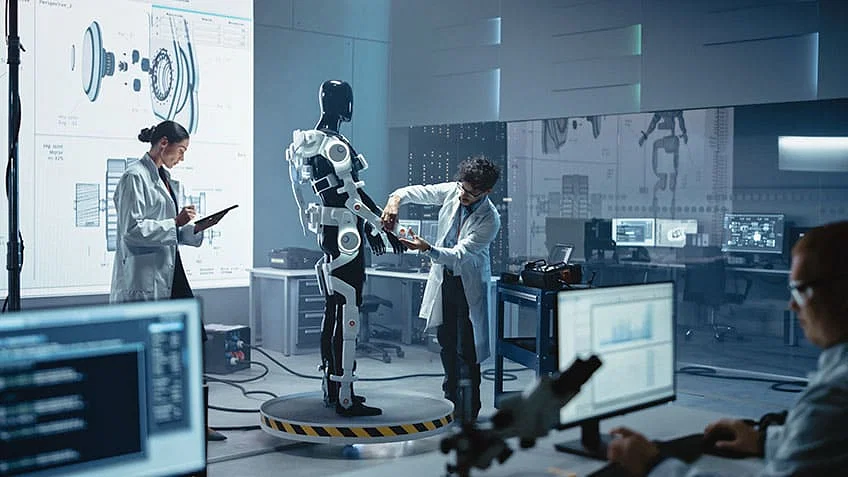
Before we get into the solutions, we have to understand the terrifyingly beautiful problem OpenAI is highlighting.
The report makes it incredibly clear: we are on the precipice of an era where AI will accelerate scientific discoveries, skyrocket productivity, and drastically lower the cost of basic goods and services. Sounds great, right?
But I also see the massive dark cloud they are pointing to. If we let this transition happen without changing our laws, we are looking at widespread job eradication, the collapse of entire industries, and a dystopian scenario where wealth and power are hoarded by a handful of tech monopolies. OpenAI themselves admit that if policy doesn’t catch up to the technology, the societal damage will be catastrophic.


To prevent this techno-feudalism, OpenAI argues we need a massive, systemic overhaul—something akin to the industrial regulations and the “New Deal” that followed the Great Depression.
OpenAI’s 5-Step “New Deal” for the AI Age

OpenAI isn’t just pointing out the problem; they’ve laid out a five-point framework for a new global industrial policy. Let’s break down exactly what they are proposing, and what it actually means for you and me.
1. AI Access as a Fundamental Human Right
Imagine living today without access to electricity or the internet. You’d be completely locked out of the modern economy. OpenAI is proposing that access to AI must be treated as critical public infrastructure. * What this means: Governments need to ensure that powerful AI tools are universally affordable and accessible. We cannot have a society divided into “AI haves” (who can produce at superhuman speeds) and “AI have-nots” (who are left fighting for scraps).
2. The “Public Wealth Fund” (A Universal AI Dividend)
This is the part that really blew my mind. A massive, for-profit tech corporation is essentially advocating for wealth redistribution.
- The Proposal: OpenAI suggests creating a national or global “Public Wealth Fund.” This fund would capture a portion of the astronomical economic gains generated by AI and distribute it directly to citizens as a baseline income.
- My Take: If AI is doing the work of ten million humans, the wealth generated by that digital labor can’t just sit in a Silicon Valley bank account. A universal dividend might be the only way to keep consumer economies afloat when traditional employment shrinks.
3. Rewiring the Tax System: The “Robot Tax”
Right now, our entire civilization is funded by taxing human labor (income tax). But what happens when human labor isn’t the primary driver of the economy anymore?
- The Shift: The report explicitly calls for a dramatic shift in how we collect taxes. If we want to survive, we have to reduce taxes on human labor and heavily increase taxes on corporate profits, capital gains, and automation.
- The Reality Check: They are basically suggesting an “automation tax.” If a company fires 500 accountants and replaces them with an AI model, the company should pay a tax equivalent to a portion of those lost wages to fund society.
4. The 4-Day Workweek (With No Pay Cut)
Finally, something we can all immediately get behind! If AI is making us 50% more productive, why are we still sitting at our desks for 40 hours a week?
- The New Standard: OpenAI suggests that as AI handles the heavy lifting, society should aggressively test and adopt shorter workweeks—specifically highlighting a 32-hour, 4-day workweek without any reduction in base salary.
- Why it matters: The goal of technology was supposed to be freeing humans from drudgery. This policy forces the corporate world to actually deliver on that promise, giving us our time back instead of just demanding more output.
5. The Golden Age of “Human-Centric” Careers
So, what are we actually going to do with our time? OpenAI predicts a massive labor shift toward roles that require deep human connection, empathy, and physical presence.
- The Safe Havens: The report highlights healthcare, elderly care, education, therapy, and community building as the massive growth sectors of the future.
- My Perspective: I completely agree with this. No matter how smart an AI gets, I don’t want a robot holding my hand in a hospital bed, and I don’t want an algorithm acting as a mentor to my child. The premium skills of the future won’t be coding; they will be empathy, emotional intelligence, and human touch.
Is This a Genuine Warning or a PR Masterclass?

As much as I appreciate the depth of this report, I always try to look at these things with a healthy dose of skepticism.
Is OpenAI genuinely trying to save the world, or are they just trying to dictate the terms of their own regulation before governments do it for them? By proposing these massive, societal-level changes, OpenAI is positioning itself not as a reckless disruptor, but as a responsible architect of the future. It’s a brilliant move. They are telling governments: “We are going to build the superintelligence anyway, so here is how you should clean up the mess it makes.”
However, their motives almost don’t matter at this point. The reality is that the transition they are describing is already happening. We are already seeing companies restructure around AI. We are already seeing the anxiety in the job market.
OpenAI explicitly stated that this report is not a “final solution” but the beginning of a global conversation. And frankly, it’s a conversation we are dangerously late to start.
I’m left with a lot of mixed feelings—a combination of awe at what this technology can achieve, and deep anxiety about whether our political leaders are smart enough to implement these safety nets in time.
What about you? Do you think governments will actually step up to tax AI and fund things like a Universal Basic Income, or are we heading straight toward a reality where tech companies hold all the cards? Drop your thoughts in the comments below—I read every single one!
You Might Also Like;