Waymo robotaxis are hitting the highways: A new era in driverless taxi service

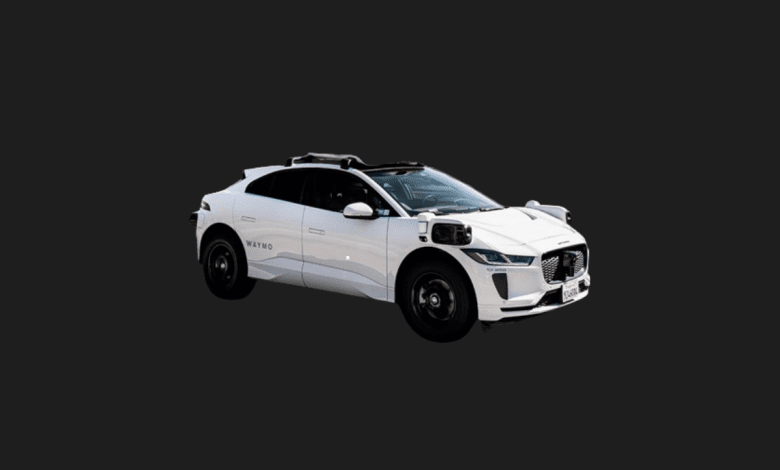

Alphabet’s autonomous vehicle brand, Waymo, is now expanding beyond city limits by offering fully driverless robotaxi services on the highways of San Francisco, Los Angeles, and Phoenix.
There is a trillion-dollar rivalry between Waymo and Tesla in the autonomous taxi service, dubbed “robotaxi.” As this fierce competition continues, Waymo has taken things a step further because the company is no longer content with just city streets.
The brand, which falls under Google’s parent company Alphabet, announced it will now serve passengers on the highways in San Francisco, Los Angeles, and Phoenix. This is a turning point not just for Waymo, but for the future of fully driverless transportation.
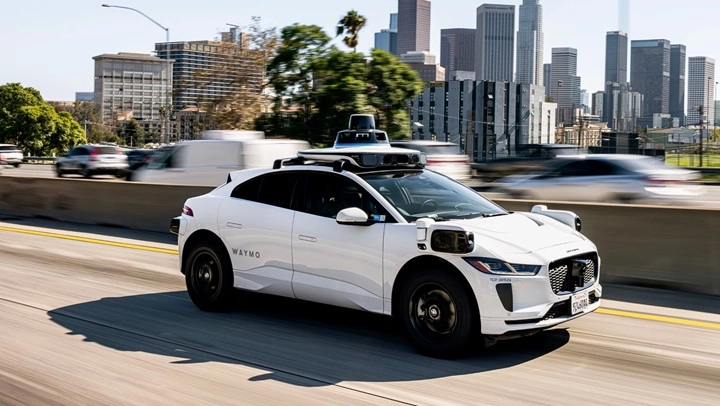
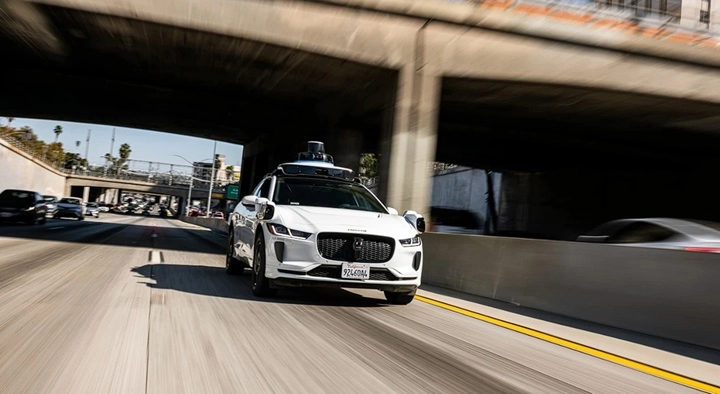
Until now, the company’s robotaxi services were generally limited to city centers. However, highways, with their high speed limits and complex traffic, are considered one of the toughest tests for autonomous systems. Waymo’s move demonstrates the maturity level of its technology. The system is no longer just changing lanes at intersections; it can now merge onto a highway at speeds over 100 km/h (over 62 mph) and navigate fluently among other vehicles.
Waymo’s CEO, Dmitri Dolgov, describes highway driving as “a skill that is easy to learn but difficult to perfect.” In his statement on the matter, Dolgov said, “It took time to make this safe and scalable with a fully driverless system, but we are now ready.”
In this new phase, Waymo’s robotaxis will be able to reach the highway’s maximum speed limit. The company also notes that the vehicle may slightly exceed the limit in specific situations that require it for safety. This transition occurred in coordination with special safety protocols developed with agencies like the California Highway Patrol and the Arizona Department of Public Safety.

In fact, Waymo spent years preparing before reaching this level. The company’s engineers had been testing highway scenarios for over a decade in both simulations and on closed tracks. The system was continuously trained on thousands of potential scenarios, especially lane merging, drivers braking suddenly, and motorcycles splitting lanes. For the past year, Alphabet employees have been participating in highway test drives around San Francisco, Los Angeles, and Phoenix.
Waymo will not be limited to just these three cities. By 2026, it plans to expand to routes in Miami, San Diego, and Washington D.C. It has also been confirmed that public test drives will begin in London.
In the San Francisco Bay Area, the service area has now extended all the way to San Jose; even trips to and from Mineta International Airport are now possible.
Waymo’s expansion onto highways is not just a route extension; it is the beginning of a shift from urban transport to long-distance mobility. Driverless vehicles are now responsible not only for complex intersections but also for miles of highways. This shows that autonomous transportation is no longer just a technology experiment but is on the verge of becoming an ordinary part of daily life.
You Might Also Like;