Artificial Photosynthesis: Turning Carbon Dioxide into Petrol with Solar Energy



Scientists have achieved a significant breakthrough in sustainable energy by converting carbon dioxide and water into the building blocks of petrol using a method that mimics natural photosynthesis.
Chinese researchers have developed a new solar-powered method capable of directly converting carbon dioxide and water into the essential components of petroleum derivatives. This approach, which replicates the photosynthesis process found in nature, is viewed as a critical threshold for reducing reliance on fossil fuels and advancing sustainable fuel production.
Mimicking Nature
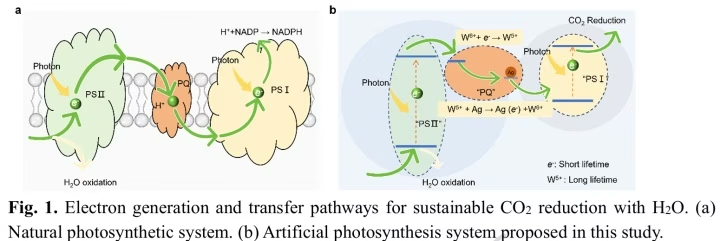
The developed system adapts the photosynthesis mechanism—where plants use sunlight, water, and carbon dioxide to produce energy—into an artificial environment. Researchers state that this method aims to make fuel production significantly more sustainable.
How It Works
To achieve this, the team designed a special material capable of storing small amounts of electrical energy to increase the efficiency of reactions that convert carbon dioxide into useful chemicals.
- Energy Storage: This feature allows energy obtained from sunlight to be used directly in chemical conversions, significantly boosting the overall efficiency of the process.
- Chemical Conversion: When used with catalysts, the system enables the production of carbon monoxide via solar energy. This carbon monoxide can then be processed into liquid hydrocarbons—effectively, petrol-like fuels.
A Solution for Hard-to-Electrify Sectors
This innovation offers a potential alternative solution for sectors that are difficult to electrify, such as aviation and marine transport. In these fields, which require high energy density, sustainable options that can replace traditional liquid fuels are of critical importance.
Compatible with Existing Infrastructure
According to scientists, light-triggered carbon dioxide conversion (photocatalysis) is gaining attention for its ability to both reduce greenhouse gas emissions and alleviate pressure on natural resources.


One of the most attractive applications in this field is “solar fuels,” which possess properties similar to fossil fuels.
- Seamless Integration: These fuels can work with existing fuel infrastructure, meaning they can be adopted without requiring radical changes to current energy systems.
- The Process: The workflow involves converting carbon dioxide first into intermediate chemicals like carbon monoxide, and subsequently into liquid hydrocarbons.
Overcoming Previous Limitations

Researchers noted that previous systems for solar fuel production relied on certain organic substances to accelerate reactions. Since these substances were fully consumed during the process, those methods were disadvantaged in terms of both sustainability and cost.
In natural photosynthesis, this issue is overcome by special molecules that temporarily store electrons generated by light. Inspired by this mechanism, the team integrated a similar charge-storage approach into their artificial photosynthesis system.
The Solution: A silver-modified tungsten trioxide material was developed. It can store electrons when exposed to light and release them when needed to maintain chemical conversions. Tests confirmed that the reactions occur successfully even under natural sunlight.
The team emphasizes that this approach eliminates the need for unsustainable additives while offering a flexible design principle for independent, highly efficient photocatalytic systems.
You Might Also Like;