I’ve watched countless videos of humanoid robots doing parkour, dancing to pop music, or carefully picking up an apple in a pristine laboratory. While those viral clips are always fun to watch, I constantly find myself asking the same question: “Okay, but when do they actually get to work in the real world?” Well, it seems that day has finally arrived. When I was looking into the latest manufacturing trends this morning, I was genuinely surprised to see that Toyota—a company legendary for its strict, highly efficient production methods—is officially bringing humanoid robots out of the lab and onto the active factory floor.
Let’s break down exactly what is happening at Toyota’s RAV4 plant, why this is a massive milestone for robotics, and what it means for the future of human labor.
The New Recruits: Meet the “Digit” Fleet

After a rigorous one-year pilot program, the Canadian manufacturing arm of the Japanese automotive giant, Toyota Motor Manufacturing Canada (TMMC), has decided to fully integrate humanoid robots into its assembly line.
They aren’t building these robots in-house, though. Toyota has partnered with the US-based robotics firm Agility Robotics to deploy a fleet of seven “Digit” humanoid robots.
According to TMMC President Tim Hollander, choosing Digit wasn’t a random tech experiment. It was a calculated move aimed at a dual purpose: improving the daily experience of their human workers and driving up operational efficiency. But how exactly does a bipedal robot fit into a fast-paced car factory?
What Will These Robots Actually Do?

If you are imagining a robot holding a welding torch or installing a steering wheel, we aren’t quite there yet. The reality is much more practical.

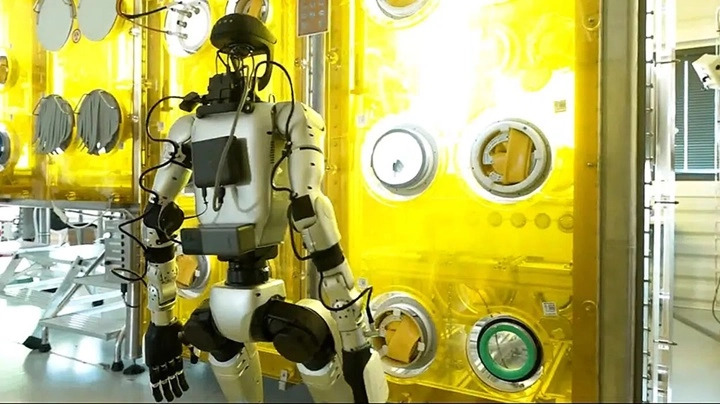
Digit is specifically designed to operate in industrial environments, particularly in areas where humans aren’t present. Its main job at the Toyota plant is to act as a crucial bridge between different automated systems. Here is what their daily shift looks like:
- Unloading Heavy Totes: Digit robots will be stationed near the automated warehouse systems.
- Bridging the Gap: They will take heavy boxes filled with car parts from autonomous tuggers and unload them onto the conveyor systems.
- Relieving Human Strain: This specific task is highly repetitive and physically exhausting. By handing this over to Digit, Toyota removes the risk of ergonomic injuries for its human staff.
I think this is the smartest way to introduce humanoids. Instead of trying to make them do complex, delicate tasks right away, companies are using them to eliminate the dull, dirty, and dangerous jobs that humans shouldn’t have to do anyway.
The Harsh Reality of the Factory Floor

It is one thing to program a robot to walk across a flat stage; it is entirely another to keep it running 24/7 in a bustling automotive plant. Integrating these machines into a real-world production facility comes with immense technical hurdles.
When researching this, I realized that the actual physical movement of the robot is only half the battle. The real challenges include:
- Battery and Charging Logistics: How do you schedule charging times so the assembly line never stops?
- Predictive Maintenance: What happens when a joint wears out?
- Workflow Integration: How does the robot communicate with existing factory software?
Furthermore, let’s talk about safety. Despite the rapid advancements in AI, humanoid robots capable of lifting heavy payloads are not yet at the stage where they can work fully autonomously right next to human workers with 100% guaranteed safety. Because of this, Toyota is smartly keeping the Digit robots in designated areas separated from human staff for now.
Scaling Up with Cloud Intelligence
Managing one robot is an engineering challenge; managing a fleet of seven (and potentially hundreds in the future) is a software challenge.
Agility Robotics is tackling this with a cloud-based software suite called “Arc.” This acts as the central brain for fleet management. By leveraging AI-supported tools, Agility claims they can drastically reduce the time and cost it takes to deploy these robots. This is a game-changer because if setup costs remain too high, no factory will ever adopt them.
Toyota and Agility have already stated that this current workflow is just the beginning. They are actively exploring new use cases to further free human workers from physically demanding tasks across the facility.
The Humanoid Workforce is Growing
If you think Toyota is alone in this, think again. The race to automate the physical world is heating up incredibly fast.
Just last year, we saw Figure AI deploy its Figure 02 robots at a BMW facility for a 10-month test, successfully unloading 90,000 parts. I am also keeping a close eye on companies like Apptronik, Unitree Robotics, 1X Technologies, Reflex Robotics, and of course, Tesla with their Optimus program. They are all aggressively pushing pilot programs to get their hardware out of the lab and into the real world.
We are witnessing the very early days of a massive industrial shift. I don’t believe robots will entirely replace human ingenuity and adaptability anytime soon, but it is clear that our future coworkers will look a lot more metallic.
I’m really curious to hear your perspective on this. If you were working in a manufacturing plant today, how would you feel about having a bipedal robot like Digit taking over the heavy lifting in your department—would you feel relieved, or a little threatened? Let’s discuss it in the comments below!
You Might Also Like;