The Soft Side of Robotics: Why Sprout is the “Baymax” We Actually Need

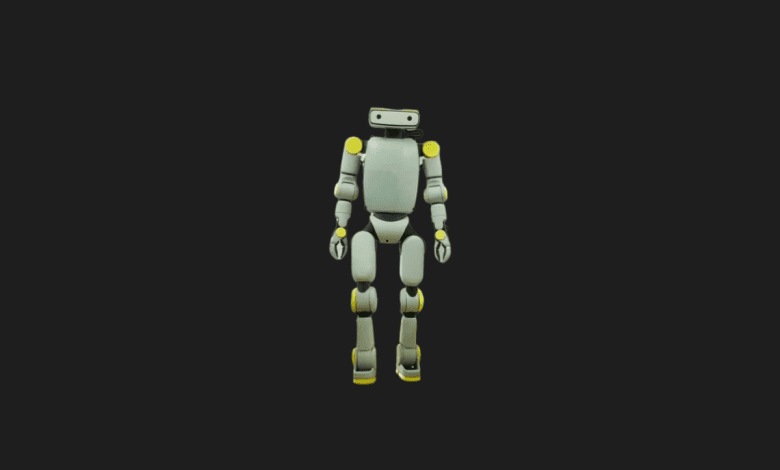

Let’s be honest: most humanoid robots we see today are a bit… intimidating. Watching a cold, metallic machine do backflips or lift heavy crates is impressive, but would you want one wandering around your living room near your kids or your pets? Probably not.
I’ve been following the robotics space for years, and I’ve noticed a consistent trend: everyone is racing to build the strongest, fastest, or most “efficient” worker. But Fauna Robotics just took a sharp turn in a much more human direction. They’ve introduced Sprout, a 1.05-meter tall humanoid that looks less like a Terminator and more like a character from The Jetsons.
When I first saw Sprout’s design, I genuinely smiled. It has these expressive eyebrows and a soft, foam-covered body. It reminded me immediately of Baymax—the kind of robot you’d actually feel comfortable standing next to.
More Than Just a Cute Face
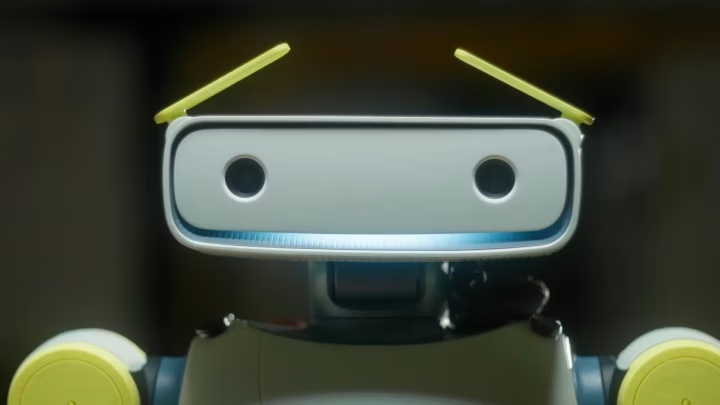
It’s easy to dismiss a “soft” robot as a toy, but after looking into what’s under the hood, I realized Sprout is a serious piece of engineering. It isn’t built to replace a factory worker—at least, not yet. Instead, it’s designed to be the perfect sandbox for the brightest minds in tech.
Think about it: if you’re a researcher at a university or a developer at a startup, you don’t want to spend three years just figuring out how to make a robot stand up without breaking its $500,000 titanium legs. Sprout is a “ready-to-go” platform. It comes out of the box with movement, sensing, and navigation already handled.
I think this is a brilliant move. By lowering the barrier to entry, Fauna Robotics is essentially saying, “We built the body; you give it the brain.”

Why “Softness” is a Hard Requirement
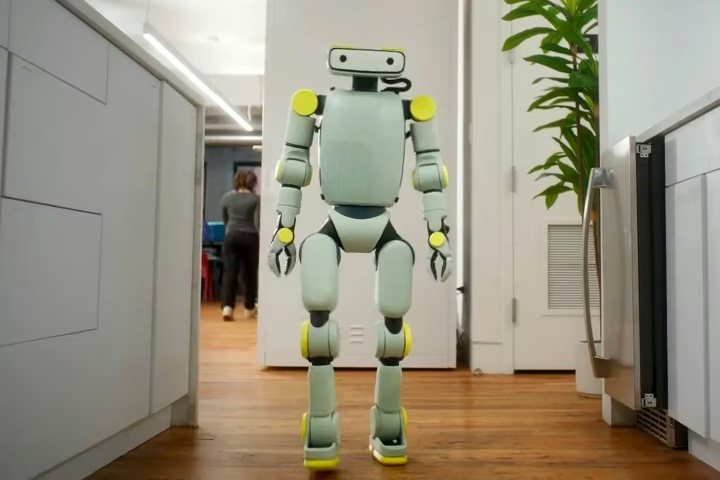
I’ve always felt that the biggest hurdle for home robotics isn’t intelligence—it’s safety. A 300-pound metal robot is a liability in a home. Sprout, however, is:
- Lightweight and Quiet: It moves without that grinding mechanical whine we’re used to.
- Pinch-Point Free: Its joints are designed so they won’t catch your fingers or clothes.
- Highly Repairable: If Sprout takes a tumble, you aren’t looking at a million-dollar repair bill.
This focus on social approachability is what’s been missing. We need robots that we aren’t afraid to bump into in a narrow hallway.
The $50,000 Question
Now, let’s talk about the elephant in the room: the price. At $50,000, Sprout isn’t exactly “affordable” for you or me. It’s priced for labs, and clearly, the big players agree with the value—Disney and Boston Dynamics are already on the client list.
When I saw Boston Dynamics was interested, I did a double-take. It shows that even the kings of “hard” robotics recognize that the future requires a softer touch for human interaction.
I don’t expect Sprout to be folding my laundry next week, but I do expect it to be the platform where the software for laundry-folding is finally perfected. It’s a bridge between the cold industrial machines of the past and the helpful companions of the future.
If you could have a robot in your home today, would you prefer a sleek, high-tech machine like the Tesla Optimus, or something soft and approachable like Sprout? I’d love to hear your thoughts on where the “vibe” of robotics should go next!
You Might Also Like;