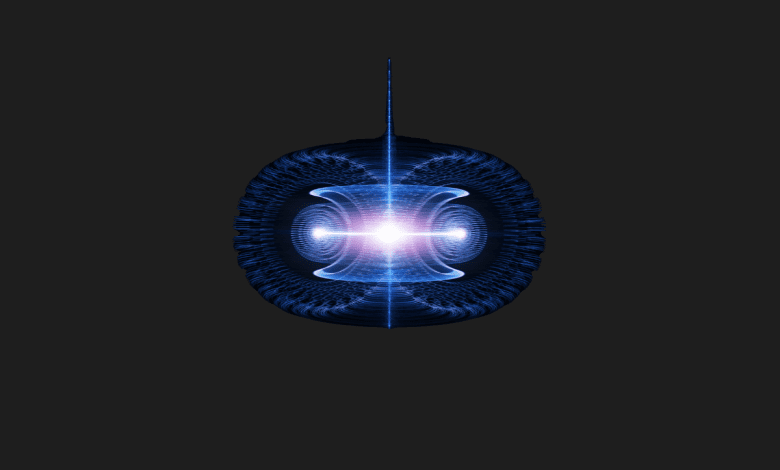

South Korean scientists have, for the first time, observed in an experiment using the VEST fusion device that turbulence beginning at the particle level disrupts and reshapes plasma equilibrium.
South Korean scientists have, for the first time, experimentally proven a direct link between microscopic and macroscopic processes that affect plasma stability in nuclear fusion reactors. The study, which showed that turbulence beginning at the particle level can alter the entire equilibrium of the plasma, is considered a significant step for both energy technologies and astrophysics research.
Small Structures Affect Plasma Equilibrium
For a long time, one of the unresolved issues in plasma physics has been the phenomenon known as “multi-scale interaction.” In this process, particle-level turbulence can grow and eventually change the equilibrium of the entire plasma system. Since current magnetohydrodynamic (MHD) theories treat plasma as a single conductive fluid, they were insufficient to explain how such micro-events lead to macro-scale changes.
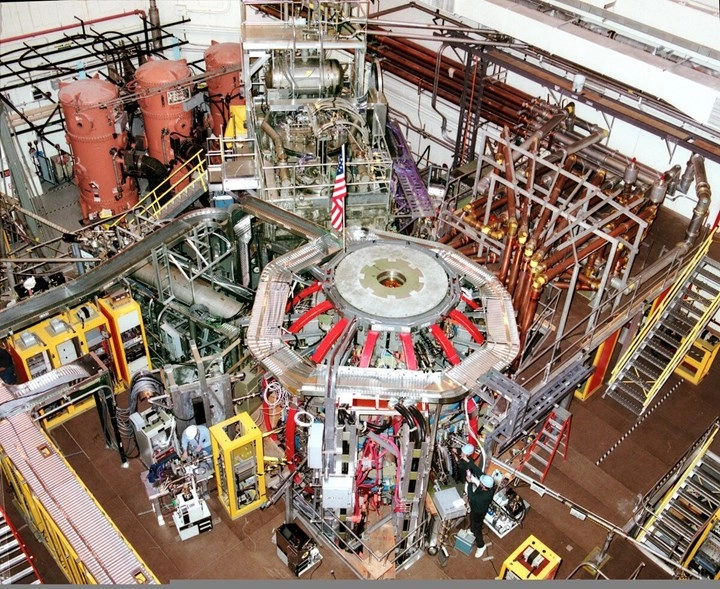
The research team used an experimental fusion device called VEST at Seoul National University to directly observe this process. In the experiment, two separate electron beams were sent along magnetic field lines. These beams created two independent magnetic flux structures moving at a drift velocity that exceeded the medium’s Alfvén speed. The researchers also observed that these structures began to produce micro-turbulence. They observed the process step-by-step: first, particle-level turbulence formed, and then magnetic reconnection occurred, meaning the flux structures merged into a single, larger structure.
Important Clues for Plasma Stability
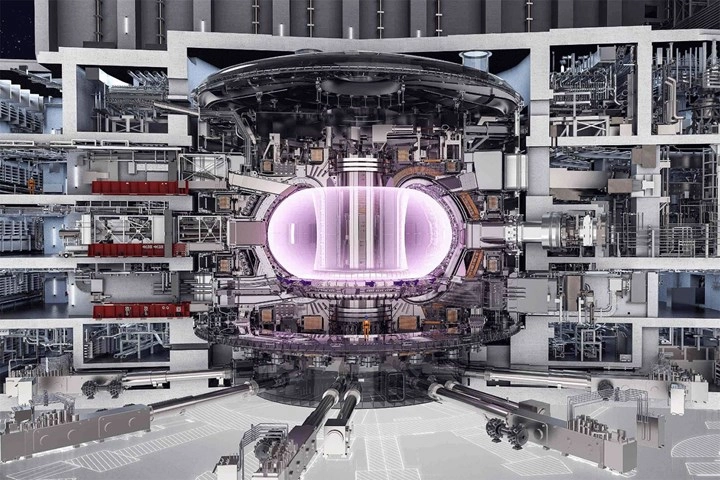
Thanks to the experiment, 3D magnetic reconnection under non-MHD conditions was observed for the first time. The findings clearly showed how particle-level movements disrupt and reshape the overall equilibrium of the plasma.
According to the scientists, the results could directly contribute to strategies for maintaining plasma stability during the development of nuclear fusion. As is known, the plasma must remain in equilibrium to sustain a fusion reaction, so understanding how to control turbulence is of great importance.


You Might Also Like;