The Humanoid Robot Mass Production Race: Unitree’s Global Ambitions



I was just watching some old robotics compilation videos from a decade ago—you know, the ones where multi-million dollar machines trip over a small cable, freeze, and comically faceplant. We all laughed at them. But fast forward to this morning, as I was analyzing the latest global tech reports, my jaw practically hit the floor.
We are no longer in the era of clumsy, experimental prototypes. We have officially entered the era of mass-produced, acrobatic, AI-driven humanoid robots.
When I look at the recent data coming out of China’s Unitree Robotics, it’s clear that the sci-fi future we’ve been speculating about is already rolling off the assembly lines. They aren’t just building a few cool toys for billionaires; they are preparing to flood the global market. Let’s dive deep into why Unitree’s latest production targets and their mind-bending physical demonstrations should put every major tech giant in the West on high alert.
The Numbers Speak Louder Than Words

Let me throw a number at you that completely changes the landscape of the robotics industry. Unitree is officially targeting the shipment of 20,000 humanoid robots in a single year.
To understand why this is a massive deal, we have to look at where they are coming from and who they are competing against. I dug into the recent data from the market research firm Omdia, and the statistics reveal a quiet but aggressive takeover:
- Last Year’s Victory: Unitree successfully shipped over 5,500 humanoid robots in the past 12 months.
- The Quadruple Leap: Scaling from 5,500 to 20,000 units is a near 4x increase in production capacity. This isn’t just about building faster; it requires a complete overhaul of global supply chains, component manufacturing, and quality control.
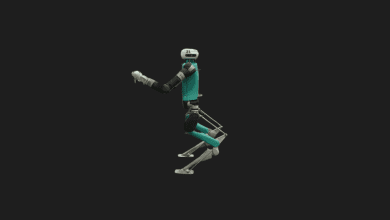
- Beating the West: Here is the kicker—that 5,500 figure actually surpasses the combined production volume of massive US-based rivals. When you add up the prototypes and limited deployments from heavyweights like Tesla (Optimus), Figure AI, and Agility Robotics, Unitree is quietly out-manufacturing all of them right now.
As someone who closely follows the manufacturing bottlenecks of advanced hardware, I can tell you that crossing the 10,000-unit threshold is the “valley of death” for hardware startups. If Unitree hits this new target, they transition from a niche robotics lab to a global manufacturing powerhouse.

Kung Fu, Parkour, and the Death of CGI Excuses

If you think these 20,000 robots are just going to be stiff, slow-moving mannequins, think again.
Unitree recently showcased their latest lineup at a massive Spring Festival Gala in China, and the footage looked so surreal that half the internet immediately claimed it was CGI. I had to watch the raw, behind-the-scenes clips to fully grasp what was happening. Just a year ago, we were impressed if a robot could walk across a stage without falling. This year? They put on a highly complex, aggressive acrobatic show.
Here is what these machines are actually doing in the real world right now:
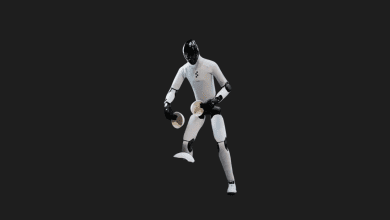
- The WuBot: This model was deployed to perform a highly synchronized, complex martial arts choreography. The balance required to shift weight dynamically during strikes is an engineering nightmare, but they nailed it.
- The H1 Parkour: The H1 models literally jumped onto and over tables, executing fluid parkour movements. This requires real-time terrain mapping and instantaneous kinetic adjustments.
- The G1 Acrobats: This was the part that truly shocked me. The G1 series performed intense kung fu routines entirely without human intervention or backstage puppeteering. These same robots were hitting running speeds of 4 meters per second and doing backflips on a trampoline that launched them 3 meters into the air.
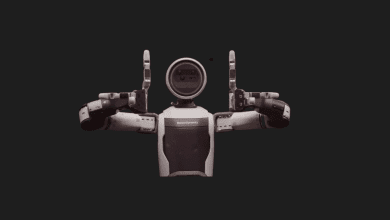
Add to this the presence of the H2 humanoids and the B2-W robotic dogs, and you have a mechanical army that possesses more physical agility than the average human being. The leap in algorithm efficiency, joint motors, and system integration over just 12 months is staggering.
The Secret Sauce: “Embodied AI”

You might be asking yourself, “Okay, they can do backflips, but are they actually smart?” This is where the conversation shifts from cool hardware to world-changing software. According to Unitree’s CEO, Wang Xingxing, the biggest bottleneck holding the global robotics sector back isn’t the metal or the motors—it’s getting these robots to deploy effectively in chaotic, unpredictable real-world environments.
A factory floor or a living room is not a sterile, flat stage. There are dropped toys, moving forklifts, changing lighting, and unpredictable humans. To solve this, Unitree is pouring massive resources into Embodied AI.
Think of it this way: If ChatGPT is an AI trapped in a digital box that only understands text, Embodied AI is an intelligence that understands physical space, gravity, texture, and consequence. Unitree refers to this system as the true “brain” of the robot.
They are developing advanced models that allow the robot to:
- Perceive its environment in 3D using LiDAR and spatial cameras.
- Decide on the safest and most efficient path autonomously.
- Adapt instantly if someone pushes it, if a floor is slippery, or if an object is not where it’s supposed to be.
Why This Matters for Our Future
When I look at Unitree’s aggressive push, I don’t just see a company trying to sell hardware. I see the foundational infrastructure of our next reality.
At Metaverse Planet, we constantly talk about the bridge between the digital and the physical. These humanoid robots are exactly that bridge. They are the physical avatars of the AI algorithms we are training today. If a robot can navigate a room, fold your laundry, or work a dangerous assembly line autonomously, the value of human labor changes forever. The cost of goods plummets. The way we interact with technology shifts from tapping screens to talking to physical companions.
Unitree is proving that mass production of high-performance humanoids isn’t a pipe dream for the next decade—it is happening right now, and the center of gravity for this manufacturing revolution is shifting eastward.
Writing this really made me question how fast our society is going to adapt. We are moving from a world where AI writes our emails to a world where AI can physically run at 4 meters per second and do a backflip.
So, here is my question for you: If the price drops to the cost of a cheap used car, would you buy an autonomous humanoid robot for your home today, or does the idea of an Embodied AI walking around your living room still creep you out? Let me know your honest thoughts in the comments—I really want to see where we all stand on this!
You Might Also Like;