The End of Traffic? Japan’s Flying Taxi Takes to the Skies


I have spent more hours than I care to admit stuck in bumper-to-bumper city traffic, staring blankly at the license plate in front of me and wishing my car could just sprout wings and lift off. For decades, the “flying car” has been the ultimate broken promise of science fiction. But while researching the latest mobility trends coming out of Japan, I realized that we are much closer to this reality than most people think.
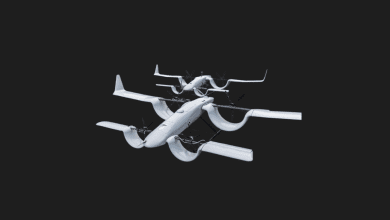
Recently, the Japanese tech startup SkyDrive Inc. took a massive leap forward by publicly flying their highly anticipated SD-05 model over Tokyo. This wasn’t a CGI render or an animated concept video; it was a physical electric vertical takeoff and landing (eVTOL) vehicle gracefully hovering over the city.
Let’s dive into what this test flight means, the impressive specs of the SD-05, and why its creators believe flying to work might soon be cheaper than taking a regular cab.
The Historic 3.5 Minutes Over Tokyo Bay

When you hear about a test flight, you might imagine a cross-country journey. The SkyDrive demonstration over Tokyo Bay, near the Tokyo Big Sight exhibition center, was much more modest—but no less groundbreaking.
Operating under strict safety protocols, the vehicle was unmanned and piloted via remote control. It lifted off, hovered above sea level, and successfully navigated a 150-meter route before touching down.
While a three-and-a-half-minute flight might sound incredibly short, it was actually a critical milestone. In the world of eVTOLs, the biggest hurdles aren’t just getting off the ground; they are stability, maneuverability, and navigating the unpredictable wind currents of a dense metropolitan area. This short hop proved that SkyDrive’s engineering can handle the complex aerodynamics of a coastal city skyline.


Meet the SD-05: Not Your Average Helicopter

Whenever I talk to people about flying taxis, the immediate response is usually, “Isn’t that just a small helicopter?” The short answer is no.
Helicopters are loud, incredibly expensive to maintain, and require massive, dedicated helipads. The SD-05 is a completely different beast designed specifically for the urban jungle.
Here is what makes this vehicle so special:
- 12 Independent Electric Motors: Instead of one massive rotor, the SD-05 uses a dozen smaller, electrically powered rotors. This redundancy makes it incredibly safe; if one motor fails, the others can compensate.
- Extreme Agility: Thanks to its multi-rotor design, it can execute sharp 180-degree turns on a dime, making it perfect for weaving through high-rise corridors.
- Hyper-Compact Landing Zones: Unlike a traditional helicopter, the SD-05 requires a surprisingly small footprint to land. This turns standard building rooftops and even small parking lots into potential “vertiports.”
- Seating Capacity: The current model is designed to carry one pilot and two passengers.
The vehicle has an operational range of 15 to 40 kilometers. At first glance, that might seem low, but when you consider that the average urban commute is usually less than 20 kilometers, it is the perfect range for jumping across a congested city in minutes rather than hours.
Cheaper Than an Uber? The Economics of the Sky

This is the part of the announcement that truly blew my mind. I always assumed that when flying taxis finally arrived, they would be an ultra-luxury service reserved entirely for billionaires and corporate executives.
Tomohiro Fukuzawa, the CEO of SkyDrive, completely flipped that narrative.
SkyDrive is targeting 2028 to begin full commercial operations in Japan. But Fukuzawa’s vision goes beyond just launching a premium service. He stated that moving past 2030, their goal is to drive the cost of an eVTOL flight down to half the price of a standard taxi fare.
Let that sink in for a moment. By relying on electric power (which is cheaper than aviation fuel), lowering maintenance costs through fewer moving parts, and eventually transitioning to fully autonomous flights (removing the pilot’s salary), the economics of urban transport completely change. If you are offered a 10-minute flight that costs less than a 45-minute agonizing taxi ride on the ground, the choice becomes a no-brainer.
Redefining the Urban Landscape
Watching the SD-05 hover over Tokyo made me realize that we are on the verge of a massive infrastructure shift. We have spent the last century building our cities around the automobile—massive highways, sprawling parking garages, and endless intersections.
If SkyDrive and its competitors succeed, the sky becomes our new highway. We won’t need to bulldoze neighborhoods to build new roads; we just need to retrofit existing rooftops. It is an elegant, emission-free solution to a problem that plagues every major metropolis on Earth.
I am genuinely excited to see how this technology scales over the next few years. It’s rare that a piece of technology has the potential to literally elevate our daily lives, pulling us out of the smog and traffic and into the open sky.
What do you think about this shift in transportation? If the price was right, would you feel comfortable stepping into an electric flying taxi for your morning commute, or are you keeping your feet firmly planted on the ground? Let me know your thoughts in the comments!
You Might Also Like;