The Dawn of the Automated Battlefield: How Ground Robots Are Redefining Warfare


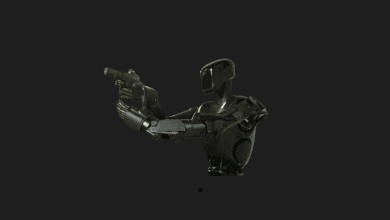
I remember sitting in a theater years ago, watching the ominous, metallic skeletons of the Terminator franchise march across a desolate, war-torn landscape. Like most of you, I walked out thinking, “Well, that’s a terrifying piece of science fiction.” But after spending the last few days digging through the latest frontline reports from Ukraine, I’ve realized something deeply unsettling: that science fiction is no longer fiction. It is the current reality of modern warfare.
We’ve all grown accustomed to the idea of drones ruling the skies. Aerial UAVs (Unmanned Aerial Vehicles) have completely rewritten the tactical rulebooks over the past few years. But while we were all looking up, a massive, quiet revolution was happening down in the mud and the trenches.
Unmanned Ground Vehicles (UGVs)—robotic systems rolling through the dirt—have transitioned from experimental prototypes to the absolute backbone of frontline operations. And the scale at which this is happening is staggering.
7,000 Robotic Operations in a Single Month
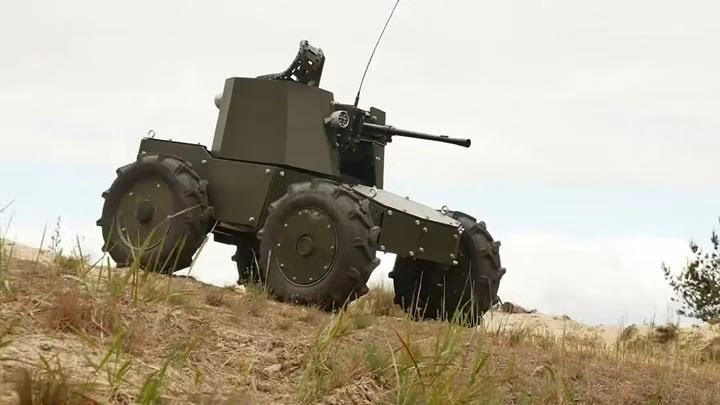
When I first read the data recently highlighted by frontline observers and international outlets like the New York Times, I actually had to read the numbers twice to make sure I wasn’t hallucinating. In a single month, Ukrainian forces executed 7,000 operations utilizing ground robots.
Let that sink in. We aren’t talking about a handful of test units being driven around a safe testing facility. We are talking about thousands of active, combat and support missions happening in the most dangerous, highly contested environments on the planet.
These robotic platforms aren’t just taking pictures, either. They are actively shaping the outcome of firefights. Based on the reports, these ground systems are out there:

- Laying anti-tank and anti-personnel mines in active combat zones.
- Firing mounted machine guns to suppress enemy positions.
- Deploying and throwing grenades directly into enemy trenches.
- Actively neutralizing enemy combatants without putting a single human operator in the direct line of fire.
As someone who studies the intersection of technology and society, watching this rapid deployment is mind-bending. The battlefield has become a live-action testing ground for the future of automated combat.
The Psychological Weight of an Unblinking Enemy
There is a human element to this technological shift that I find absolutely fascinating—and terrifying. War is, fundamentally, a psychological endeavor. Throughout history, soldiers have relied on the fact that the enemy across from them is also human. A human gets tired, a human feels pain, a human can be suppressed by heavy fire, and a human feels fear.
A ground robot feels none of these things. When you shoot a human soldier, they go down. When you shoot a tracked robot, unless you hit a critical component, it just keeps rolling toward you with cold, calculated precision. According to Ukrainian drone operators on the ground, this is having a devastating psychological impact on opposing forces. It breaks the morale of defending infantry in a way that traditional artillery simply doesn’t.
The data backs up this psychological collapse. Reports indicate that in just one month earlier this year, over 100 Russian soldiers surrendered directly to these unmanned systems. Surrendering to a machine represents a massive, unprecedented psychological threshold being crossed in human history. It’s the realization that you cannot outlast, out-intimidate, or negotiate with the metal box rolling toward your trench.
Lifesavers in the Crossfire: The Logistics Revolution
While the combat capabilities grab all the cinematic headlines, the real story—the aspect that I believe is truly altering the course of the conflict—is logistics.
Right now, the skies over the frontlines are saturated with kamikaze FPV (First Person View) drones. It has created a phenomenon known as the “transparent battlefield.” If you move above ground during daylight, you are seen. If you are seen, you are struck. Moving human soldiers to deliver a box of ammunition or a few bottles of water has become a virtual death sentence.
So, how do you keep an army supplied in an environment where humans can’t walk? You send the robots.
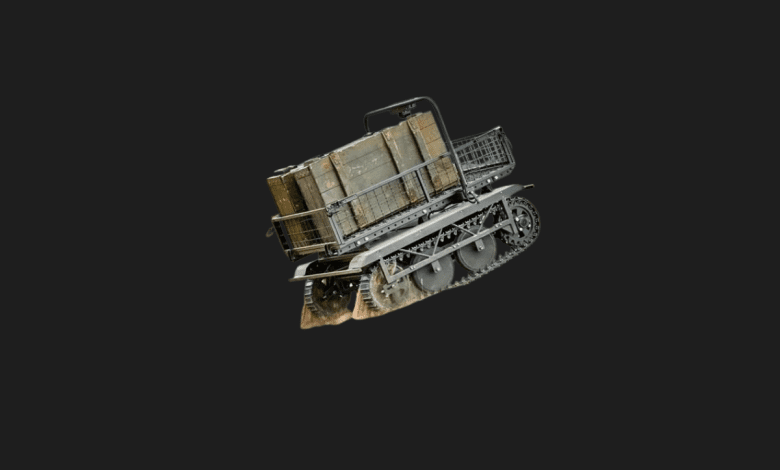
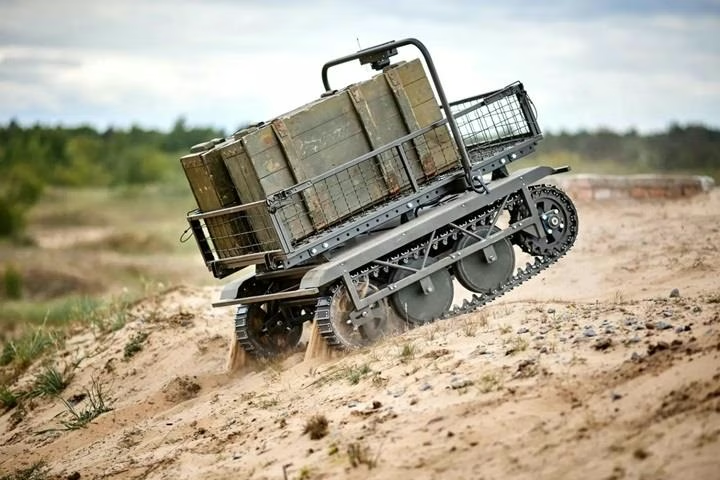
Today, nearly 90% of all logistics operations in certain sectors of the Ukrainian military are handled entirely by robotic systems. That statistic is mind-blowing. These machines are serving as the ultimate lifeline for soldiers pinned down in trenches. They crawl through the mud, under the radar of aerial drones, to deliver:
- Heavy ammunition boxes and artillery shells.
- Rations and clean drinking water.
- Vital medical supplies.
The Ultimate Medevac
Even more incredible is their role in medical evacuations. Historically, rescuing a wounded soldier under fire often resulted in more casualties as medics rushed into the kill zone. Now, ground robots are being sent in to pull the wounded to safety.
Some of the larger, heavy-duty UGV models deployed right now are capable of carrying up to three wounded soldiers at the same time. Imagine being critically injured, pinned down by sniper fire, and watching a low-profile, armored robot roll up right next to you to drag you back to a medical triage point. It is a brilliant, life-saving application of technology that doesn’t get enough attention.
A Rapidly Scaling Defense Ecosystem
What amazes me most about this robotic revolution is how fast it was engineered. This isn’t the result of a twenty-year, multi-billion-dollar development cycle from a giant, legacy defense contractor. This is the result of agile, startup-style innovation adapting to immediate, desperate needs.
The ground robotics sector has become the fastest-growing area in Ukraine’s defense technology ecosystem. The numbers are a testament to how quickly warfare is evolving:
- Production has scaled up by roughly six times compared to previous periods.
- The domestic market size for these systems has rapidly surpassed the $250 million mark.
And the barrier to entry is getting terrifyingly low. We are seeing highly capable systems being built with commercial-off-the-shelf components. For instance, reports highlight the deployment of agile “robot dogs” outfitted for kamikaze attacks, costing around $9,000 a piece. When you compare a $9,000 robot dog to a multi-million dollar main battle tank, the economics of modern warfare completely flip.
Add to this the deployment of systems like the “Fury”—a heavy ground robot equipped with a mounted machine gun—and you realize these machines are no longer just experimental support tools; they are the primary actors in the theater of war.
The Ethical Horizon: Where Do We Go From Here?
I write about the Metaverse, AI, and digital innovation because I love seeing humanity push boundaries. But looking at the explosive growth of armed, uncrewed ground vehicles forces me to take a hard step back.
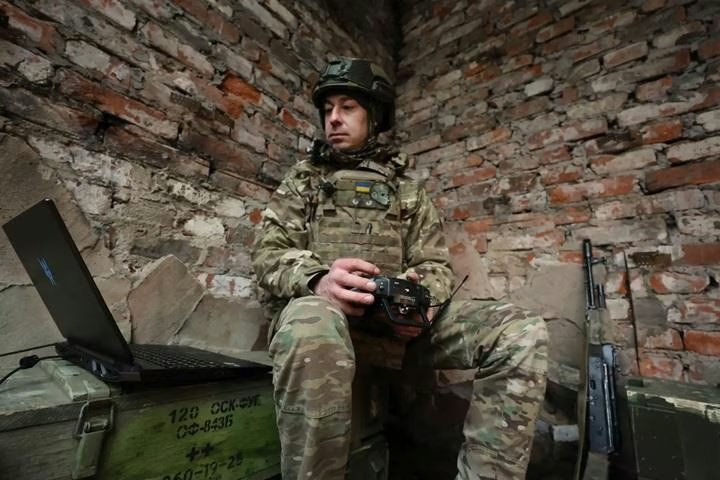
We are standing on a very slippery slope. Right now, these systems are remote-controlled. There is a human operator with a remote and a screen, making the final decision to pull the trigger or detonate the payload. But as electronic warfare and signal jamming become more intense, the connection between operator and robot will inevitably be severed.
When that happens, the obvious technological next step is to grant these systems autonomous targeting capabilities. We are inching dangerously close to a reality where algorithms, not humans, decide who lives and who dies in the mud of a trench.
The events unfolding in Eastern Europe right now are providing us with a crystal-clear preview of the mid-21st-century battlefield: highly automated, devoid of direct human presence on the zero-line, and incredibly lethal. It forces us to ask deep, uncomfortable questions not just about military tactics, but about the ethics of how we conduct war.
I’m struggling to wrap my head around the long-term implications of this. I’d love to hear your perspective. If fully autonomous ground robots become the standard for every military in the world, do you think it will make wars less costly in terms of human life, or will it just lower the barrier to starting conflicts in the first place? Let’s discuss it in the comments below.
You Might Also Like;