The 15-Second Countdown: How Long Can Humans REALLY Survive on Mars?


Mars has captured humanity’s imagination for centuries, standing as our next great frontier. But beneath the romantic notion of colonization lies a brutal truth: the Red Planet is an instant killer. Forget science fiction; here is the stark reality of human survival on Mars, both suited and unsuited.
🤯 Phase 1: The Immediate Kill – 15 Seconds of Horror

The most common misconception about stepping onto Mars without a suit is that you’d instantly freeze or suffocate. While true, these are not the primary cause of death. The real killer is the planet’s almost non-existent atmosphere.
- The Atmospheric Problem: Mars’s atmosphere is less than 1% as dense as Earth’s. This extreme lack of pressure turns a lethal threat into a terrifying physical phenomenon called Ebullism.
- What is Ebullism? At extremely low pressures, the boiling point of liquids drops dramatically. Since Mars’s atmospheric pressure is below the necessary threshold, the fluids in your body (saliva, tears, and even blood) would begin to vaporize—or boil—at normal body temperature. Your body would painfully swell, and within seconds, your lungs would collapse, followed by a total loss of consciousness.
- The Verdict: Without a suit, you have roughly 15 seconds before the lack of pressure renders you unconscious, followed quickly by irreversible cellular damage and death.
🥶 Phase 2: The Suit Barrier – Escaping Instant Death
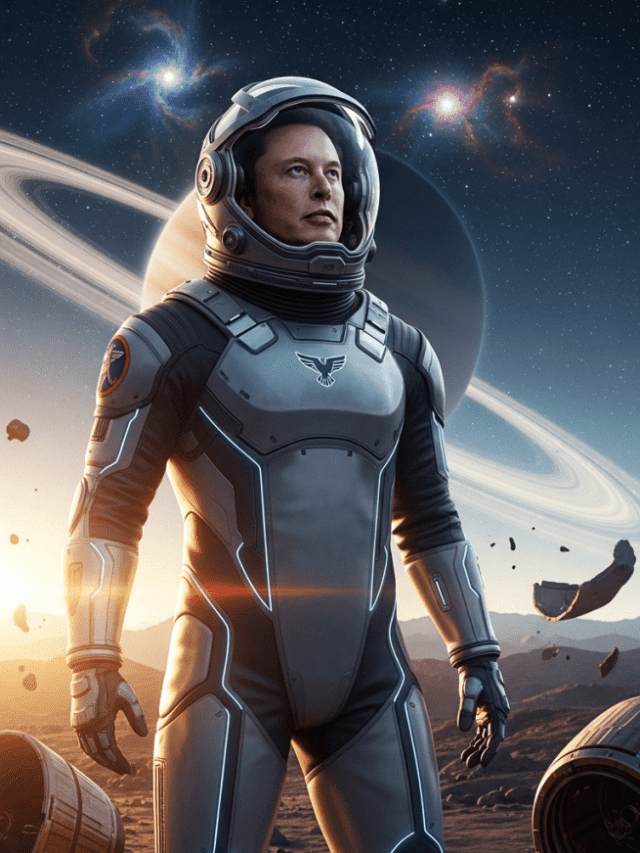
The spacesuit is your personal, pressurized bubble, overcoming the ebullism threat. But simply wearing a suit doesn’t guarantee a long life. It merely trades an immediate death for a protracted, technological challenge.
- Extreme Cold: Even with a suit, temperatures frequently drop to $-100^\circ\text{C}$ ($-148^\circ\text{F}$). The suit’s life support system must constantly work to maintain a habitable environment against this freezing hostility.
- The CO2 Fog: The thin Martian atmosphere is over 95% Carbon Dioxide. Any breach in the suit, even a small leak, means instant CO2 poisoning and suffocation, reinforcing the fragility of life on the planet.
🛡️ Phase 3: The Silent Killer – The Radiation Problem
Once the immediate environmental threats are mitigated by a spacesuit and a habitat, the ultimate long-term threat emerges: Cosmic Radiation.
- The Missing Shield: Unlike Earth, Mars has no global magnetic field to deflect high-energy particles from the Sun and deep space. It also lacks the thick, protective atmosphere of Earth.
- The Effect: These high-energy particles constantly bombard the Martian surface, penetrating the walls of habitats and the material of spacesuits. This cumulative exposure can severely damage an astronaut’s DNA, leading to increased risks of cancer, cataracts, and degenerative diseases.
- The Challenge for Future Tech: If we are to colonize Mars, we must develop revolutionary technology that can artificially replicate a magnetic field, build habitats deep underground using regolith (Martian soil) for shielding, or invent advanced countermeasures to repair or mitigate radiation damage within the human body.
Conclusion: More Than Survival, It’s Transformation

While a human can theoretically survive on Mars for decades inside a purpose-built habitat, the true duration of human life there is entirely dependent on our technological prowess. Mars is not just a planet to conquer; it is a deadly crucible that will force humanity to radically transform its biological and technological limits just to survive the 15-second countdown and the silent threat of radiation.
You Might Also Like;
- The Harsh Reality of Lunar Colonies: Can We Actually Survive on the Moon?
- The Hard Truth About the GTA VI PC Release Delay
- Boston Dynamics in Crisis: The Mass Production Clash with Hyundai