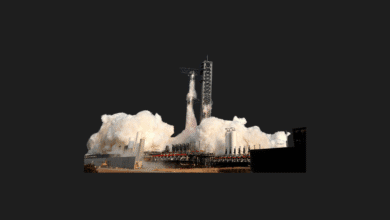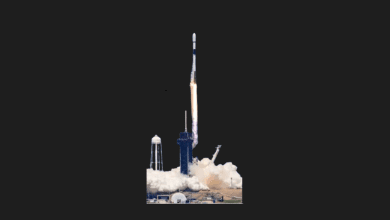
When I first saw the numbers on this, I genuinely had to do a double-take, Spartans. We spend a lot of time analyzing SpaceX’s commercial milestones—reusable rockets, Starship tests, and colonizing Mars. But their latest move pivots straight into global defense, and it is on an entirely different scale.
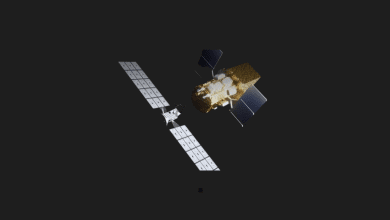
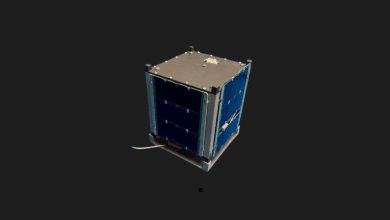
The U.S. Space Force just handed Elon Musk’s company a massive $4.16 billion contract to build out a space-based tracking network under the “Golden Dome” initiative. We aren’t just talking about a few communication satellites anymore; we are looking at the foundational architecture of Earth’s future orbital defense.
The “Golden Dome”: Eyes in the Sky by 2028
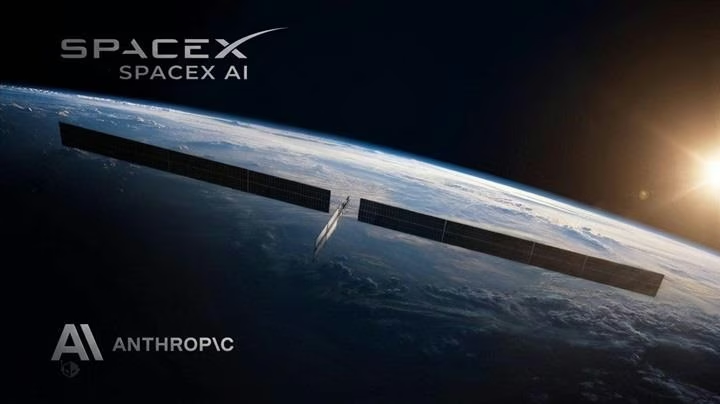
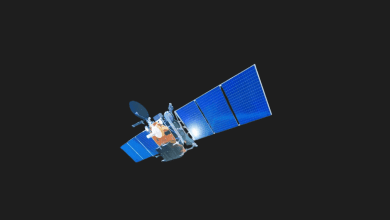
Officially called the “Space-Based Ground and Air Moving Target Indicator,” this system is designed to track missile and aircraft threats from orbit. Traditional ground-based radars have physical limitations—they can only “see” so far over the horizon. The Golden Dome completely bypasses that problem.
Here is what makes this new network a game-changer:
- Global Threat Detection: By placing advanced sensors in orbit, the network can continuously track aircraft, hypersonic vehicles, and incoming missiles anywhere on the planet.
- Beyond Just Sensors: It’s not just about cameras in space. The network will rely on highly secure, lightning-fast communication links to transmit data.
- Real-Time Processing: The system will funnel massive amounts of data down to resilient ground stations, merging it all into a single, real-time threat assessment hub.
To me, it sounds like the planetary defense grids we usually only read about in science fiction. And the timeline is incredibly aggressive—they plan to have the first constellation operational by 2028.
A Trillion-Dollar Shift in Global Security

What really caught my attention isn’t just the initial $4 billion. Defense experts project that over the next 20 years, the total cost of the Golden Dome program could reach a staggering $1.2 trillion. This isn’t just a tech upgrade; it is a permanent shift in national security infrastructure.


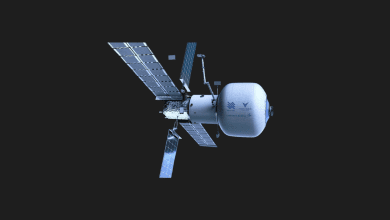
And SpaceX is securing its dominance on multiple fronts. Just this week, they locked in another $2.29 billion contract from the Space Force. While the Golden Dome is about tracking targets, this second contract focuses on building the ultra-high-speed, resilient communication network needed to carry all that military data.
My Take: The Defense Industry is Changing Forever
Traditional defense contractors must be sweating right now. For decades, a few legacy companies held the keys to massive military contracts. Now, SpaceX is proving that the speed and scale of commercial space tech can easily outpace traditional systems. The line between commercial space exploration and national defense is practically vanishing before our eyes.
So, I have to ask you: How do you feel about a private, commercial space company holding the keys to the world’s most advanced military defense network? Is this the inevitable future of security, or does it make you a bit uneasy? Let’s discuss it in the comments!
You Might Also Like;