
I have a drawer in my office. I call it the “Graveyard of Good Intentions.” It’s filled with gadgets like the Rabbit R1 and the Humane AI Pin—devices that promised to revolutionize how I interact with the world but ultimately failed to deliver.
So, when I woke up this morning to the news of Pickle 1, a Y Combinator-backed project calling itself the world’s first “Soul Computer,” I was naturally skeptical. But as I dug into the details, my skepticism started to mix with genuine curiosity. This isn’t just another smart assistant; it wants to be a digital extension of your memory.
Here is everything you need to know about Pickle 1, and my honest take on whether this is the future or just another addition to my graveyard drawer.
More Than Just “Smart Glasses”
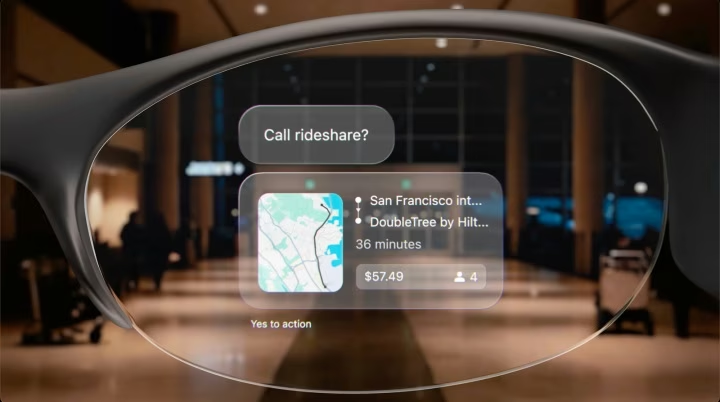
Let’s get the terminology straight first. Pickle isn’t trying to replace your smartphone. They aren’t trying to be an Apple Vision Pro either. They are positioning this device as a companion.
The core promise is fascinating: It sees what you see, hears what you hear, and remembers what you might forget.
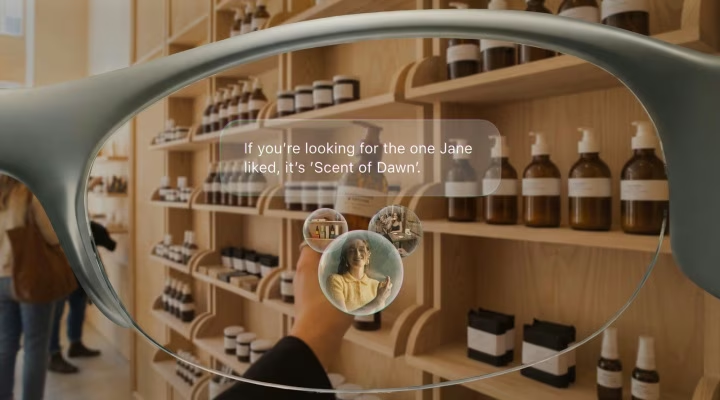
I often find myself in meetings or social gatherings where I blank on a name or a specific detail mentioned weeks ago. Pickle 1 aims to solve exactly that. It creates a “memory layer” over your reality. It captures context, not just data.


The Magic of “Memory Bubbles”
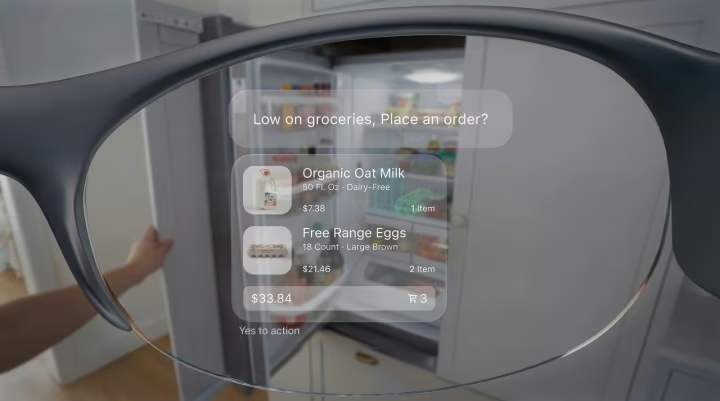
The device runs on Pickle OS, an AI system designed to learn your habits within just a few days. It organizes your life into what they call “Memory Bubbles.”
- Searchable Life: You can ask, “What did I promise to send to John last Tuesday?” and it pulls up that specific “bubble.”
- Contextual Awareness: It understands intention. It doesn’t just record audio; it understands that you are in a business meeting versus a casual coffee chat.
- Editable History: Unlike our biological brains, you can edit these bubbles.
Ugu’s Take: The concept of an external hard drive for my brain is incredibly appealing. However, the company explicitly warns that the AI might hallucinate (make things up). So, while it’s a “Soul Computer,” don’t treat it like a doctor or a lawyer. It’s a helper, not an oracle.
Hardware: Can You Actually Wear It?
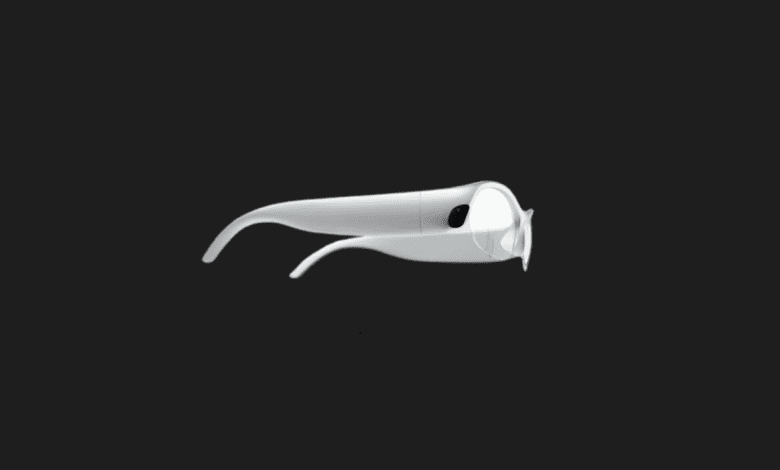
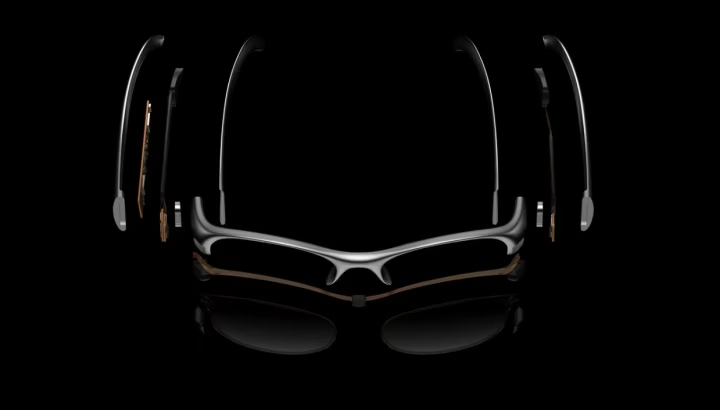
One of the biggest hurdles for AR glasses has always been comfort. You don’t want to look like a cyborg, and you definitely don’t want a heavy brick sitting on your nose.
Pickle seems to have found a sweet spot, but there are caveats:
- Weight: It weighs approximately 68 grams. For context, a standard pair of Ray-Bans is about 40-50g. This is slightly heavier but definitely wearable for long periods.
- Battery Life: They claim 12 hours of mixed usage. This breaks down to roughly 4 hours of active AR display and 2 hours of spatial computing.
- The Heat Issue: This is where I get a bit nervous. The company admits that during intense recording or AR usage, the aluminum chassis can get hot. Having a heating element touching your temples isn’t exactly my idea of comfort. They say it shuts down for safety, but that interrupts the experience.
Pricing and Availability
- Early Bird: $799 (Limited batch)
- Standard Price: $1,300
- Release Date: Q2 2026
It is not cheap. But compared to the $3,500 price tags of high-end headsets, it’s positioning itself in the premium smartphone territory.
The “Privacy” Elephant in the Room
This is the part that usually scares people off, and rightly so. If a device is recording my “soul” and my memories, who owns that data?
Pickle has been very aggressive with their privacy claims:
- Hardware Isolation: Data is processed in secure, isolated areas of the hardware.
- User-Only Access: What you see through the AR lenses is visible only to you.
- “Off-the-Record” Mode: A single touch stops all recording.
My thoughts: On paper, this looks secure. But we are handing over the visual and audio history of our lives to a startup. Trust is going to be their biggest product, even more than the glasses themselves.
Why This Matters
We are entering a new phase of technology. We are moving away from “User uses Device” to “Device lives with User.”
Pickle 1 represents a bold step towards a future where we don’t look at screens, but look through them to enhance our natural capabilities. Whether it will succeed where others have failed depends entirely on the execution of that AI. If it’s slow, buggy, or makes up fake memories, it’s game over.
But if it works? If it actually acts as a reliable backup for my forgetful human brain? Then, take my money.
What do you think? Would you be comfortable wearing a camera that remembers everything you do, or is this too “Black Mirror” for your taste?
You Might Also Like;