Snap SPECS: The $2,195 Standalone AR Glasses That Change Everything

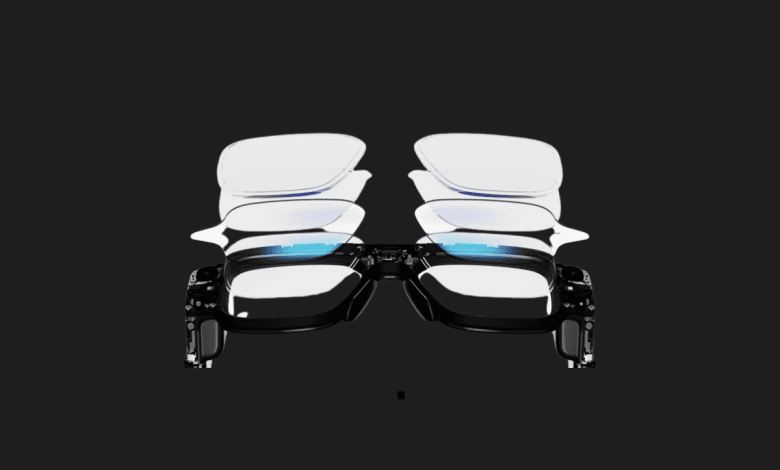

I have to admit, when I first heard Snap was launching a new pair of AR glasses, my immediate thought was, “Okay, another social media toy.” But after diving into the details of the newly announced Snap SPECS, my jaw genuinely dropped. This isn’t just a basic camera glass; Snap has built a full-blown spatial computer you can wear on your face.
At $2,195, they are definitely not an impulse buy. But let’s talk about why this release is such a massive deal for the augmented reality space, and why I think it actually pushes the entire industry forward.
No Wires, No Battery Packs: True Freedom

The biggest complaint I always have with advanced AR headsets is the tether. You’re either plugged into a PC or walking around with a heavy battery pack stuffed in your pocket. Snap managed to eliminate all of that.
The new SPECS operate entirely as a standalone system.
- Ultra-Lightweight: Crafted from durable Swiss TR90 polymer, they weigh in at just 132 grams (for the 47mm frame) and 136 grams (for the 52mm). For context, that’s incredibly light for a device packing an entire computer inside.
- Adaptive Lenses: They feature electrochemical lenses that shift from completely clear to a tinted shade in about 10 seconds, adapting to the lighting in your environment instantly.
A Cinematic Display on Your Face

What really caught my attention was how Snap engineered the visual experience. They are using a proprietary liquid crystal silicon display technology equipped with billions of nanostructures.
Instead of feeling like you’re looking through a tiny keyhole, the SPECS deliver a 51-degree field of view capable of projecting 16 million colors. To put that into perspective, Snap says using these glasses feels like looking at a 24-inch desktop monitor while working, or sitting back and watching a 115-inch TV from about three meters away. I don’t know about you, but the idea of taking a 115-inch screen with me on an airplane is wildly appealing.

Under the Hood: Dual Snapdragon Power
How do they process all this without overheating? Snap went with a dual Snapdragon processor architecture:
- Chip 1: Dedicated entirely to computer vision and mapping your physical space.
- Chip 2: Powers the heavy lifting for Snap’s AR Lenses and digital content.
This setup results in an insanely low seven-millisecond motion-to-photon latency. In plain English: when you move your head or interact with virtual objects using high-speed hand tracking, the digital elements feel perfectly locked to the real world. No annoying lag, no motion sickness.
The Battery Reality Check
Of course, pushing this much power in a standalone frame comes with a compromise. The SPECS offer up to four hours of battery life for mixed-use. However, they come with a dedicated charging case that extends that total life up to 20 hours.
If you’re sitting down, you can plug them in via a magnetic charging cable for extended sessions. Even better, the USB-C port allows the glasses to act as an external display for your Mac, iPhone, or gaming console.
Is the AR Future Finally Here?
Hitting pre-orders for the US, UK, and France this fall, the Snap SPECS are clearly aiming for developers, tech enthusiasts, and early adopters who want to push spatial computing into their daily routines.
I honestly think Snap has pulled off an engineering marvel by cramming this much tech into a 132-gram frame. It’s a huge leap from where we were just a few years ago. But I’m turning this over to you. Would you drop over two grand to leave your physical monitors behind and step fully into AR, or is the price tag still too high to justify replacing your current tech setup? Let me know what you think!
You Might Also Like;