Scientists at the Medical Research Council Laboratory of Molecular Biology in the UK have announced they have developed a new type of bacteria with a more efficient genetic code than what is found in nature.
The new organism, named “Syn57,” is a genetically re-engineered version of the E. coli bacterium. While all known life on Earth uses 64 different codons to synthesize the 20 amino acids that are the building blocks of proteins, some of these codons are redundant. Syn57 eliminates this redundancy, functioning with only 57 codons, which is where its name comes from.
Scientists Intervene in Evolution
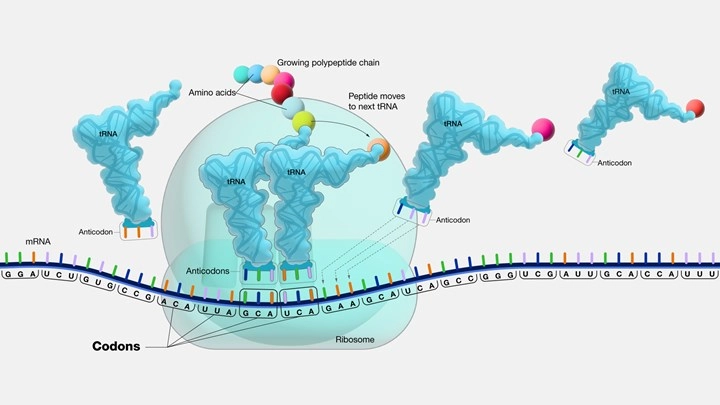
A codon is a sequence of three letters in DNA and RNA that tells a cell which amino acid to produce. Scientists first fully mapped this system in 1966, but it has been known since then that the evolutionary process did not “perfect” the genetic code, and some codons are interchangeable. For a long time, researchers have been testing whether life could function more efficiently by removing these redundancies.
In 2010, the first synthetic bacterial cell was created, but it was still a copy of the natural 64-codon system. Then, in 2019, a team from the University of Cambridge reduced this number to 61 codons, showing that life could be sustained with fewer codons.
Now, a new study from the same university has raised the bar even higher. To create Syn57, researchers modified over 101,000 DNA sequences. This process was first designed on a computer and then implemented in the lab.
Akos Nyerges, a synthetic biologist from Harvard University, summarized the importance of this development, stating, “We can begin to discover what life can tolerate. We can finally test these alternative genetic codes.”


The research not only proves that life can be sustained with a more streamlined genetic blueprint, but also opens up significant possibilities for the future. Syn57’s unused codons could be repurposed to create new synthetic polymers and macrocyclic structures.
Furthermore, Syn57’s altered genetic language could potentially prevent viruses from hijacking cells and controlling their protein production. This feature has the potential to reduce virus-related losses in industrial-scale protein production using bacteria. Additionally, making the genetic code “unreadable to natural microbes” greatly reduces the risk of these artificial organisms spreading into the environment.
You Might Also Like;
- Mars is Not a Planet. It’s a Graveyard. (The Great Filter Warning)
- Is GTA 6 Proof We’re Living in a Simulation?
- The End of Chatbots: Why 2026 is the Year of AI Agents (And What It Means for Your Job)
Follow us on TWITTER (X) and be instantly informed about the latest developments…