Scientists Are Trying to Prevent the Placement of Giant Mirrors in Orbit

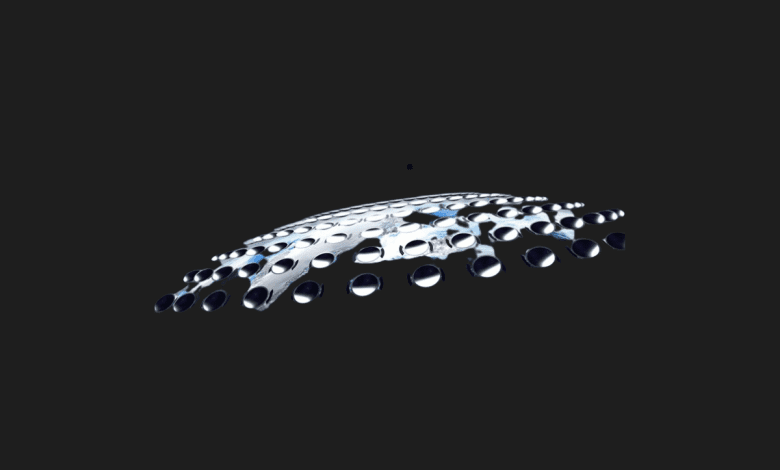

The project by the startup Reflect Orbital to place 4,000 giant mirrors in Low Earth Orbit is drawing strong criticism from the scientific community. Astronomers are particularly concerned about the dangers of this project.
The idea of launching giant mirrors into space to reflect Sunlight back to Earth is not new. For years, some researchers have argued that reflecting solar light could be beneficial for areas such as energy generation and emergency lighting in disaster zones. However, this idea has always been controversial because large reflective surfaces placed in space were known to threaten both astronomical observations and natural ecosystems. Reflect Orbital, a California-based startup, has now made this debate much more heated. The company plans to deploy a total of 4,000 giant orbital mirrors around the Earth by 2030. The scientific community is vehemently opposing this plan.
Reflect Orbital Wants to Place 54-Meter Giant Mirrors in Orbit

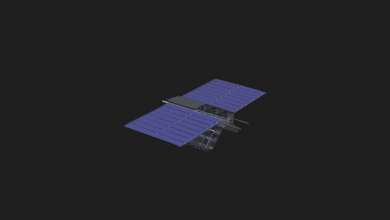
Reflect Orbital’s goal is to be the first commercial system capable of providing Sunlight at night. The company recently announced the project’s first test satellite in an application to the FCC (U.S. Federal Communications Commission). Earendil-1, planned for launch in 2026, will use an 18-meter square mirror and reflect Sunlight during dark hours to selected areas.
However, this is only the beginning. The final project satellites will feature giant mirrors 54 meters wide. These mirrors will be positioned in Low Earth Orbit, similar to Starlink satellites. According to scientists, hundreds of such large mirrors orbiting at such a low altitude will leave extraordinarily bright trails in the sky, inevitably impacting observations at every level, from telescopes to the naked eye. This fundamentally underpins the scientific community’s criticisms of the project. Robert Massey from the Royal Astronomical Society highlighted the project’s core purpose of illuminating the night, stating, “From an astronomical perspective, that’s pretty much the definition of catastrophe.”
The brightness levels of the mirrors are as concerning as their size. Anthony Tyson, chief scientist at the Rubin Observatory, says each mirror could appear up to four times brighter than the Moon. This means intense light reflections that could not only disrupt observation but also damage sensitive telescope sensors. Astronomers warn that if this project goes ahead, both long-exposure observations will be interrupted, and unfixable interference trails will be created in data sets, severely harming astronomy research.
Criticisms are not limited to astronomy. Light pollution affects the biological clocks of countless species, from migratory birds to insects. David Smith from BugLife warns, “Nature has lived by the day-night cycle for billions of years. If humanity tries to change this cycle with the flick of a switch, the price will be very high.” Experts point out that especially migration routes and reproduction could be severely impacted. Reflect Orbital, in response to all these criticisms, argues that their mirrors will only illuminate narrow areas of 5 km for short periods and will be angled to completely cut off the light at other times. Furthermore, the company claims they can protect astronomers by “adding the coordinates of observatories to an avoidance list.” However, astronomers do not find this explanation convincing. In the past, “avoidance” strategies for much fainter satellites like Starlink were not effective in practice.

Reflect Orbital, which has also received a grant from the U.S. Air Force, claims to have received over 250,000 applications from interested institutions and local governments for this service. Their application to the FCC also emphasizes this. If approved, for the first time in human history, the sky will be intentionally “redesigned” for commercial illumination. Of course, doing so will also put Earth’s natural balance at risk.
You Might Also Like;