Beyond Lasers and Spaceships: Sci-Fi Masterpieces That Question Existence


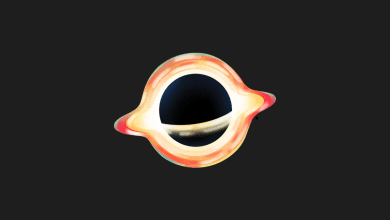
I have a confession to make: when I was younger, I watched science fiction for the cool gadgets. I wanted the lightsabers, the flying cars, and the warp drives. I think we all start there. But as I’ve grown older—and as I’ve watched our real world start to resemble the movies I grew up with—my perspective has shifted.
Science fiction is not really about the future. It is about us, right now.
It’s easy to get distracted by the neon aesthetics of a cyberpunk city or the sleek design of a starship, but the true power of the genre lies in its ability to strip away the noise of everyday life and ask the terrifyingly simple questions: What is consciousness? What does it mean to love? If we are just code and biology, do we have a soul?
I’ve compiled a list of movies that do more than just entertain. These are the films that kept me up at night staring at the ceiling, questioning the very fabric of my reality. If you are looking for pure action, these might not be for you. But if you are ready to have your mind bent and your heart tested, let’s dive in.
1. Arrival: The Architecture of Thought
When I first sat down to watch Arrival, I expected an invasion movie. You know the type: things blow up, the military saves the day. What I got instead was a profound meditation on grief, time, and communication.
Directed by the brilliant Denis Villeneuve, this film flips the script. It isn’t about fighting the aliens; it is about understanding them.

Language as a Weapon (and a Gift)
The protagonist, linguist Louise Banks, isn’t armed with a gun, but with a whiteboard. As she decodes the complex, circular logograms of the alien visitors (the Heptapods), something fascinating happens. The film plays with the Sapir-Whorf hypothesis—the idea that the language you speak determines how you think.
- Linear vs. Circular: We see time as a straight line (past -> present -> future).
- The Shift: As Louise learns their language, she begins to perceive time simultaneously. Past, present, and future merge.
The Ultimate Choice
What hit me hardest wasn’t the sci-fi element, but the human one. Louise sees her entire future. She sees the joy of having a child, but also the inevitable, crushing tragedy that follows.
My Reflection: If you could see your whole life, from start to finish, would you change anything? Louise chooses to embrace the pain because the love within those moments is worth it. It’s a beautiful, heartbreaking reminder that loss is the price of admission for love.
2. In Time: The Currency of Life
I feel like In Time is criminally underrated. Critics often dismiss it as an action flick, but the concept is one of the most terrifying economic critiques I’ve ever seen on screen.
Imagine a world where genetic aging stops at 25. You are young forever, physically. But there is a catch: you have a digital clock on your forearm counting down. When it hits zero, you die instantly. Time is literally money.
A Mirror to Our Hustle Culture
In this universe, you pay for coffee with 4 minutes of your life. A bus ride costs 2 hours. The rich are effectively immortal, carrying millennia on their wrists, while the poor live “day to day” in the most literal sense.
Watching this, I couldn’t help but draw parallels to our gig economy.
- How often do we trade our literal lifespan for a paycheck?
- How much “time” do we waste on things that don’t matter?
The Fear of the Clock
The film makes a brilliant point: Immortality makes you a coward. The rich in this movie are terrified of everything because they have an eternity to lose. The poor, who might die tomorrow, live with a frantic, desperate intensity. It forces you to ask yourself: Is it better to have a long, empty life, or a short one that actually means something?
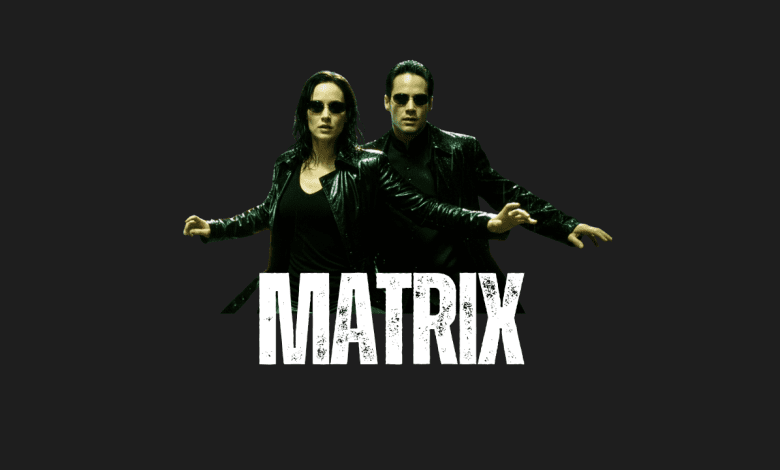
3. The Matrix: The Original “Metaverse” Nightmare
You cannot talk about existential sci-fi without bowing down to The Matrix. Released in 1999, it felt like a cool action movie. Watching it today, in an era of AI algorithms, VR headsets, and the very Metaverse I write about daily, it feels like a documentary.
The Comfort of the Blue Pill
We all know the premise: humanity is trapped in a simulation while machines harvest our energy. But the core philosophical debate is between the Red Pill (truth/suffering) and the Blue Pill (ignorance/bliss).
I’ll be honest—there are days when the Blue Pill looks tempting. The real world in the movie is cold, dark, and filled with sludge for dinner. The Matrix has steak (even if it’s fake).
Why It Still Matters
What defines “real”?
- Is it what you can touch and smell?
- Or is it simply electrical signals interpreted by your brain?
If I spend 10 hours a day in a virtual world, building friendships and creating art, is that experience “fake”? The Matrix challenges the hierarchy of reality. It suggests that freedom is more important than comfort, a lesson that is becoming increasingly hard to swallow in our convenience-obsessed society.
4. A.I. Artificial Intelligence: The Pinocchio of the Future
This movie destroys me. Every. Single. Time.
Steven Spielberg took a project started by Stanley Kubrick and created a modern fairy tale that is deeply disturbing. We follow David, a robotic boy (Mecha) programmed with a unique function: to love his owner unconditionally.
The Cruelty of Programming
The tragedy of David is that his love is real to him, but he is just a sophisticated appliance to everyone else. When his human family abandons him in the woods (a scene that still haunts me), his programming doesn’t allow him to move on. He spends millennia searching for the “Blue Fairy” to make him a real boy, believing that if he is “real,” his mother will love him.
A Warning for Creators
As we stand on the brink of creating AGI (Artificial General Intelligence), this film screams a warning.
- It isn’t about whether robots will kill us (like Terminator).
- It is about the moral responsibility we have toward the consciousness we create.
If we build a machine that can feel pain or love, do we have the right to turn it off? Do we have the right to throw it away when a newer model comes out? David’s story suggests that humanity might not be emotionally mature enough for the technology we are building.
5. 2001: A Space Odyssey: The Great Filter
If Star Wars is a rock concert, 2001: A Space Odyssey is a cathedral. It is quiet, vast, and makes you feel incredibly small.
Stanley Kubrick and Arthur C. Clarke didn’t want to tell a story; they wanted to simulate an experience. From the dawn of man to the furthest reaches of space, the film tracks our evolution, guided by the mysterious black Monoliths.
HAL 9000: The Perfect Villain
The most “human” character in the film is HAL, the ship’s computer. HAL isn’t evil; he is just trapped in a logic loop. He is given conflicting orders and decides that the only way to complete the mission is to remove the human element (the astronauts) because humans are error-prone.
Key Takeaway: We often view technology as a tool to conquer the universe. Kubrick argues that we are just toddlers playing with matches. We haven’t even conquered our own nature yet.
The Star Child
The ending is notoriously confusing, but I view it as optimistic. It suggests that humanity is not a finished product. We are a “work in progress.” Just as we evolved from apes, we are destined to evolve into something else—something beyond physical form, beyond time. It’s a humbling reminder that the universe is far stranger than we can imagine.
Final Thoughts: The Mirror in the Screen
These films don’t give us answers. They don’t tell us how to live. Instead, they hold up a mirror.
- Arrival asks us to cherish the moment.
- In Time asks us to value our time.
- The Matrix asks us to value the truth.
- A.I. asks us to be responsible creators.
- 2001 asks us to look at the stars and realize we have a long way to go.
In a world where we are increasingly merging with our technology, these stories are our modern myths. They help us navigate the gray areas where “human” and “machine” overlap.
I’d love to hear your perspective: Which of these films changed the way you look at the world? Or is there a hidden gem I missed that kept you up all night questioning your existence? Let’s discuss it in the comments.
You Might Also Like;