Rogbid SR15: The Ultra-Thin Titanium Smart Ring Disrupting the Market

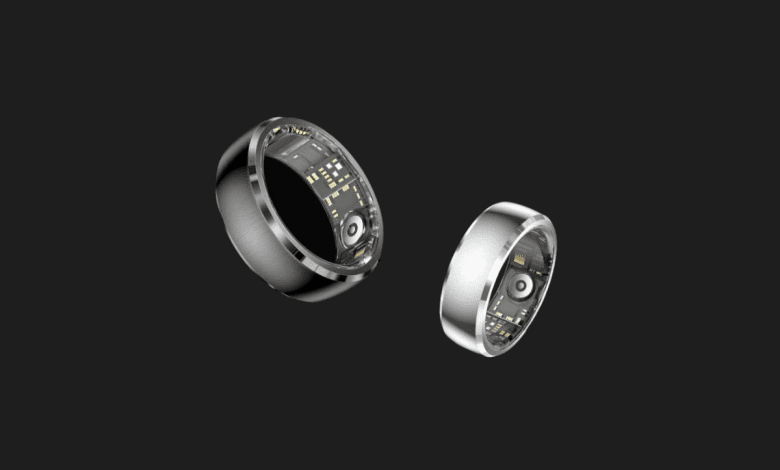

I have always had a love-hate relationship with smartwatches. I love the data they provide, but let’s be honest: sleeping with a bulky screen strapped to your wrist isn’t exactly comfortable. For a long time, I’ve been waiting for smart rings to truly hit the mainstream without requiring me to take out a second mortgage.
When I was researching the latest developments in wearable tech this week, I stumbled upon the newly announced Rogbid SR15 smart ring, and I have to admit, it completely caught me off guard. We are looking at a device that packs a titanium build, comprehensive health tracking, and haptic feedback into a tiny band—all for a fraction of what the industry giants charge.
Let’s dive deep into why I think the Rogbid SR15 might just be the wearable that makes you ditch your smartwatch for good.
The Titanium Advantage: Featherweight but Tough

The first thing I look for in a smart ring is how easily I can forget I’m wearing it. If it feels like a heavy bolt on my finger, it’s going in the drawer.
Rogbid clearly understood the assignment here. The SR15 boasts a titanium alloy body, which is the gold standard for premium wearables right now. It gives you the durability of steel but at a fraction of the weight.
- Thickness: At just 3 mm thin, it rivals the profile of a standard wedding band.
- Weight: Weighing in at a mere 3.2 grams, it’s so light that you’ll likely forget it’s there while typing, lifting weights, or sleeping.
I’ve tested rings made of cheaper plastics or heavy metals, and they always get in the way. Titanium is the way to go, and seeing it on a device in this price bracket is a massive win for consumers.


Under the Hood: 24/7 Health Tracking on Autopilot
A smart ring is only as good as its sensors, and I was genuinely surprised by the hardware packed inside this tiny chassis. The SR15 uses a PAR2860 main control chip paired with a highly sensitive 3918H PPG sensor.
But what does that actually mean for you and me? It means continuous, high-precision biometric data collection without draining the battery in a few hours.
Here is what the ring tracks around the clock:
- Real-time Heart Rate: Keeping tabs on your resting and active pulse.
- Blood Oxygen (SpO2): Crucial for understanding your respiratory health and sleep quality.
- Advanced Sleep Tracking: Because wearing a ring to bed is infinitely more comfortable than a watch.
- Stress Detection: Monitoring your body’s physiological responses throughout the day.
- Menstrual Cycle Tracking: A dedicated and highly useful feature for women’s health management.
Instead of navigating clunky menus on a tiny watch screen, the ring acts as a silent observer, gathering data and feeding it into smart algorithms to give you a complete picture of your health on your phone.
Fitness Tracking: 100+ Sports Modes (Is it Overkill?)
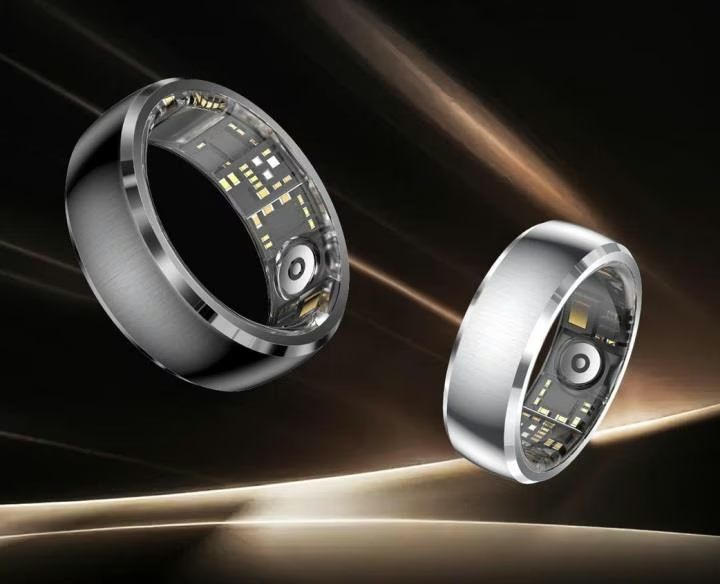
When I read that the Rogbid SR15 comes with over 100 sports modes, I actually laughed. Can a ring really differentiate between 100 different activities?
While it might sound like marketing overkill, the core functionality is what matters. Whether you are running, cycling, swimming, or doing yoga, the ring leverages its algorithms to measure your exercise duration, calculate calories burned, and track your heart rate zones.
Because it has an IP68 waterproof rating, you don’t even have to take it off in the shower or the pool. It’s designed to be a “wear it and forget it” fitness companion.
The Killer Feature: Haptic Feedback and Smart Controls
Here is where I think Rogbid really separates itself from the pack. A lot of smart rings on the market right now are passive data collectors. They track your stats, but they don’t interact with you.
The SR15 introduces micro-vibrations.
Imagine you are in a quiet meeting, and your phone is on silent. Instead of missing an important call, your ring gives you a subtle vibration. It works for calls, messages, and—my personal favorite—alarms. Waking up to a gentle tap on your finger instead of a blaring alarm clock (which wakes up everyone else in the room) is an absolute game-changer.
Furthermore, you can use the ring to control your media—skipping tracks or playing/pausing videos with a simple gesture. It feels like a piece of tech straight out of a sci-fi movie.
Battery Life: The Charging Case Paradigm
Battery life is the Achilles’ heel of micro-wearables. The SR15 packs a tiny 20 mAh battery, which realistically gives you up to 5 days of continuous use.
However, Rogbid took a page out of the true wireless earbud playbook. The ring comes with a dedicated charging case. When combined with the case, your total time away from a wall outlet extends to 10 days. I love this approach. If you take the ring off to shower, you can just pop it in the case, and it stays topped up effortlessly.
The Verdict: A $100 Market Disruptor?
Now, let’s talk about the elephant in the room: the price.
When you look at the current market leaders, you are usually looking at spending upwards of $300, and sometimes you’re even slapped with a monthly subscription fee just to see your own health data.
The Rogbid SR15 is launching at $100.
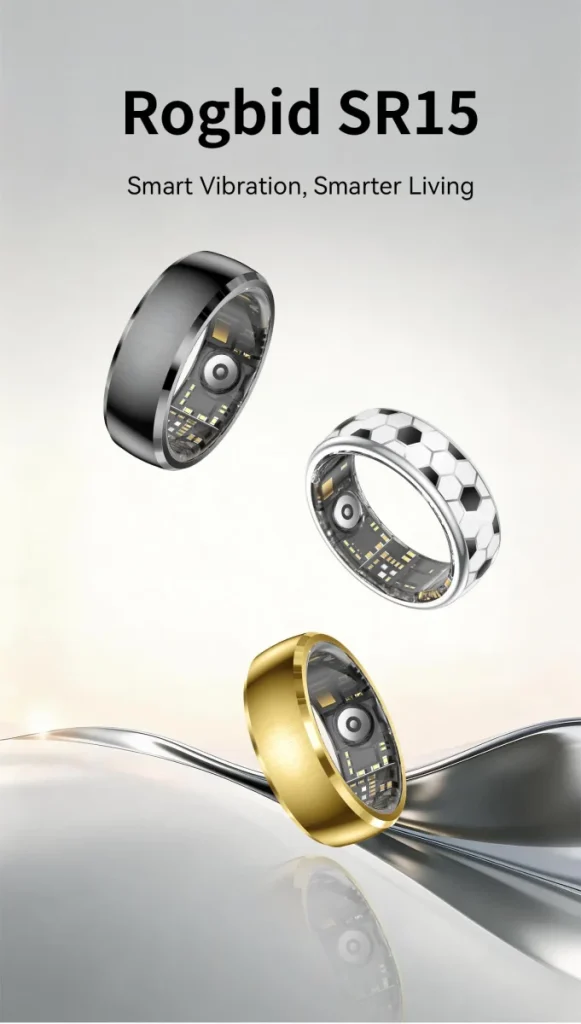
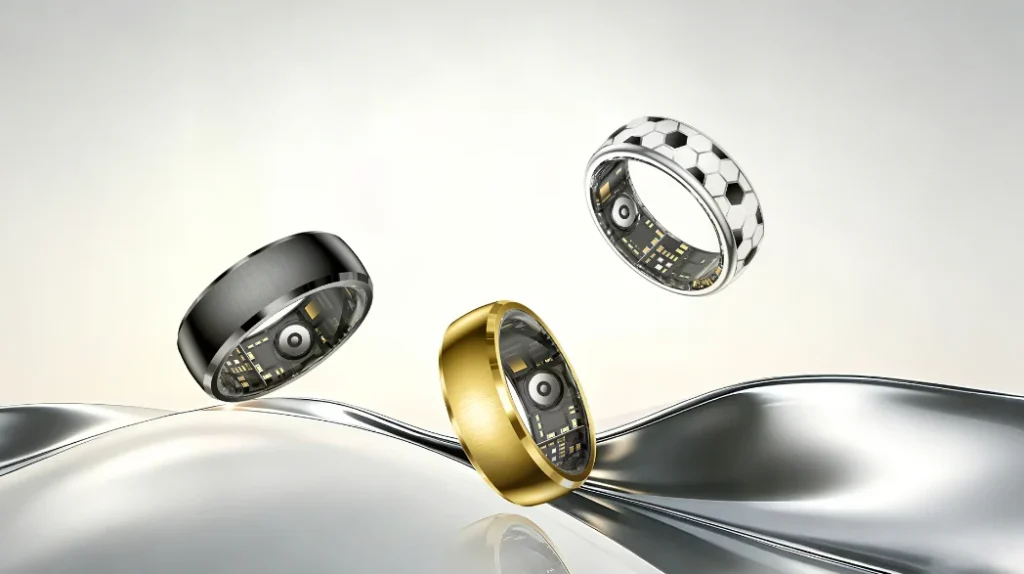
It’s available in sizes ranging from 7 to 14, and comes in Classic Gold, Silver, Black, and a rather unexpected special edition model for the upcoming 2026 FIFA World Cup.
In my opinion, this pricing strategy is going to force the bigger brands to rethink their models. You are getting titanium durability, comprehensive sensors, haptic feedback, and solid battery life for a fraction of the expected cost. It makes stepping into the world of smart rings accessible to almost anyone.
I’m seriously considering swapping my smartwatch for one of these just to simplify my daily routine. But I want to hear from you. Would you be willing to give up the screen on your wrist for the invisible convenience of a smart ring like the SR15? Let me know your thoughts!
You Might Also Like;