Robots Can Now Feel Pain: The “Nervous System” Update We Didn’t Know We Needed



We have all seen the movies. The Terminator gets shot, looks at the hole in his chest with zero emotion, and keeps walking. It’s cool on screen, but in reality, it’s a design flaw. If a robot doesn’t know it’s being damaged, it destroys itself.
For decades, giving robots a sense of touch was a nightmare of wiring and processing power. But a team of Chinese researchers has just cracked the code by doing something brilliant: They stopped trying to build a computer and started copying the human nervous system.
Mimicking the “Noise” of Our Nerves

Here is the thing about our bodies: our nervous system is chaotic. It’s a constant stream of “noisy” electrical signals. Traditional robots hate noise; they want clean, linear data.
However, this new NRE-Skin (Neuromorphic Robotic E-Skin) embraces that biological chaos. Instead of constantly sending heavy data packets to the central processor (the brain), it uses electric spikes—activity bursts—just like our neurons do.
Think of it like a barcode.
- When the skin is touched, pressure sensors convert that physical touch into a specific pattern of electrical pulses.
- The frequency tells the system how hard the pressure is.
- The pattern tells the system where it is coming from.
I find this fascinating because it solves the “energy problem.” By only sending signals when there is a spike in activity (an event), the robot saves massive amounts of battery power. It’s not “thinking” about its arm until its arm is actually touched.


The “Ouch!” Factor: Reflexes and Pain Thresholds

This is where it gets a little spooky but incredibly useful. The skin isn’t just a sensor; it’s a defense mechanism.
The researchers programmed a “pain threshold” into the system. If the pressure on the skin exceeds a certain limit—say, a sharp object or a crushing grip—the system triggers an immediate reflex arc.
Here is the genius part: When you touch a hot stove, your hand pulls back before your brain even realizes it hurts. That’s your spinal cord taking over to save you time. This robot does the exact same thing. The reflex happens at a local level, without needing to ask the main AI brain for permission.
In the experiments, when the robot arm felt “pain,” it instantly retracted. They even connected it to a robot face, and when the pain threshold was crossed, the robot winced. Watching a machine physically react to pain with a facial expression? That is the moment the “Uncanny Valley” gets a lot deeper.
The “LEGO” Approach to Repair

As a tech enthusiast who hates how hard it is to repair modern phones, this next feature made me smile.
Skin—whether human or robotic—is the first line of defense, so it gets damaged. The researchers realized that replacing a whole arm because of a scratch is wasteful. So, they designed the NRE-Skin to be modular.
- It’s made of patches that lock together with magnets.
- If one patch gets destroyed, you just pop it off and click a new one on.
- The system reads the unique “identity code” of the new patch and instantly recognizes it. No drivers to install, no rebooting. Just “Plug and Play” skin.
Why Does This Matter?
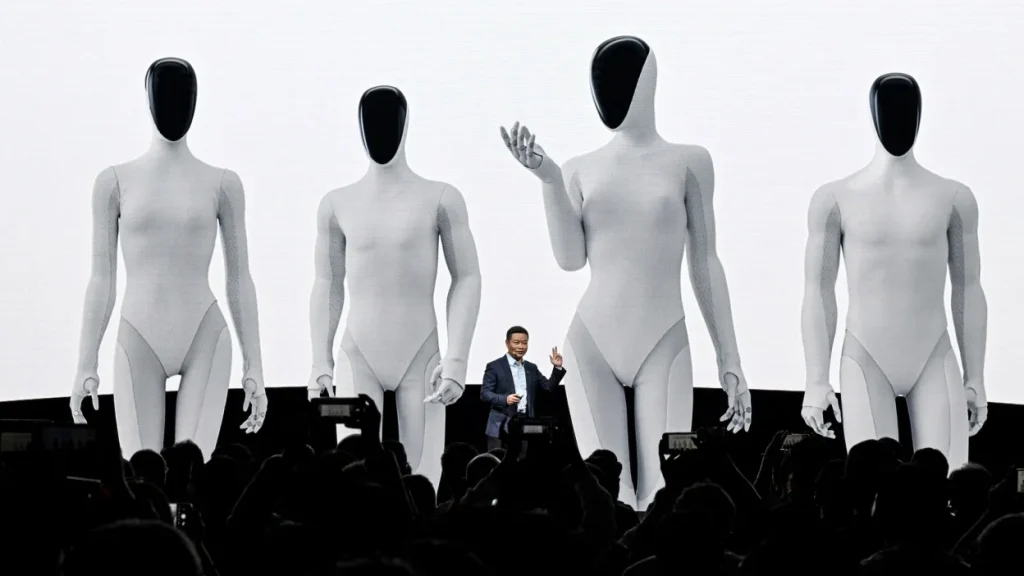
You might be thinking, “Ugu, why do we want robots to feel pain? Isn’t the point that they don’t complain?”
Actually, pain is essential for survival.
- Self-Preservation: A robot that feels pain won’t crush its own fingers in a door or walk into a fire. It protects the investment.
- Prosthetics: Imagine an artificial hand for an amputee that actually pulls back when it touches something too sharp or hot. This isn’t just for industrial robots; it’s the future of human prosthetics.
- Safety: If a factory robot can “feel” that it bumped into a human worker, it can stop instantly, far faster than a camera-based system could react.
My Final Verdict
Currently, the system only detects pressure. But the roadmap includes adding temperature sensors soon. We are inching closer to a world where the handshake you get from a robot might feel indistinguishably human—warm, firm, and reactive.
It makes me wonder: If a robot can feel pain and react to it to save itself, at what point do we start treating it with empathy?
Let me know what you think in the comments. Would you trust a robot more if it knew what “pain” was?
You Might Also Like;