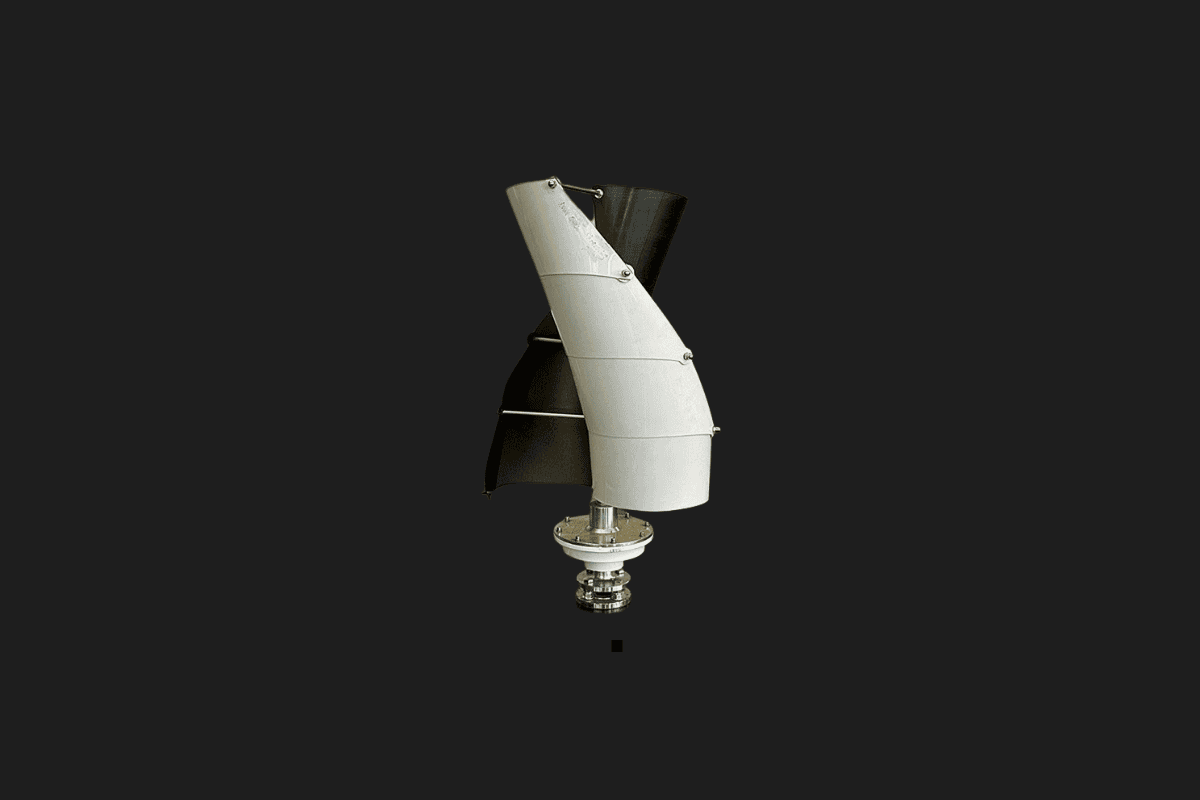
I’ve always been fascinated by how we harness nature’s power, but let’s be honest: manufacturing renewable energy hardware can sometimes be a massive logistical nightmare. When I was recently diving into the mechanics of vertical-axis wind turbines—the ones you increasingly see popping up on city rooftops—I realized just how heavy, expensive, and difficult those curved blades are to produce.
Historically, you need massive metal molds, heavy aluminum, and a ton of energy just to build the exact machinery that’s supposed to help us save energy. It feels a bit ironic, doesn’t it? But this week, I stumbled upon a brilliant breakthrough from researchers at Concordia University that completely flips the script. We are now looking at 4D printed composite blades that are 80% lighter and literally shape themselves.
Here is my deep dive into why this self-forming technology is about to change the game for urban clean energy and beyond.
The Magic of 4D Printing: No Molds Required


You might already be familiar with 3D printing, but 4D printing adds an entirely new dimension: time and transformation. The material actually reacts and changes shape after the manufacturing process is complete.
Here is the coolest part about the Concordia University study: these researchers aren’t actively trying to print a complex, curved blade. Instead, they are manufacturing flat carbon fiber and epoxy panels.
- Self-Shaping Materials: Once the flat panels are cured and cooled down, the differing mechanical properties of the layered materials cause them to bend and curl completely on their own.
- Zero Heavy Machinery: The material naturally reacts to its environment and settles into the perfect aerodynamic curve.
- Massive Cost Reductions: By eliminating the need for heavy metal molds and complex shaping machinery, the barrier to entry for manufacturing these turbines drops significantly.
If you ask me, removing the clunky, traditional molding process from the equation is an absolute game-changer for scaling up local, urban energy production.
The Brilliance of the “Inverse Design” Approach


Typically, engineering a composite material involves a lot of trial and error. You stack the carbon fiber, cure it, see how it shapes up, and if it’s wrong, you start completely over. The team behind this new turbine blade did something totally different, which I find incredibly smart. They call it Inverse Design.
Instead of guessing how a flat panel might curl, they decided exactly what aerodynamic shape they wanted the final blade to be. Then, they used complex mathematics to calculate backward. They determined precisely how to lay and weave the flat carbon fiber sheets so that, upon cooling, they would naturally warp into that exact target design.
Think of it like baking a cake that perfectly frosts and decorates itself while it cools down on the kitchen counter. It’s highly calculated, predictable, and extremely efficient.
80% Lighter, 100% Better Performance?
When I read the actual lab test results, I was genuinely shocked. You might assume that a self-curling carbon panel would be fragile or less efficient than a solid piece of machined metal. The reality is the exact opposite:
- Drastic Weight Reduction: These new composite blades are roughly 80% lighter than commercial aluminum blades of the exact same size.
- Higher Rotational Speeds: In controlled lab environments, the dramatic reduction in weight allowed the turbines to spin significantly faster.
- Increased Energy Output: Faster spinning with less physical resistance means these turbines have the potential to generate much more electricity under the exact same wind conditions.
Lower weight also translates to easier transportation and drastically simplified rooftop installations. You wouldn’t need a heavy-duty crane to get these set up on a standard residential or commercial building.
A Future Beyond the Wind
As someone who loves tracking where technology is heading, I always look at how a specific breakthrough can bleed into other industries. This isn’t just about sticking better, lighter turbines on our city buildings—though that alone is a massive win for the environment. Think about the broader applications of “Inverse Design” and self-shaping composites:
- Aerospace: Imagine lighter, self-forming wing components that reduce the overall weight of an aircraft, saving thousands of gallons of jet fuel.
- Automotive: We could see cheaper, mold-free manufacturing processes for electric vehicle bodies, making EVs more affordable for everyone.
- Smart Architecture: Building materials that react and shape themselves based on temperature or weather conditions to naturally insulate our homes.
Seeing heavy, clunky manufacturing processes replaced by smart, self-assembling materials makes me incredibly optimistic about our tech future. It proves that sometimes, the best way to solve a complex engineering problem is to step back and let the materials do the hard work for you. I am definitely going to keep a close eye on how quickly this leaps from the university lab to our local rooftops.
What about you? If you could use this “self-shaping” 4D material to redesign an everyday object to be 80% lighter and more efficient, what would you choose to build?
You Might Also Like;
- The New Era of Space Mechanics: Extending Satellite Lifespans
- AI Discovers Groundbreaking Non-Opioid Painkiller
- Mind Over Matter: What Neuralink’s First Human Trial Really Means for Our Future
-

-

-

-

-

-

-

-

-

-

-

-