
I grew up watching sci-fi movies where metallic officers patrolled the streets, scanning crowds with red laser eyes. It always felt like a distant, slightly dystopian fantasy—something for the year 2080, maybe. But after reading the latest projections from criminology experts, I realized I was wrong. The future isn’t decades away; it’s practically knocking on the door.
According to Professor Ivan Sun from the University of Delaware, we aren’t just talking about clumsy robots that bump into walls anymore. We are talking about fully autonomous, law-enforcing machines that could be patrolling our streets by 2031. That is just five years from now.
Here is why this transition is happening faster than any of us expected, and what it actually means for our daily lives.
Why Now? The Perfect Storm for Automation
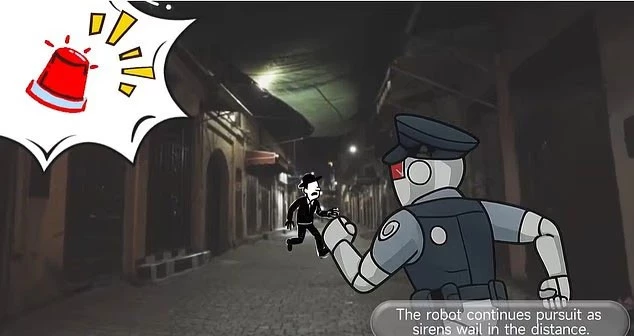
I’ve always believed that necessity drives invention. Right now, global law enforcement is facing a crisis. We are seeing a combination of rising crime rates, increasingly complex criminal networks, and a severe shortage of human personnel. Police departments simply cannot hire enough people to keep up.
This is where the “Robocop” concept shifts from a movie script to a logistical solution. Professor Sun argues that deploying robots is becoming an inevitable answer to these shortages. In countries like China, we are already seeing early versions of humanoid police. But the West is about to catch up, and the technology is leaping forward.
Capabilities That Exceed Human Limits
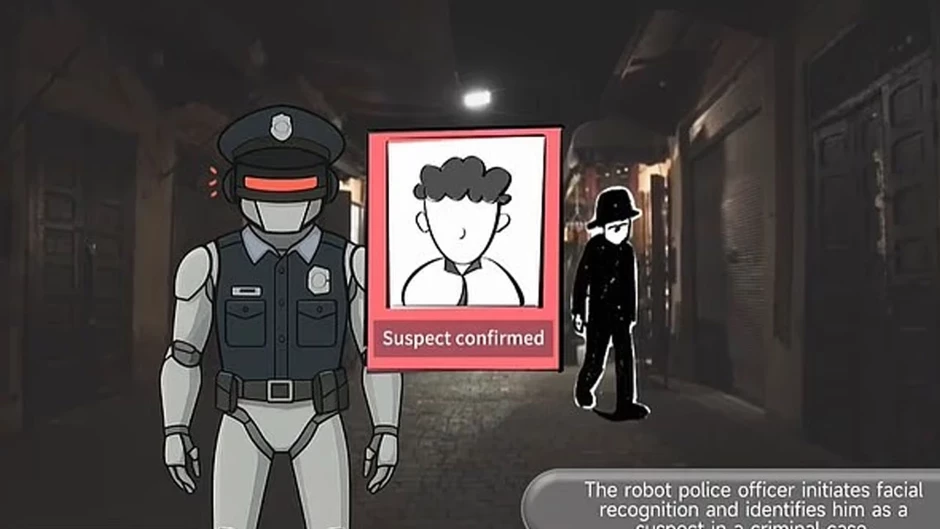
What really struck me while researching this isn’t just that robots are coming, but what they can do. We are not talking about a robot that just stands there and takes a police report.

Imagine a scenario where a suspect flees a crime scene. A human officer has physical limits—adrenaline fades, muscles tire, and breathing gets heavy. A robot? It doesn’t stop.
Here is what the next generation of robotic police will likely be capable of:
- Tireless Pursuit: They can chase a suspect for kilometers without slowing down, effectively ending the “running away” strategy.
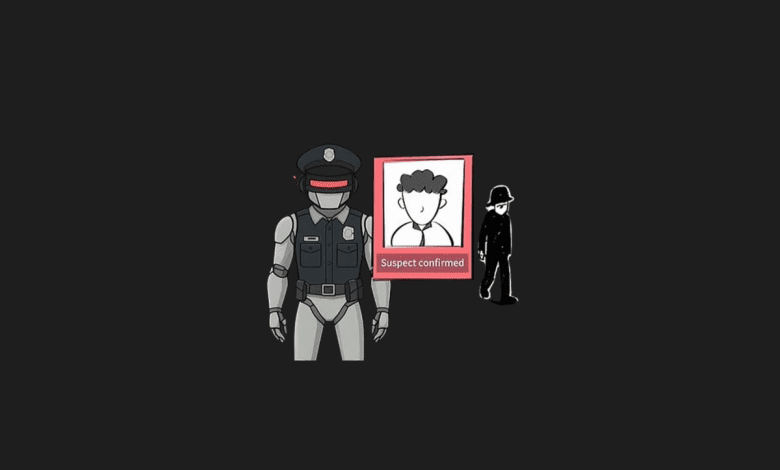
- Biometric Scanning on the Move: While chasing, the robot is simultaneously scanning the suspect’s face, gait, and biological data, locking in their identity before they are even caught.
- Long-Range Threat Detection: This is the game-changer. AI-equipped units will be able to detect if a suspect is carrying a weapon from 200 meters away. This is a level of visual acuity no human eye can match.
The “Warrior” vs. The “Service” Bot

There is a fascinating psychological divide happening right now. In places like the UAE or Singapore (where the “Xavier” robot patrols), robots are currently seen as “Service Bots.” They help tourists, remind people of social distancing, or offer language support. They are friendly.
However, Professor Sun’s research into police attitudes—including those in the UK—shows a different preference. Police officers don’t want receptionists; they want partners.
The data suggests that officers are much more open to “Warrior” robots. Why? Because of safety. Just like we use robots for bomb disposal today, the logic is to send a machine into a high-risk situation first. If there is an armed standoff, wouldn’t you rather send a replaceble metal chassis than a human father or mother?
Augmented Reality: The Human Upgrade
It is not just about replacing humans; it is about upgrading them. I found it incredibly interesting that this roadmap includes AI-powered smart helmets for human officers.
Think of it like the Heads-Up Display (HUD) in an Iron Man suit. These helmets would provide real-time data, facial recognition overlays, and even tactical advice during critical moments. The system could analyze a threat and offer guidance on whether to use force or de-escalate. It blurs the line between man and machine, turning the officer into a cyborg of sorts.
The Ethical Elephant in the Room

Of course, I can’t write about this without addressing the massive ethical concerns. The technology is moving faster than the legislation.
- Who is responsible? If a robot uses excessive force, who goes to court? The manufacturer? The commanding officer? The AI?
- Privacy: Having a machine that scans everyone’s biometric data constantly is a privacy nightmare for many.
- Decision Making: Can we trust an algorithm to make split-second life-or-death decisions?
Professor Sun admits that legal and moral debates are still raging, but he views the integration as “unstoppable.” The efficiency and safety benefits are just too high for governments to ignore.
My Perspective
I look at this with a mix of excitement and hesitation. On one hand, the idea of a police force that is unbiased, tireless, and bulletproof sounds like the ultimate safety upgrade. On the other hand, removing the “human element”—with all its empathy and discretion—from law enforcement feels like a dangerous step.
By 2031, seeing a robot on the corner might be as normal as seeing a traffic light. The question is, will we feel safer, or just more watched?
I’d love to hear your thoughts on this. If you were in trouble, would you trust a robot officer to save you, or would you insist on a human?
You Might Also Like;