The End of Darkness? Neuralink’s “Blindsight” is Ready for Its First Human Patient


I remember watching Star Trek: The Next Generation as a kid and being fascinated by Geordi La Forge. He was blind, but his iconic visor allowed him to “see” things no normal human could—like heat signatures and energy waves. It felt like pure fantasy back then.
But this week, Elon Musk and Neuralink made an announcement that gave me goosebumps: The fantasy is becoming reality.
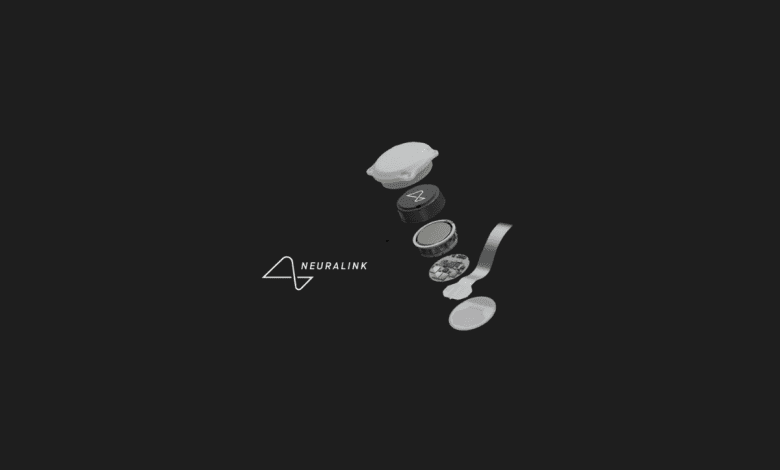
Neuralink has officially announced that “Blindsight,” their revolutionary device aimed at restoring vision, is ready to be implanted in a human for the first time. If regulatory bodies give the green light, we aren’t just talking about a medical procedure; we are talking about a historical pivot point for humanity.
A New Hope for the “Uncurable”
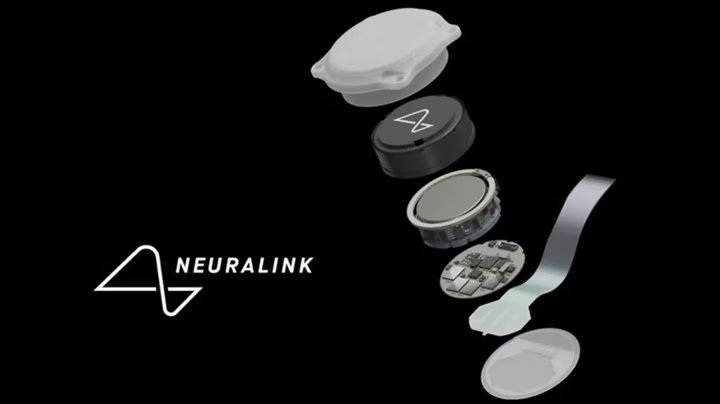
It’s been exactly two years since Neuralink implanted its first “Telepathy” chip into a paralyzed patient (remember Noland Arbaugh playing chess with his mind?). Now, the team is shifting gears to something arguably even more complex: Vision.
What struck me most about this announcement is the confidence. The company has expanded its clinical trials from 12 participants to 21 worldwide. They aren’t just testing the waters anymore; they are diving in.
For decades, if you lost your optic nerve—the cable connecting your eye to your brain—that was it. Game over. There was no way to bridge that gap. Blindsight changes the rules of the game.

How on Earth Does This Work?
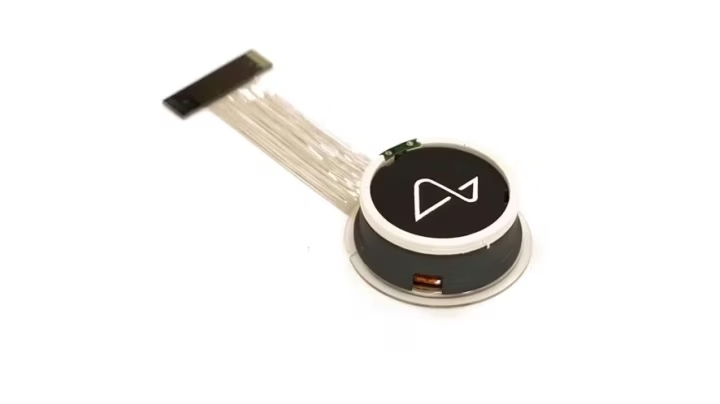
I dug into the technical details, and the approach is fascinating because it completely ignores the eye itself.
If your eyes are broken cameras, Blindsight doesn’t try to fix the lens. Instead, it bypasses the camera and plugs the video feed directly into the “TV screen” (your brain).
Here is the process in simple terms:
- The Input: A small camera (likely embedded in a pair of glasses) captures the world around you.
- The Bridge: That visual data is processed wirelessly.
- The Output: An implant sitting on the visual cortex of the brain stimulates neurons directly to recreate the image.
Musk stated something that blew my mind: “Even if someone has lost both eyes and their optic nerve, provided the visual cortex is intact, they could see again.” He even theorized that people who have been blind since birth could gain sight for the first time.
Managing Expectations: It Starts with “Atari Graphics”

I appreciate that Musk—usually known for his hyper-optimistic timelines—is managing expectations here. He was very clear: Don’t expect 4K vision on day one.
The first patients won’t see the world in high definition.
- The vision will likely look like early 8-bit Nintendo graphics.
- It will be low-resolution, pixelated, and strange.
But think about it—if you have lived in total darkness for years, seeing a pixelated shape of your loved one or navigating a room without a cane isn’t “low res.” It’s a miracle.
Over time, as the brain adapts and the hardware improves (more electrodes = more pixels), the resolution will sharpen.
The FDA and the Skeptics

Of course, we have to look at the other side of the coin. Is this safe?
The FDA seems to think it has merit. In September 2024, they granted Blindsight “Breakthrough Device” status. This doesn’t mean it’s approved for sale, but it means the FDA considers it critical enough to fast-track the review process.
However, I also read a study from the University of Washington published recently, and the academic community is cautious.
- The Challenge: Our brains don’t work like computer monitors. You can’t just light up a neuron and expect it to act like a perfectly colored pixel.
- The Risk: There is a fear that the image might be distorted or hard for the brain to interpret.
I think this skepticism is healthy. We need scientists to question the safety while engineers push the boundaries.
Beyond Therapy: The “Geordi La Forge” Era

Here is where my inner sci-fi geek starts hyperventilating. Musk hinted that Blindsight isn’t just about restoring “normal” vision. It’s about expanding it.
Once you have a digital interface connected to your visual cortex, why stop at the visible light spectrum?
- Infrared Vision: Seeing heat signatures (night vision).
- Ultraviolet Vision: Seeing colors flowers use to attract bees.
- Radar: “Seeing” distance and solid objects through fog.
This is the transition from medical restoration to transhumanist enhancement. We are approaching a future where a blind person might eventually have better vision than a sighted person.
The Next Step
We are waiting for the final regulatory nod for that first surgery. When that happens, the world will be watching. It won’t be perfect, it will be glitchy, but it will be the first light in the dark for millions.
I have to ask: If you had the option to upgrade your healthy eyes to see in Infrared or Zoom in like a camera, would you get a brain chip, or is that crossing a line for you? Let’s talk in the comments!
You Might Also Like;