Neuralink Enters Mass Production Era: The Dawn of Human 2.0



Let’s be honest; when I watched movies like Ghost in the Shell or The Matrix as a kid, I never actually thought those technologies would become reality within my lifetime. But the news I read last night tore down the thin veil between science fiction and reality.
Neuralink is no longer just a “lab experiment.” The company is officially targeting mass production of brain implants in 2026 and aims to fully automate the surgical process.
When I read this, I had to pause and think: Is this just a medical advancement, or is it the beginning of a new era for Homo Sapiens—a version update to “Human 2.0“? Let’s dive into the details and the background of this revolution together.
Mass Production: From “Boutique” Chips to Industrial Solutions
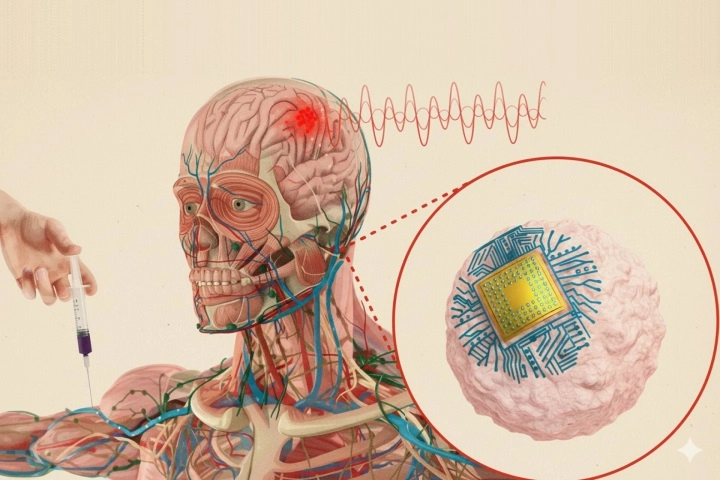
Until now, Brain-Computer Interfaces (BCI) have been hand-crafted, incredibly expensive, and slow-to-implement technologies. Neuralink’s 2026 vision aims to change this fundamentaly.
The most critical detail in Musk’s announcements, in my opinion, isn’t the “chip” itself, but the “process.” The company wants to eliminate manual surgery entirely and entrust the operations to robots. Why is this so important?
- Speed: A delicate procedure that takes hours by human hands could drop to minutes with robots.
- Scalability: Mass production means this technology won’t just be for a lucky few, but accessible to thousands in need.
- Cost: Automation naturally drives down costs, making the technology “attainable.”
Here is my take: Musk is trying to do to neurosurgery what he did to the automotive industry with Tesla (the Gigafactory logic). They want to make brain surgery as standard, fast, and routine as a LASIK eye surgery.

The 12 Pioneers and Proof of Mind Power

This technology isn’t just a paper dream. Looking at the data from September, I see there are currently 12 “Cyborgs” (I don’t mean this in a bad way; I think it’s cool) walking among us.
These 12 individuals are people who have lost mobility due to severe paralysis or neurological conditions. But what they have achieved with the Neuralink implant is mind-blowing:
- Gaming by Thought: They can play video games just by looking at the screen and “thinking” the moves.
- Digital Freedom: They browse the internet and control mouse cursors with their minds.
- Communication: They are re-establishing their presence in the digital world, bypassing physical limitations.
As a gamer myself, I can’t help but imagine; playing a game at the speed of thought, without a keyboard or mouse, with zero latency… While this is currently a “lifeline” for paralyzed individuals, could it be the ultimate “interface” we all desire in the future?
Why Automation is Non-Negotiable

I need to touch on a technical detail here. The human brain has the consistency of jelly and is an incredibly complex structure. Placing electrodes much thinner than a human hair into it leaves zero room for shaking hands or human error.
The surgical robot developed by Neuralink (which, to me, looks a bit like the turrets from the game Portal) can insert these electrodes with micron-level precision, avoiding blood vessels entirely. Musk’s goal of “full automation in 2026” isn’t about putting surgeons out of work; it’s about transcending the physical limitations of the human hand.
Ugu’s Note: If these robots work as promised, getting brain surgery might become less stressful than going to the dentist. It sounds crazy, but the data points in that direction.
The Future: Therapy or Upgrade?
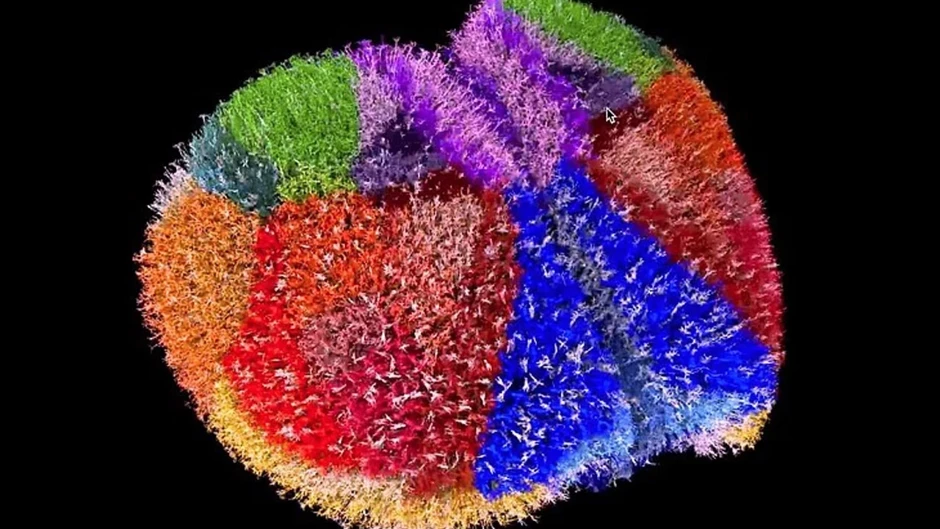
Right now, the focus is purely medical. Spinal cord injuries, ALS, paralysis—these are the priorities. We can all agree on this; for these conditions, this technology is a miracle.
However, when the words “Mass Production” enter the chat, other questions inevitably pop into my mind. When a technology becomes cheap and widespread, its use cases expand. What happens tomorrow when healthy people want these chips to:
- Learn foreign languages instantly,
- Back up their memories to the cloud,
- Establish a symbiotic relationship with AI?
2026 might go down in history not just as a medical milestone, but as the year the definition of humanity began to change.
Conclusion: Are We Excited or Terrified?
Neuralink’s 2026 goals are the concrete proof of how fast technology is accelerating. Personally, I take my hat off to any technology that allows a paralyzed person to text their loved ones just by thinking.
Automation and mass production are the keys to making this miracle “mass market.” But like any great power, this comes with great responsibility. Security, privacy, and ethics will be the hottest topics of discussion in the coming years.
What do you think? If it was proven 100% safe and promised super-human abilities (faster learning, machine control, etc.), would you get a chip implanted in your brain? Or are you one of those who say, “I’ll stay analog”?
Let’s meet in the comments and discuss the future.
You Might Also Like;