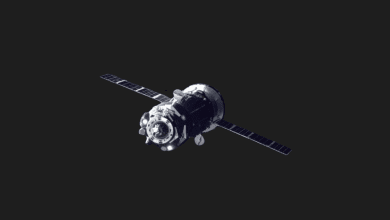
NASA made striking discoveries in 2025, ranging from Mars to the Sun, from asteroid Bennu to distant galaxies, and from black holes to comets. Here are the 7 biggest NASA discoveries of the year.
The year 2025 went down in history as a year full of uncertainty for NASA. While the agency struggled with mass layoffs, budget cuts, and leadership changes, it managed to achieve discoveries that shook the scientific world despite all challenges. Here are the seven groundbreaking NASA discoveries that stood out in 2025.
Potential Biosignatures on Mars


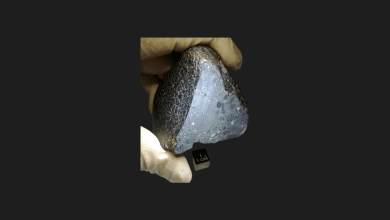
In July 2024, NASA’s Perseverance rover discovered an extraordinary rock in Mars‘ Jezero Crater. This rock, which features spots resembling poppy seeds and leopard patterns on its surface, caught the attention of scientists. Perseverance took a core sample of this rock, named “Chevaya Falls,” and analyzed its surface chemistry.
It was determined that the rock contains essential components for life such as organic carbon, sulfur, oxidized iron (rust), and phosphorus, as well as minerals associated with microbial metabolism on Earth. While the findings were published in the journal Nature, it is stated that Chevaya Falls could be one of the strongest signs of past life on Mars. The core needs to be brought to Earth and analyzed for definitive verification. However, the Mars Sample Return mission is currently on hold.
3I/ATLAS: An Interstellar Visitor


Most astronomers know that the asteroids and comets they observe belong to the Solar System. However, in June, the NASA-supported ATLAS system detected a third interstellar object coming from a distant corner of our galaxy. This comet, named 3I/ATLAS, originated from another star system.
Researchers launched a global race to collect as much data as possible before the object disappeared from view. Initial analyses revealed that 3I/ATLAS is notable for its exceptionally high carbon dioxide content and aged structure. NASA collected comprehensive data and images by observing the comet with multiple spacecraft. This information will continue to be an important resource for astronomers even after 3I/ATLAS leaves the Solar System.
Betelgeuse’s Small Star Companion
The red supergiant Betelgeuse in the Orion constellation has been displaying strange light patterns that have puzzled astronomers for years. In 2024, it was suggested that Betelgeuse might have a small companion star that could explain this odd behavior.

This year, a team led by senior researcher Steve B. Howell from NASA’s Ames Research Center confirmed this hypothesis. The small and faint star, named “BetelBuddy,” was photographed in high resolution using the Gemini North telescope in Hawaii.
Thanks to this discovery, Betelgeuse’s brightness, which changes in an approximately 400-day cycle, and its secondary 6-year period can now be understood. Although variable stars are common, Betelgeuse’s long-term dimming phase had remained unexplained for centuries.
Uranus’s Hidden Moon


NASA’s James Webb Space Telescope discovered a previously unnoticed moon orbiting Uranus this year. This small moon, named S/2025 U1, was missed during the Uranus flyby performed by Voyager 2 nearly 40 years ago. It was discovered in February thanks to Webb’s powerful Near-Infrared Camera (NIRCam).
Astronomers determined that the moon is located at the edge of Uranus’s inner rings, approximately 56,000 kilometers away on the equatorial plane. This small moon, which is about 10 kilometers in diameter, suggests that Uranus may have many more hidden moons.
The Heaviest Black Hole
One of the discoveries that stood out this year was the identification of the heaviest black hole. Using data from the Hubble Space Telescope and the European Southern Observatory’s Very Large Telescope (VLT), astronomers discovered a giant black hole with an estimated mass 36 billion times that of the Sun.
This cosmic giant is located at the center of a supergiant galaxy named Cosmic Horseshoe, 5 billion light-years from Earth. The galaxy’s massive mass bends nearby light, creating an Einstein ring. This natural lensing phenomenon made the detection of the black hole possible. The study demonstrated how effective combining gravitational lensing with telescope data is in cases where classical methods are insufficient for detecting black holes.
Samples from Asteroid Bennu

Samples taken from Asteroid Bennu also excited the scientific world this year. NASA’s OSIRIS-REx mission found components carrying the building blocks of life in the Bennu samples that returned to Earth in 2023. In research published in Nature and Nature Astronomy, protein building block amino acids, five nucleobases that form RNA and DNA, and salty solutions were detected in the samples.
Even more impressive was the presence of sugars in the samples. Thus, it was confirmed that Bennu carries all the essential components necessary for life. This strongly suggests that asteroids like Bennu transported the fundamental components of life to Earth. Interestingly, the only sugar missing from the samples was deoxyribose, the primary component of DNA. This supports the RNA world hypothesis regarding the origin of life. This hypothesis suggests that Earth’s earliest life forms consisted of RNA molecules capable of containing genetic information and replicating.
The Sun Seen Up Close for the First Time

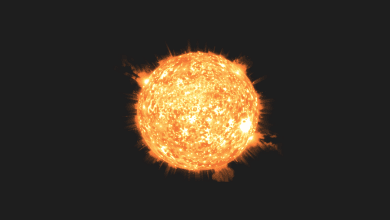
Another significant development was obtaining the closest images of the Sun ever taken. NASA’s Parker Solar Probe spacecraft made history by approaching within just 6.12 million kilometers of the Sun.
Photos and videos released in July show the Sun’s corona in unprecedented detail. These high-resolution data obtained with the WISPR (Wide-Field Imager for Solar Probe) camera reveal coronal mass ejections and powerful solar winds in detail. These data are of critical importance for improving the prediction and prevention of geomagnetic storms that could affect the magnetosphere on Earth.
You Might Also Like;
- Pocket-Sized Wind Energy: The Revolution for Off-Grid Living
- The Wait is Finally Over: Native YouTube Lands on Apple Vision Pro
- Inside the Beast: Samsung and NVIDIA’s Massive AI Factory with 50,000 GPUs
-

-

-

-
-

-
-
-
-
-
-
-