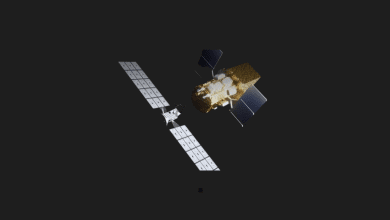

I clearly remember diving into the incredible discoveries made by the Neil Gehrels Swift Observatory a few years back, completely fascinated by how it tracks the most violent explosions in the universe. So, when I woke up to the news that NASA had officially greenlit and launched a literal space tow-truck to save this legendary telescope from a fiery death in our atmosphere, I couldn’t wait to unpack the details.
This isn’t just a routine software update or a minor trajectory tweak. We are witnessing a high-stakes, orbital rescue operation called the Swift Boost Mission. If you love the idea of robots saving robots in the vacuum of space as much as I do, buckle up. Here is everything you need to know about how NASA plans to give Swift another decade of life.
Why Swift Needed a Lifeline

Since its launch in 2004, the Swift Observatory has been our primary set of eyes for gamma-ray bursts (GRBs). But right now, it is fighting a losing battle against the Sun.
As we approach the peak of the current solar cycle, increased solar activity causes Earth’s atmosphere to expand slightly outward. This expansion creates extra drag on satellites in low Earth orbit. I was shocked to see just how fast this drag was pulling Swift down; initial assessments showed that without an immediate intervention, the observatory would have re-entered Earth’s atmosphere and burned up by the end of this year.
Losing Swift would mean losing a critical tool in modern astronomy. That’s where the hero of our story, a robotic spacecraft named LINK, comes in.
Meet LINK: The Orbital Paramedic

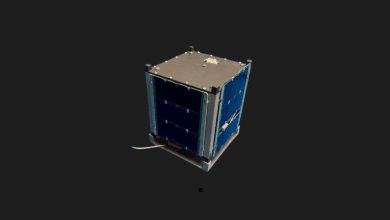
Developed by the Arizona-based aerospace company Katalyst Space, LINK is essentially an autonomous orbital servicing vehicle. The goal of the Swift Boost mission isn’t just to refuel the telescope, but to physically grab it and push it to safety.

Here is a quick breakdown of the rescue asset:
- Spacecraft: LINK (developed by Katalyst Space)
- Launch Date: July 3
- Launch Location: Kwajalein Atoll, Marshall Islands
- Mission Goal: Boost Swift into a new, 370-mile-high orbit
- Expected Lifespan Extension: Approximately 10 years
A Launch Straight Out of Sci-Fi
One of my favorite details about this mission is how it got off the ground. Instead of sitting on a massive vertical launchpad in Florida, the Swift Boost mission utilized an air-launch system.
The LINK spacecraft was integrated into a Pegasus XL rocket (built by Northrop Grumman). This rocket was then strapped to the belly of a massive carrier aircraft known as Stargazer. The plane took off from the Marshall Islands, climbed to an altitude of about 40,000 feet, and literally dropped the rocket. After a brief free-fall, the Pegasus XL ignited its engines and blasted LINK into the cosmos. I always find air-launched rockets incredibly elegant—it bypasses so much of the dense lower atmosphere and offers immense flexibility for launch locations.
The Delicate Dance of Orbital Docking

Right now, LINK is active and talking to ground control. Over the next few weeks, the engineering teams at Katalyst Space will put the robotic craft through a grueling series of system checks. They need to ensure the propulsion, navigation, and sensor suites are working flawlessly before making a move toward a multi-million dollar NASA asset.
Once the health checks are complete, the real nail-biting phase begins.
- The Approach: LINK will carefully navigate toward the Swift Observatory, conducting a detailed visual and sensory inspection to ensure the telescope is stable.
- The Capture: Using three specialized robotic arms, LINK will reach out and firmly grasp the observatory. I can only imagine the tension in the control room during this phase—one wrong move could damage Swift’s delicate instruments.
- The Boost: Once securely docked, LINK will ignite its thrusters, slowly and methodically pushing the combined mass up to a safe 370-mile orbit.
Because they have to be incredibly gentle to avoid snapping any of Swift’s solar panels or antennas, this boosting maneuver is expected to take anywhere from 10 to 12 weeks.
Why Saving Swift Matters (The Secret of Your Gold Jewelry)
You might be wondering: Why go through all this trouble for a 20-year-old telescope?
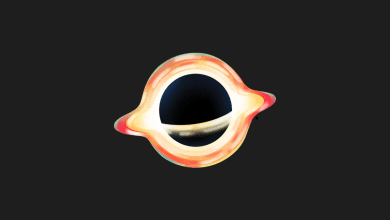
The answer lies in the extreme physics of the cosmos. Swift monitors gamma-ray bursts—events so powerful that in mere seconds, they release more energy than our Sun will produce over its entire 10-billion-year lifespan. These bursts are the birth cries of black holes, caused by massive supernovas or the violent collisions of ultra-dense neutron stars.
But here is the part that always blows my mind. According to Swift’s Principal Investigator, Brad Cenko, the data collected by this observatory has helped confirm that the heaviest elements on the periodic table—things like gold and platinum—are forged in the fires of these exact cosmic collisions.
Every time I look at a gold ring or a platinum watch, I think about the fact that those atoms were created in a cataclysmic explosion billions of light-years away. Without Swift, our ability to track and study the origins of these elements would be severely crippled.
A New Era of Space Sustainability
The Swift Boost mission is more than just a rescue operation; it is a critical test for the future of space sustainability. For decades, our approach to dying satellites was simple: let them fall and burn, or push them into a “graveyard orbit” and forget about them.
By proving that we can send a robotic mechanic to intercept, dock with, and relocate an aging satellite, NASA and Katalyst Space are opening the door to a massive industry of in-orbit servicing. If this works, we might start seeing fleets of maintenance drones extending the lives of weather satellites, communications arrays, and other vital infrastructure, saving billions of dollars and reducing space debris.
Personally, I’ll be glued to the mission updates as LINK makes its final approach in the coming weeks. The idea that we are actively performing mechanical surgery in low Earth orbit is just another reminder of how fast our capabilities in space are evolving.
What about you? If you could fund a robotic rescue mission to save any piece of retired, dying, or historic space technology currently drifting in the void, which one would it be and why?
You Might Also Like;