Imagine entering a virtual world where you don’t just see or hear your environment — you feel it. The warmth of a digital sun, the pressure of a handshake, or the texture of virtual fabric could soon be transmitted directly to your body. Thanks to advances in nanotechnology and haptic engineering, this is no longer a distant dream. Nano-scale haptic sensors are being developed to encode physical sensations into digital signals that can be interpreted by the human nervous system. Early laboratory trials have already achieved around 70% accuracy in transmitting temperature and pressure, marking a major step toward fully immersive virtual experiences.
1. Introduction: Feeling the Virtual World

Imagine entering the Metaverse and not only seeing or hearing your environment but actually feeling it. The warmth of a digital sun, the texture of virtual fabric, or the pressure of a handshake could be transmitted directly to your body. Thanks to advances in nanotechnology and haptic engineering, this is no longer science fiction. Nano-scale haptic sensors convert physical sensations into digital signals, which the nervous system can interpret. Early lab trials have already achieved 70% accuracy in transmitting temperature and pressure, marking a crucial step toward fully immersive virtual experiences.
2. How Nano-Haptics Work

Nano-haptic technology relies on ultra-small sensors capable of detecting minute forces, pressure, and temperature changes. These sensors transform physical inputs into electrical signals that can be processed and delivered through VR gloves, suits, or other interfaces. When combined with AI algorithms, the system can simulate realistic touch sensations with increasing fidelity. This creates the foundation for true tactile feedback, allowing users to interact with the Metaverse in ways that were previously impossible.
3. Applications in Gaming and Entertainment
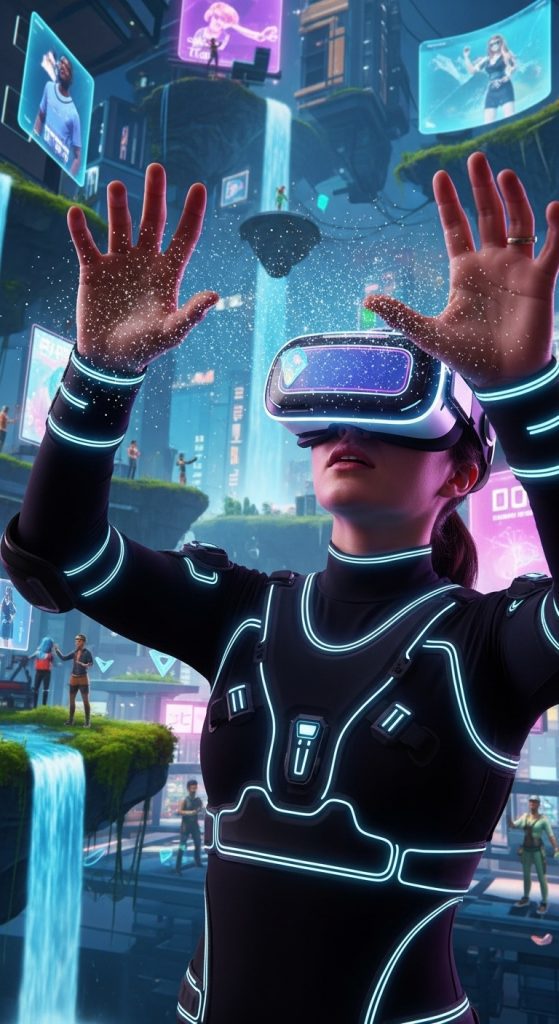
The most immediate application of nano-haptic technology is in gaming and interactive entertainment. Imagine feeling the impact of a punch in a VR boxing game, the texture of surfaces while climbing virtual cliffs, or even subtle environmental cues like wind or rain. This technology could make VR and AR experiences indistinguishable from real life, driving engagement, immersion, and emotional connection. Game designers are already experimenting with nano-haptics to create multi-sensory narratives that respond to player actions in real time.
4. Implications for Medicine and Training

Beyond entertainment, nano-haptics could revolutionize medicine and training. Surgeons performing remote operations could feel tissue resistance, temperature, and pressure as if they were physically present. Emergency response teams or pilots could train in fully simulated environments that mimic real-world tactile feedback, improving skill acquisition and reducing mistakes. Educational simulations could become multisensory, offering a more intuitive learning experience that enhances memory retention and real-world application.
5. Transforming Social Interaction

One of the most profound implications of nano-haptic technology is in social interaction. Digital touch could allow virtual handshakes, hugs, or even gentle touches to feel real, bridging emotional gaps created by physical distance. In the Metaverse, friends, families, and colleagues could connect in ways that are more natural and meaningful than text, audio, or video alone. This has the potential to reshape human relationships, but it also raises questions about emotional authenticity and psychological effects.


6. Psychological and Ethical Considerations

As digital touch becomes increasingly realistic, the line between the physical and virtual world may blur. If the brain perceives synthetic sensations as real, could it influence emotions, memories, or pain perception? Researchers are beginning to study these neurological implications, exploring both benefits and risks. Ethical concerns include consent, privacy, and potential misuse of nano-haptic technology, as sensations could theoretically be manipulated without the user’s awareness.
7. Metaverse and the Future of Reality

The Metaverse, enhanced with nano-haptics, could evolve into a fully sensory universe, where visual, auditory, and tactile experiences converge seamlessly. Users might inhabit worlds where the distinction between real and virtual experiences becomes nearly invisible. This could revolutionize entertainment, education, social connection, and professional collaboration, creating opportunities previously unimaginable. However, it also challenges our understanding of human experience, identity, and perception of reality.
You Might Also Like;