
We have delved deep into the concept of the Metaverse, a topic that exploded onto the global technology agenda when Facebook CEO Mark Zuckerberg rebranded his company to Meta. Since that pivotal moment, countless companies and individuals have eagerly begun investing in this digital frontier.
However, critical questions remain: Will the Metaverse truly revolutionize Virtual Reality (VR) and Augmented Reality (AR)—technologies that have historically struggled to captivate the mass market? Or is this merely a marketing strategy to repackage existing tech and normalize the sale of potentially “unnecessary” virtual plots and digital assets? Is this a fleeting trend, or is it a foundational shift akin to the creation of the internet itself?
Lately, there is a tendency to label everything “virtual” as the Metaverse. This is a misconception. It is becoming increasingly clear that moving beyond a simple digital environment is impossible without the underlying infrastructure of the Web 3.0 revolution. True persistence, ownership, and decentralization are the keys; without them, the Metaverse remains just a buzzword rather than a technological reality.
1.Definition to consider: Verse

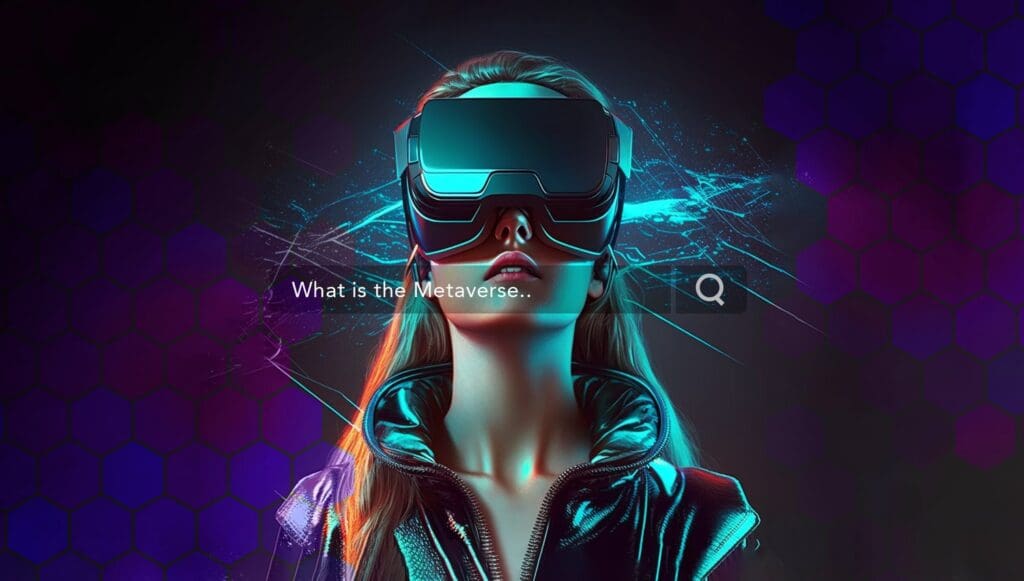
Global surveys indicate that hundreds of distinct definitions for the Metaverse have emerged across Europe and the USA. In fact, there is still no single, agreed-upon definition for this digital evolution. The technological landscape following the widespread adoption of the internet was initially chaotic and fragmented.
Over the past decade, top technology companies have moved to consolidate these scattered innovations to provide qualified services and simplify the user experience. These tools needed to be brought under one roof to function as cohesive products that improve life, whether socially or in business. If this ecosystem hadn’t emerged as the Metaverse, it would have inevitably appeared under a different concept. Tech giants like Meta (formerly Facebook) acted early, embracing this shift to redefine their corporate identity after 20 years in the market.
The Metaverse, still in its infancy, differs significantly from previous technological developments because futurists proclaimed the concept before the engineering was fully ready. Unlike Virtual Reality (VR), where the hardware entered our lives before we fully understood its potential, the Metaverse is a vision that is still under active development.
For the first time in tech history, the name came first. This was a deliberate strategy to familiarize the public with future technologies, understand how humans want to exist in a virtual world, and arouse curiosity. While foundational technologies exist, the advanced sensors and neural interfaces that will interact with our nervous systems and brain patterns are still being perfected.
In this new concept, the “verse” (universe) remains the fixed foundation, but the “meta” (beyond) is dynamic. Consequently, many industry leaders have embraced the concept under various names to suit their vision. For instance, the California-based giant Nvidia refers to its ecosystem as the Omniverse, while Microsoft has positioned its tools within the Multiverse.
2.People will have IP addresses


Human perception is constructed through symbols, but the Metaverse encompasses broad social and technological dimensions. While we have long possessed some awareness of Augmented Reality (AR) and Virtual Reality (VR), the landscape is shifting. The recently emerging Mixed Reality (MR) technology is significant in this context—an innovation that enables virtual content and real-world environments to interact simultaneously. For instance, in critical sectors like healthcare, a surgeon can utilize mixed reality to project outcomes and data directly onto the physical world during an operation.
In this new era, Web 3.0 brings pillars like decentralization, collaboration, and socialization to the forefront. Concepts such as NFTs and cryptocurrency are evolving beyond simple virtual entertainment into a sophisticated virtual economy. Advertising is also transforming; instead of intrusive pop-ups on screens, we will see advertisements in augmented reality spaces seamlessly integrated into our environment.
Perhaps the most profound shift involves the concept of IP. Historically, every computer on the internet has had an Internet Protocol (IP) address. However, in the future, IP will represent Intellectual Property attached to the individual rather than just a code for machines. People will possess a unique digital signature. For example, exclusive content from journalists will be protected by code, ensuring that ownership and royalties cannot be bypassed or stolen. These changes are not distant science fiction; this transition is expected to reshape our digital lives within the next 5 to 6 years.
3.Digital twins will drop to people


We are on the verge of a rapid transition from using simple avatars to adopting our own Digital Twins. Initially, we engage with the virtual world through stylized avatars, but soon we will evolve into photorealistic, virtual versions of ourselves. These Digital Twins will not only represent us at social gatherings but will also possess the capability to manage various tasks on our behalf. While the initial simulation accuracy might start at 70%, the goal is to reach 90% replication of reality, even if a 100% match remains theoretically impossible.
This shift will revolutionize e-commerce. Unlike browsing a brand’s 2D website in isolation, the Metaverse introduces a social layer. You might encounter friends in a brand’s virtual store, either by coincidence or by plan, transforming shopping back into a communal activity.
Privacy and presence will also be customizable. Even when you are online in a virtual office—meeting colleagues just as you would in a physical workspace—you will have the option to appear “offline” or invisible when you need privacy. The convergence of physical and digital fashion will be seamless; the shoes your avatar wears in the virtual world will match the exact pair on your feet in reality. In this landscape, essentially every company must evolve into a technology producer.
For instance, consider a razor company utilizing immersive technologies. Users could virtually “try” the product in the Metaverse, feeling the texture and sensation through haptic feedback to check for potential skin reactions or allergies without physically touching the blade. It will be as if they opened the package in a store. This level of interaction will elevate the collection of customer data, allowing businesses to understand user preferences with unprecedented precision.
4.Transition to a movement and experience-based world

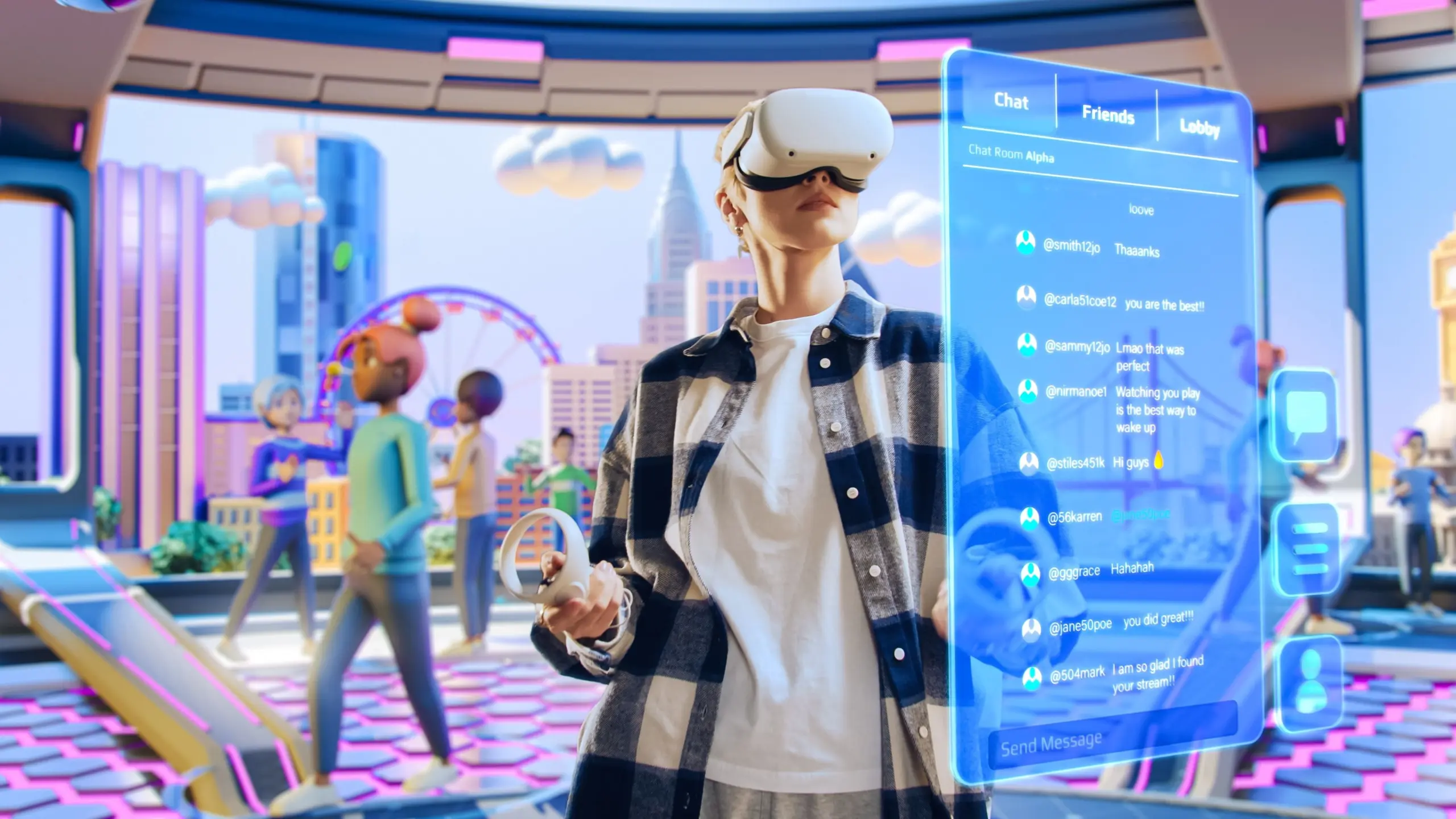
One of the most frequently asked questions today is, “How is this different from standard online entertainment?” To clarify, traditional online entertainment and the Metaverse are distinct concepts with fundamentally different architectures. Specifically, online entertainment operates on a centralized structure, whereas the Metaverse is built on a decentralized structure, similar to cryptocurrencies.
Decentralization in blockchain technology involves transferring control and decision-making authority from a central entity—whether an individual, organization, or group—to a distributed network. In the Metaverse, people will not just watch; they will exist with unique digital identities. It marks the transition from merely observing the virtual world through a screen to actively participating inside it—akin to the evolutionary leap from 2D cartoons to immersive 3D animation.
To understand this shift, we must look at how the internet has evolved:
- Web 1.0: We primarily received information passively from static websites.
- Web 2.0: The era of smartphones and mass sharing, where we could comment, create content, and interact on centralized platforms.
- Web 3.0: The current revolution.
Web 3.0 brings true freedom to the virtual world through decentralized architecture. This marks a profound shift from a transaction-based world to an activity- and experience-based world. In this new ecosystem, the freedom of the virtual world extends to the internet itself, transforming it from a space focused on simple data exchange into a realm centered around immersive human experience.
5.Virtual land is anything but a singular venture

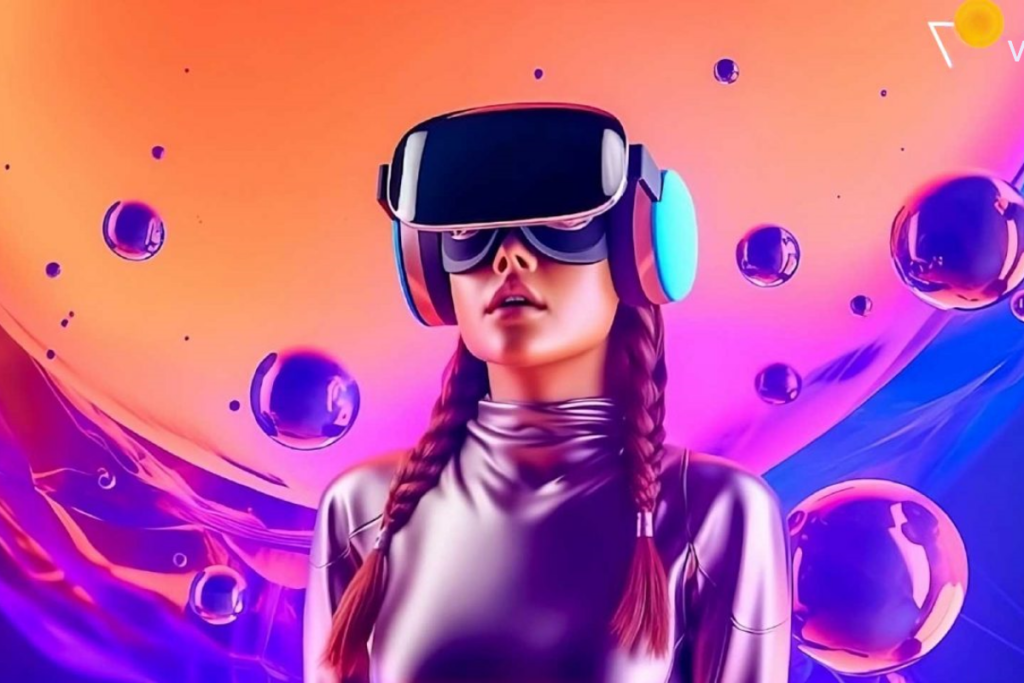
Understanding the technical architecture of the Metaverse is crucial for any business entering the space. While the current 2D web is composed of pixels, the architecture of the Metaverse is built on voxels. A voxel is a graphic data point that represents a specific value on a grid in 3D space—essentially the building block of the virtual world.
This distinction is vital for various industries, particularly for material and manufacturing companies. Just as businesses transitioned from physical shops to e-commerce in the past, they may soon scale down physical locations to establish virtual stores in the “Verse” world. In this environment, a store or product is not just a flat image but a volumetric structure defined by voxels.
Acquiring space in the Metaverse should be viewed as a foundational technical investment, similar to purchasing a domain name for a website in the early internet era. For example, in leading platforms like Decentraland, the world is finite, divided into exactly 90,601 parcels of land (voxel areas). Ownership here goes beyond simple possession; due to blockchain technology, even if a parcel is resold, specific Intellectual Property (IP) rights or royalty mechanisms can ensure that the original creator or owner retains a connection to the asset.
You may also like this content
-
-
-

-

-

-

-
-

-

-
-

-

