
I’ve always been a bit of a skeptic when it comes to hydrogen cars—they always seemed like “the fuel of the future” that never actually arrives. But when I saw what Mercedes-Benz is doing with the NextGenH2, I realized I was looking at the wrong segment. While hydrogen might be struggling with sedans, it’s looking like a total game-changer for the heavy-duty titans of the road.
I’ve been digging into the specs of this machine, and let me tell you, this isn’t just a “green” version of a diesel truck. It’s a complete rethink of how we move 40 tons across a continent.
Not Your Average Battery Setup
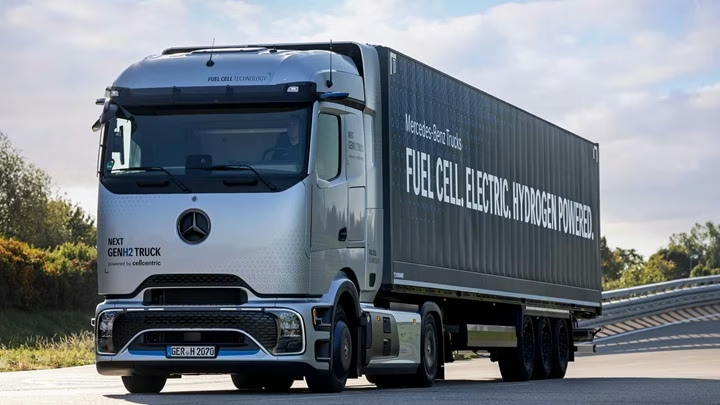
One thing that really caught my eye is how Mercedes handled the power delivery. Most hydrogen vehicles use a tiny battery as a buffer. Not here. I was surprised to find a massive 101 kWh LFP (Lithium Iron Phosphate) battery tucked inside.
Think of the NextGenH2 as an electric truck that carries its own power plant. It uses two fuel cells located right where the old diesel engine used to sit. These cells feed that big battery, which then powers two electric motors pushing out nearly 500 horsepower.
What I love about this “range-extender” approach is the efficiency. It even uses regenerative braking—imagine a massive semi-truck recharging its own battery just by slowing down on a highway off-ramp. That’s smart engineering.
The Secret Sauce: Liquid, Not Gas
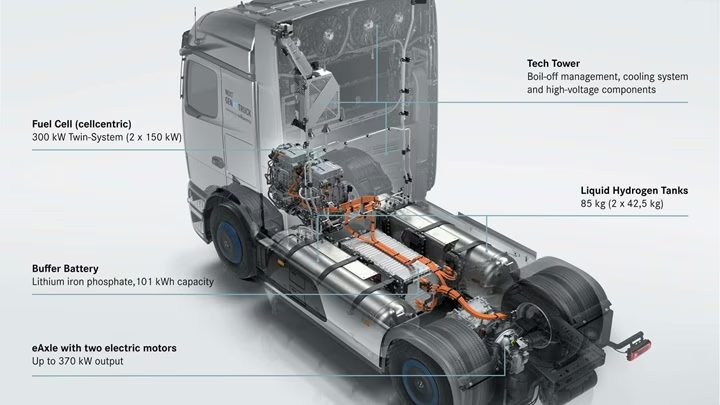
This is where it gets technically impressive. Most hydrogen projects use compressed gas, but Mercedes is going with Liquid Hydrogen (sLH2).


- The Temperature Challenge: They store it at a bone-chilling -253°C.
- The Density Win: Because liquid is much denser than gas, they can pack way more energy into the same space.
- The Result: We’re talking about a range of over 1,000 kilometers.
When I read that, I realized they’ve finally hit the “Holy Grail” of trucking: matching the range of a traditional diesel engine without the carbon footprint. And for those of us who hate waiting at chargers, this thing refills its 85kg tanks in just 10 to 15 minutes. That’s basically a coffee break for a long-haul driver.
My Perspective: Is This the Diesel Killer?
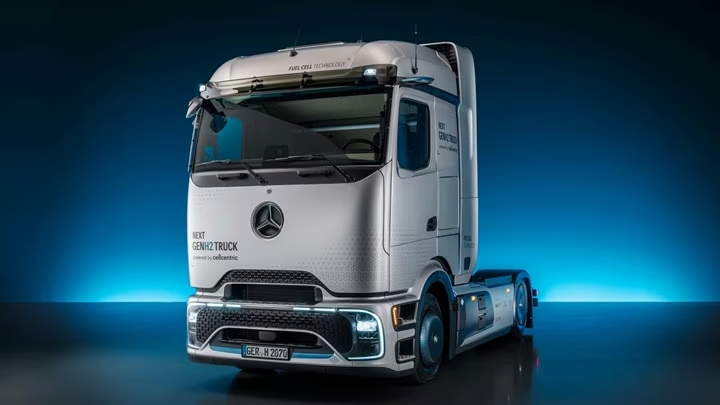
I’ll be honest: the infrastructure for liquid hydrogen is still in its infancy. But Mercedes isn’t just throwing this out there and hoping for the best. They are starting with a limited run of 100 units this year, with full-scale production aimed for the early 2030s.
What strikes me most is that they didn’t sacrifice the “truck” part of the truck. It’s built on the proven Actros architecture, meaning drivers still get the high-tech cabins and safety systems they are used to. They’ve made the transition to zero emissions feel… well, normal. And in the world of logistics, “normal” is exactly what leads to mass adoption.
I’m curious to hear your thoughts: Do you think liquid hydrogen is the ultimate solution for long-haul shipping, or will battery-electric trucks eventually catch up in range?
You Might Also Like;