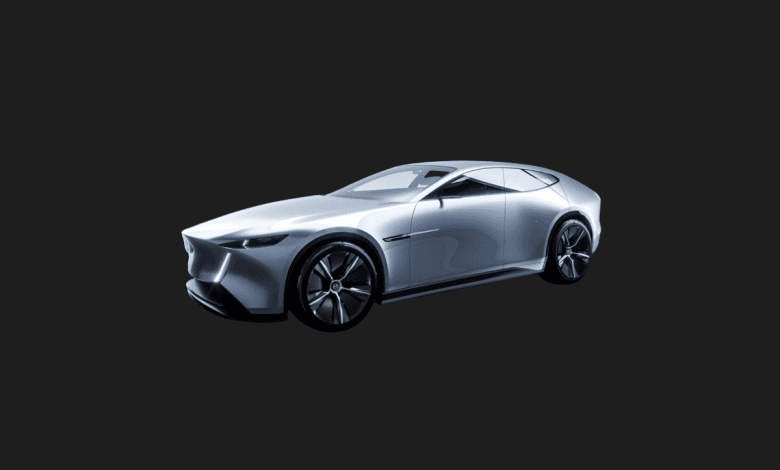

Mazda unveiled the Vision-X Coupe concept at the Japan Mobility Show. The model, which combines a rotary engine hybrid system with carbon capture technology, showcases the brand’s 2035 vision.
Mazda introduced the new Vision-X Coupe concept as part of the Japan Mobility Show in Tokyo. This stylish four-door coupe, designed for the year 2035, took center stage as a design vision reflecting the brand’s outlook on the future.

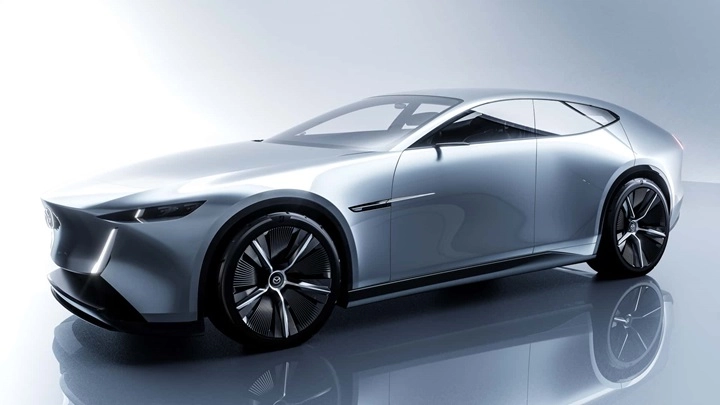
The company has not shared many details yet, but the concept is clearly built upon the Kodo design language. Mazda has refined this design philosophy in a more elegant manner instead of making a radical change. A completely closed grille design stands out at the front. This design, divided by a vertical light signature, is supported by thin headlights and a wide lower air intake.
The Vision-X Coupe has a length of 5,050 mm, a width of 1,995 mm, a height of 1,480 mm, and a wheelbase of 3,080 mm. This makes the car nearly 20 cm longer compared to the Mazda6. At the heart of the vehicle lies a plug-in hybrid system, which includes a turbocharged rotary engine, an electric motor, and a battery whose capacity has not yet been disclosed. This system produces a total of 503 horsepower and offers an all-electric driving range of up to 160 km. The total range is stated to be approximately 800 km.
Mazda states that the environmentally friendly hybrid structure goes a step further by cleaning the air while the vehicle is driven. This is made possible by the combination of carbon-neutral fuel derived from microalgae and Mazda’s proprietary CO2 capture technology. According to the company’s statement, microalgae capture CO2 as they grow and store it as oil in their cells. These oils are extracted and converted into carbon-neutral fuel. The remaining microalgae matter can be used as food or organic fertilizer because it is protein-rich.
Regarding the CO2 capture technology, Mazda has developed a system that can absorb carbon emissions directly from the exhaust. These captured emissions can be reused in plant cultivation or in the production of high-performance carbon materials.


You Might Also Like;