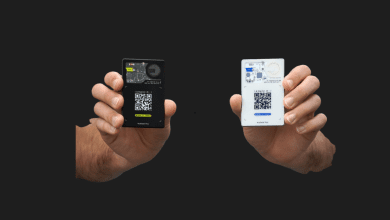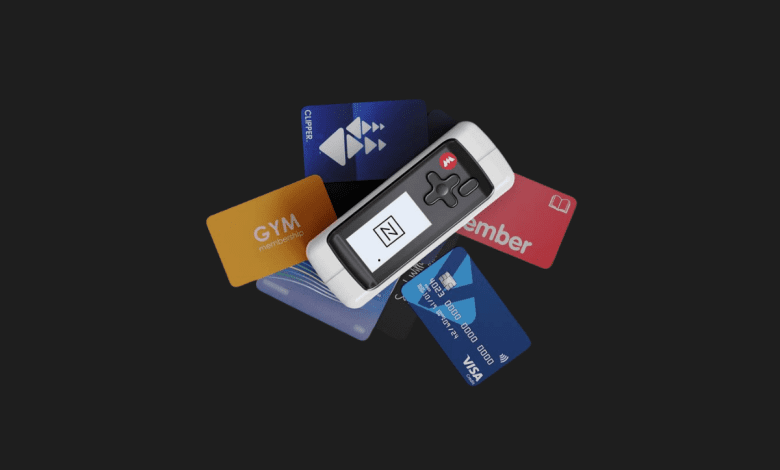

As someone who constantly tinkers with electronics, wireless protocols, and smart home systems, carrying around a bag full of dongles, RFID cloners, and infrared remotes gets old fast. When I first heard about the M1 by Monstatek, it promised to be the ultimate Swiss Army knife for technophiles, penetration testers, and everyday hardware hackers. Naturally, I had to see if this pocket-sized multi-tool could actually replace the mountain of diagnostic gear I keep scattered across my workbench.
Pros & Cons
- ✅ Massive Protocol Support: Integrates Sub-1 GHz, RFID, NFC, and Infrared capabilities into a single, unified device.
- ✅ Developer-Friendly: Features exposed GPIO pins and an open-source architecture that makes building custom modules incredibly easy.
- ✅ Pocket-Sized Form Factor: A rugged, highly portable design that fits comfortably in your pocket alongside your everyday carry items.
- ❌ Steep Learning Curve: It is not particularly beginner-friendly; unlocking its full potential requires a solid grasp of networking and radio frequencies.
- ❌ Niche Appeal: While incredibly powerful for tech enthusiasts, casual users might struggle to find practical daily use cases.
- ❌ Crowdfunding Delays: As a Kickstarter-born device, the initial production runs and accessory availability can be subject to delays.
Technical Specs
| Feature | Details |
|---|---|
| Wireless Capabilities | Sub-1 GHz transceiver, Bluetooth LE |
| Proximity Tech | 125 kHz RFID & 13.56 MHz NFC (Read/Write/Emulate) |
| Hardware Expansion | GPIO Pins for custom boards and sensors |
| Display | High-contrast, low-power display screen |
| Storage | MicroSD card slot for payloads and captures |
| Battery Life | Multi-day standby on a single USB-C charge |
My Experience
Taking the M1 out of its packaging, I was immediately struck by its solid construction. It has a slightly utilitarian, retro-futuristic aesthetic that unapologetically screams “hardware hacker.” The buttons have a satisfying, tactile click to them, and the interface is incredibly responsive. My first test was to see if it could consolidate my pile of apartment and office keycards. Within ten minutes, I had successfully scanned and emulated both my 125 kHz building fob and my 13.56 MHz NFC office badge. Leaving my lanyard at home and just tapping this little device to get into my building felt like living in a cyberpunk novel.
Next, I dove into the Sub-1 GHz capabilities. If you’ve never played with sub-GHz frequencies, it’s a fascinating world. I walked around my house capturing the signals from my old ceiling fan remote and a wireless doorbell. The M1 picked them up flawlessly, allowing me to replay the signals and control these devices straight from the interface. It completely demystifies the invisible signals bouncing around our everyday environments. I also had a bit too much fun at a local sports bar using the built-in universal infrared blaster to subtly turn down the volume on an obnoxiously loud television.
What truly sets the M1 apart from being just a parlor trick is the GPIO header and its developer-focused ecosystem. I hooked up an external Wi-Fi development board to the pins, and suddenly the device transformed into a portable network auditing tool. The open-source nature of the project means that the community is constantly writing new scripts, plugins, and custom firmware that expand its capabilities far beyond what ships in the box.
That being said, this is a tool that requires you to meet it halfway. It won’t hold your hand. If you don’t know the difference between high-frequency and low-frequency RFID, or what a raw signal capture is, you are going to have to do some reading. But if you are willing to learn, or if you are already a seasoned IT professional, the M1 is an absolute joy to use. It has effortlessly earned a permanent spot in my backpack.
Who is this for? / Alternatives
The M1 Monstatek is purpose-built for penetration testers, cybersecurity students, hardware hackers, and curious tech enthusiasts who love exploring the digital world around them. It is arguably the most direct competitor to the massively popular Flipper Zero, offering a very similar suite of tools but with its own distinct hardware design and community focus. If you are specifically focused on advanced radio frequency analysis rather than a pocket multi-tool, you might also consider the HackRF One, though it is significantly less portable and lacks standalone emulation capabilities.

Quick FAQ
Is the M1 legal to own and carry?Yes, the device itself is completely legal. It is designed as an educational and diagnostic tool. However, using it to intercept, clone, or manipulate systems you do not own or do not have explicit permission to test is highly illegal.
Can it be used to audit Wi-Fi networks out of the box?By itself, the M1 focuses on Sub-GHz, IR, RFID, and Bluetooth. To perform Wi-Fi audits, you will need to attach a compatible external Wi-Fi development module to the GPIO pins.
M1 Monstatek Review
Product Images


You Might Also Like;