
I’ve been following the Artemis program since its inception, and honestly, the tension right now is palpable. We are on the brink of sending humans back to the lunar vicinity for the first time in over half a century with Artemis 2. It’s the kind of mission that gives you goosebumps. But as I’ve been digging through the latest technical reports, a shadow has emerged over the excitement: the Orion heat shield.
Is NASA pushing the envelope of exploration, or are they taking a gamble with astronaut lives? I’ve looked into the data, and here’s my take on why this “shield saga” is the most critical conversation in space flight today.
The Artemis 1 “Charring” Surprise

To understand why experts are losing sleep, we have to look back at Artemis 1. When the uncrewed Orion capsule splashed down in late 2022, NASA engineers noticed something unsettling. The Avcoat material—the protective skin designed to burn away and carry heat with it—didn’t just erode smoothly. It cracked and “spalled,” meaning small chunks actually broke off.
When I first read the December 2024 analysis, it hit me: NASA found that gases were getting trapped inside the heat shield material. Instead of escaping harmlessly, these gases built up pressure until the shield literally popped in places.
Why Orion is Different from Apollo

You might ask, “Ugu, didn’t we solve this with Apollo?” Well, yes and no.
- Apollo Era: Used a honeycomb structure where Avcoat was injected into tiny cells. This localized any damage.
- Orion Era: To save time and weight, NASA used much larger blocks of Avcoat.
- The Result: The larger blocks created unexpected pathways for gas to build up, leading to the cracking we saw during the 5,000°F re-entry.
The “Skip” Solution: Strategy Over Hardware

What surprised me most in NASA’s latest update wasn’t a hardware fix, but a software and trajectory change. Instead of redesigning the shield—which would delay the mission by years—NASA is opting for a modified “Skip Re-entry.”


Imagine a stone skipping across a pond. Orion will hit the atmosphere, “bounce” slightly to shed velocity and heat, and then descend for a final landing. By tweaking this path, NASA believes they can keep the thermal loads within a “safe” margin where the gas buildup won’t cause catastrophic failure.
Ugu’s Note: This feels like a classic engineering compromise. They aren’t fixing the material; they are changing the environment the material has to endure. It’s clever, but is it enough?
A House Divided: Experts vs. Agency

This is where it gets personal for the space community. On one side, you have NASA leadership, like former Administrator Bill Nelson, stating the decision was unanimous and based on rigorous data. They argue that the “backup” layers beneath the Avcoat are more than capable of protecting the crew even if some surface cracking occurs.
On the other side, voices like Charlie Camarda, a former astronaut and heat shield expert, are waving red flags. Camarda has been vocal that NASA might be “normalizing deviance”—a term we haven’t heard much since the Challenger and Columbia disasters. He fears that by not solving the root cause of the material failure, we are rolling the dice on the safety of the four brave souls stepping into that capsule.
The Voices of Experience
- The Optimists: Engineers like Dan Rasky argue that risk is never zero. As long as the erosion is predictable and doesn’t hit the structure, the mission is a “go.”
- The Skeptics: Critics worry that a slight deviation in the re-entry angle could cause larger chunks of the shield to break off, potentially creating an imbalanced aerodynamic flow that could tumble the spacecraft.
My Final Thoughts: Trust or Verify?
As a tech enthusiast, I want to trust NASA’s math. They have some of the smartest minds on the planet. But as a human who respects the bravery of astronauts, I can’t help but feel a bit uneasy. We are trading a hardware redesign for a “gentler” flight path. In the vacuum of space and the fire of re-entry, things rarely go exactly to plan.
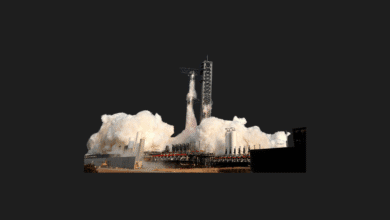
NASA is currently moving the Space Launch System (SLS) toward the pad, signaling that they are confident. They believe the “safety margin” is wide enough. I truly hope they are right. Because if Artemis 2 succeeds, it paves the way for the first woman and person of color to walk on the Moon. If it fails, it could be the end of the program as we know it.
What do you think? Should NASA delay Artemis 2 until they have a 100% redesigned heat shield, or is the new “skip” trajectory a smart enough solution to move forward?
You Might Also Like;