Is it Possible to Digitize Consciousness and Separate it from the Body?


According to experts, while the digitization of human consciousness (mind uploading) and its separation from the physical body is theoretically possible, the practical challenges are immense. A complete brain map (connectome) alone is not enough.
Throughout history, humanity has overcome nearly every difficult boundary: conquering Mount Everest, landing on the Moon, and diving to the ocean depths. However, traversing the universe still seems impossible due to physical limitations, such as traveling to other galaxies. The laws of physics prevent a massive object, like a spaceship, from reaching the speed of light. Even at the speed of our fastest spacecraft, NASA‘s Parker Solar Probe, reaching the nearest star system (Alpha Centauri) would take millennia, and the Andromeda galaxy would take billions of years. This starkly highlights the brevity of human life.
This reality drives humanity’s quest to transcend the body and achieve immortality by making consciousness permanent. If we cannot physically travel to the stars, perhaps we can become timeless by digitizing consciousness (transferring it).
What is Mind Uploading?

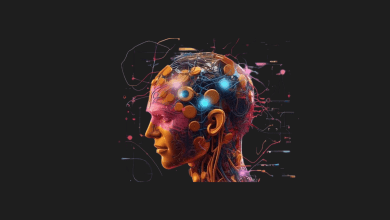
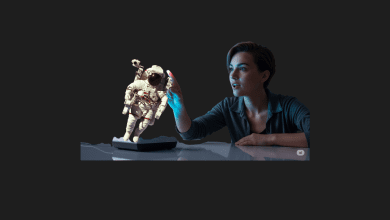
Mind uploading involves copying or transferring the entire structure of the brain and the conscious experience to a digital environment. In this setting, the individual could continue to exist without a physical body, preserving their self and memories. Theoretically, this digital life could be limitless.
In this scenario, a digitized consciousness could simulate real-life experiences (eating, driving) and even undertake actions beyond physical constraints, like interstellar travel.
Feasibility and Barriers

The main obstacles to mind uploading are:

- Complexity of the Brain: The human brain has approximately 86 billion neurons and trillions of connections (synapses). Scientists have only managed to map the entire brain of a fruit fly or small parts of a mouse brain. Mapping the full human brain in 3D using current methods would require ten million times more work and resources, taking decades.
- Insufficient Input: Recording just the neurons isn’t enough. The connection with the outside world—including sensory input (sight, hearing, touch) and internal signals (heartbeat, biological rhythm)—must also be digitally simulated. Without this, a complete disconnect from the senses could lead to unique psychological problems.
- The Problem of Consciousness: Science still lacks a clear understanding of how consciousness emerges and how billions of neurons collectively produce thought. Consciousness is also viewed as an experience that cannot be simply explained by functions, and we are still at the very beginning of understanding how to measure or define it.
Alternative Approaches and Future Timelines
- Alternative Approach: Instead of copying every part, solving the brain’s operating principles and imitating only the necessary computational processes. This is akin to learning how a car works to build a new one, rather than copying every single part.
- Biological Replacement: Gradually replacing biological neurons one-by-one with artificial neurons. However, scientists cannot yet substitute even a single neuron this way.
Experts estimate that we are, at best, decades away from digitizing consciousness, and more realistically, centuries away. However, rapid advancements in Artificial Intelligence (AI) could accelerate this. According to Dr. Hidenori Tanaka, AI might not directly copy the brain but could create neural patterns very close to the human mind by mimicking speech and behavior.
Ethical and Philosophical Debates
Beyond technical hurdles, there is a fundamental ethical debate: Would the mind loaded onto the digital structure truly be “us”, or merely a copy?
- Experts like Prof. Sylvester Kaczmarek and Prof. Crystal L’Hote suggest the uploaded mind would be a copy, questioning the concept of “self.” It is doubtful whether the transferred consciousness would retain the same personality and traits; any current model might only be a simulation of consciousness.
Some experts, such as Rohit Patel, suggest that breakthroughs often come from unexpected directions, and the technology that enables consciousness transfer might be one that has not even been invented yet.
You Might Also Like;
- We Selected 10 Series Similar to Stranger Things for Those Who Love It
- Where and How is Silver Used in Electric Vehicles?
- Hyundai Unveils Its Multi-Purpose Wheeled Robot
Follow us on TWITTER (X) and be instantly informed about the latest developments…