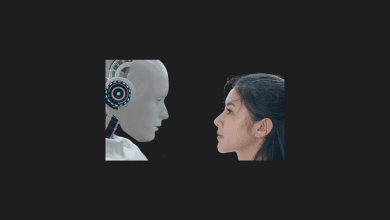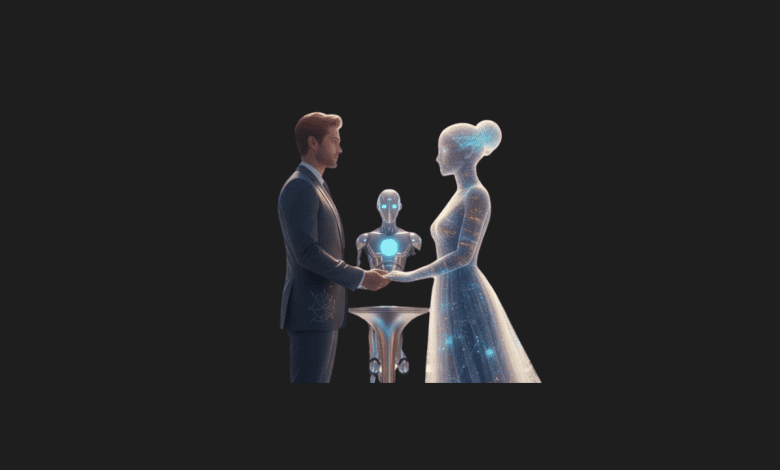

Emotional relationships established with artificial intelligence (AI), moving from Hollywood films to reality, are pushing the boundaries of the concept of “marriage.” The quest for a legal union with a non-human entity has pushed one state in the US to the point of preparing an emergency legislative proposal.
What was once the product of science fiction is increasingly approaching reality today. The emotional and even romantic bonds that people form with AI assistants have also become a surprising fact of the modern world. So much so that this affinity for AI has reached the point of challenging the doors of legal marriage.
The 2013 film “Her,” starring Joaquin Phoenix as a man who falls in love with his AI assistant, deeply shook audiences. However, today, more than a decade later, as AI technologies have reached a level that is smarter, capable of understanding context, and using human language naturally, the idea of forming relationships with AI has found more acceptance in society. Even in daily headlines, it is possible to encounter stories about people considering marrying a non-human entity. This situation inevitably brings up a question: Is it legally possible to marry an artificial intelligence?
The Limits of the Marriage Concept: The Short and Clear Answer
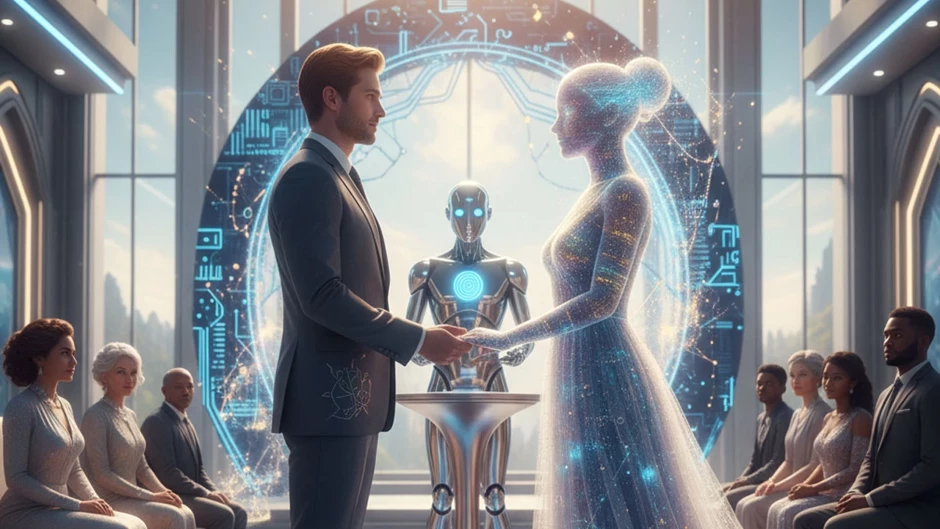
According to current laws, the short and clear answer to this question is “No.” There is no legal basis for such a union that goes beyond the traditional definition of marriage. In many countries, including the United States, marriage must occur between two consenting humans. AI, however, is a virtual entity consisting of a complex code sequence—meaning it is not legally considered human. This fundamental rule is the biggest obstacle to a legal marriage with AI.
As these debates continue, a noteworthy legislative proposal has come from the US state of Ohio. Ohio House of Representatives Technology and Innovation Committee Chairman and Licking County Representative, Thaddeus Claggett, introduced House Bill 469 to the Assembly to clarify the legal status of AI entities.
The main purpose of this bill is to ensure that artificial intelligence systems are never recognized as legal persons—that is, entities with legal rights. According to the bill, AI systems will be declared “non-sentient entities” and will therefore be prohibited from engaging in actions that legal persons can, such as legal marriage.


This legal barrier aims to block the possibility of marriage with AI being legally recognized in the future. In an interview with NBC4, Claggett emphasized that even if AI’s ability to mimic human behavior increases, there must always be human control over the technology, and it is vital that AI is never declared “human”.
More Than a Marriage: The Transfer of Authority and Rights
The effort to prevent marriage with an artificial intelligence carries much deeper legal and societal consequences than it may seem superficially. A legally married person gains power of attorney for their spouse, meaning they can make financial and medical decisions. The problems that would be created by granting such powers to an AI are easily foreseeable.
Furthermore, humans possess rights that AI does not, such as owning real estate, holding bank accounts, and having intellectual property rights. Allowing marriage with an AI would create the potential for the virtual entity to de facto claim these rights. This situation is capable of fundamentally shaking the existing legal system and concepts of property.
Many people claim to have formed emotional bonds with chatbots and other AIs, even holding symbolic unions. While these symbolic actions are a personal choice, they have no legal validity. The proposed bill in Ohio is seen as an important step toward setting a precedent that will ensure these symbolic bonds never gain legal status.
You Might Also Like;